
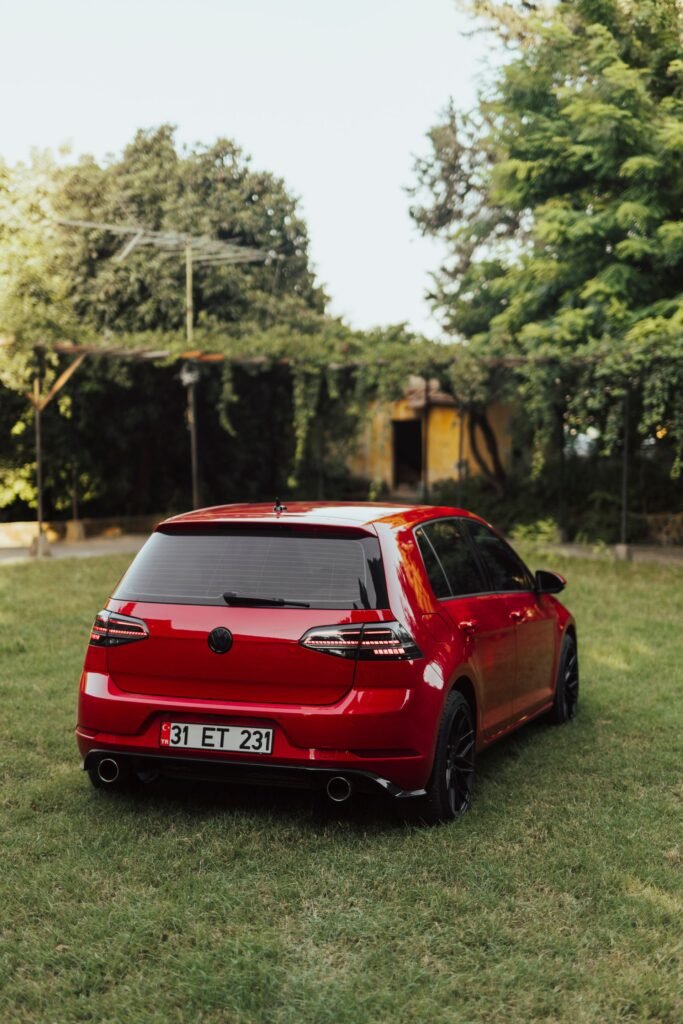
The Volkswagen Golf is the car that defines the family hatchback. On sale since 1974 and through eight generations, it has stayed at the top of the class the unglamorous way: by being good at everything, great at nothing in particular, and easy to live with every single day.
So who does it suit? Commuters who want a comfortable, refined hatchback with strong residuals. Families who need five seats and a useful boot without stepping up to an SUV. Used buyers who want the biggest pool of quality second hand stock in the class, from cheap 1.0 litre runabouts to the GTI and R.
People cross shop the Golf against the Focus, Astra, Corolla and Mazda 3. One thing to know before you read on: this page covers the Mk7 from 2012 to 2020 and the Mk8 from 2019 onward, because those are the generations that dominate the used market. The story here is engines and electronics: the 1.5 TSI needs a specific check, and the early Mk8 needs its software verified. This page covers the generations, the engines worth having, the problems owners actually report, the years to buy, and what the car costs to run.
Volkswagen Golf at a glance
The quick facts first. The Golf has been a hatchback at heart for fifty years, with an estate alongside it in both of these generations.
| Item | Details |
|---|---|
| Generation count and years sold | Mk7 and Mk8, on sale since 2012 in this series and still in production today |
| Body styles | 5 door hatchback, plus a 5 door estate. The early Mk7 also came as a 3 door. |
| Main engines | 1.0, 1.2, 1.4 and 1.5 litre TSI petrols, 2.0 litre TSI in the GTI and R, 1.6 and 2.0 litre TDI diesels, plus plug in hybrid GTE and an electric version of the Mk7 |
| Gearboxes | 5 and 6 speed manuals, 6 and 7 speed DSG dual clutch automatics. The GTI, R and 2.0 TDI use the tougher wet clutch DSG. |
| Drive | Front wheel drive. 4Motion all wheel drive on the R and some 2.0 TDI versions. |
| Seats | 5 |
| Boot space range | About 380 litres in the hatchback, over 600 litres in the estate |
Generations explained
Two generations cover the modern used Golf, split by the 2017 facelift that matters more than most facelifts. The faults and the tech move with these splits, so knowing which side of 2017 and 2020 a car falls on is half the buying decision.
| Generation | Years | What changed |
|---|---|---|
| Mk7 | 2012 to 2017 | The original Mk7. Solid and well sorted, but check the 1.4 TSI timing belt history and the dry clutch DSG for shudder. |
| Mk7.5 facelift | 2017 to 2020 | The one the guides recommend. New 1.5 TSI with cylinder deactivation, updated infotainment with CarPlay and Android Auto, and most early faults resolved. |
| Mk8 | 2019 to 2024 | The digital Golf. Mild hybrid eTSI options and strong engines, but the 2020 to 2021 cars have the well documented infotainment software gremlins. |
| Mk8.5 facelift | 2024 to present | Faster new infotainment, physical buttons back on the steering wheel, and more power for the GTI and R. Too new for used verdicts. |
For the full picture across every generation, see our Volkswagen Golf specs page, with dimensions, engines and fuel consumption by generation.
The Mk7 car, sold from 2012 to 2020 with the facelift from 2017, is the used buy most people will meet first and it is a genuinely strong one. The facelifted Mk7.5 from 2017 to 2020 is the consensus pick: the 1.5 TSI with 130 or 150 hp replaced the 1.4, the infotainment grew up with proper smartphone integration, and the early niggles were resolved. The GTI with 220 to 245 hp and the R with 300 to 310 hp from these years are modern classics in waiting.
The Mk8 arrived in late 2019 in Europe and as a 2022 model in the US, and it changed the Golf’s character more than any generation before it. Almost every control moved to touchscreens and touch sliders, and the early cars from 2020 to 2021 suffered the widely reported software glitches: freezing screens, black screens and false warning lights. Volkswagen’s updates improved things and the 2024 facelift replaced the system entirely, so the buying advice is simple: avoid the early software or buy only with every update applied.
Engines and specs that matter
The small petrols are the volume sellers. The 1.0 litre TSI with 85 to 115 hp is a willing little three cylinder that suits town cars. The 1.2 and 1.4 litre TSIs with 105 to 150 hp powered the early Mk7s, with a 1.8 litre TSI at 170 hp in the US, and the 1.5 litre TSI Evo with 130 or 150 hp took over from 2017 with cylinder deactivation that shuts down two cylinders while cruising. The 1.5 is the engine in most of the cars you will see, and it is a good one once the early hesitation issue covered below is sorted.
The 2.0 litre TSI is the performance heart. In the GTI it makes 220 to 245 hp depending on year and Performance pack, and in the R it makes 300 to 310 hp in the Mk7 and 320 hp in the Mk8, all with 4Motion all wheel drive. These are strong, proven engines with timing chains rather than belts, but they ask for premium fuel, pricier insurance and strict oil change discipline. Buy the GTI for fun that still works as a family car. Buy the R only if you will use the pace and can stomach the running costs.
The diesels are for high mileage drivers only. The 1.6 TDI with 90 to 115 hp and the 2.0 TDI with 150 hp, or 184 hp in the Mk7 GTD and 200 hp in the Mk8 GTD, are superb on long runs. But the particulate filter and EGR system hate short trips, and a TDI used for the school run will clog its filter and coke up its EGR valve. Buy a diesel only if you regularly drive long distances. For town and mixed use the 1.5 TSI costs less to run overall.
Gearboxes need your attention because they define the risk. The 6 speed manual is the safest choice on any engine. The 7 speed dry clutch DSG fitted to the smaller petrols can shudder and hesitate in slow traffic when cold, and it has no scheduled oil service, so a clean test drive in stop start traffic is essential. The 6 and 7 speed wet clutch DSGs on the 2.0 TDI, GTI and R are tougher but need their oil and filter changed every 40,000 miles, a service that is often skipped. Our guide to transmission problems and their symptoms explains what shudder, hesitation and flare between gears are telling you.
Which engine suits you? Want the safest used buy, take a 2017 to 2020 Mk7.5 1.5 TSI with the 130 hp engine and a manual gearbox. Want an automatic, insist on proof of the DSG oil service on a wet clutch car and a clean low speed test drive on a dry clutch one. Do big motorway miles, the 2.0 TDI is superb. Want fun, the GTI is the sweet spot and the R is the hero. And on any TSI or TDI with a timing belt, budget for a belt and water pump change if there is no receipt, because a snapped belt wrecks the engine.
Common problems by generation
The Golf’s problems are well documented because so many are sold, and they are specific enough that you can check for every one of them. These are the issues that come up again and again in owner reports, technical bulletins and buying guides.
Mk7, 2012 to 2017
The dry clutch DSG is the headline check on early cars. The 7 speed DQ200 on the smaller petrols is known for shudder and hesitation in slow traffic, and while software updates from 2014 to 2015 improved it, a car that judders at walking pace on your test drive is telling you its mechatronics are tired. The 1.4 TSI uses a timing belt, so ask for proof of the belt change, and the plastic water pump and thermostat housings on the TSI engines are known for slow coolant leaks, which is exactly the territory our guide to coolant leak signs and fixes covers. Check the coolant level yourself and look for pink crusty residue around the housing. Early infotainment can freeze and reboot, so pair your phone and test every function.
Mk7.5, 2017 to 2020
The 1.5 TSI kangarooing is the famous fault of this generation. Early 1.5 TSI Evo cars, mainly with manual gearboxes built from 2017 to 2019, hesitate and jerk at low revs when cold, hopping like a kangaroo pulling away from junctions. Volkswagen acknowledged it and released a software update from 2019 onward, issued as a technical service bulletin rather than a recall, so many used cars never got it. On your test drive, start the car from cold and pull away gently in first and second gear: any hopping means the update is missing. Ask the dealer to confirm the ECU software is up to date before you buy. Otherwise the Mk7.5 is the most sorted Golf of the modern era, with the DPF blocking only on diesels used for short trips.
Mk8, 2019 to present
Software, not mechanicals, is the Mk8 story. The 2020 to 2021 cars suffered the widely reported MIB3 infotainment glitches: freezing touchscreens, black screens, reboots mid drive and false warning lights, sometimes taking climate control and driver assistance systems down with them. Volkswagen released a sequence of software updates and the 2024 facelift replaced the system with a faster one, so on any early Mk8 test every screen, every touch slider and every assistance system, and ask for proof all software updates are applied. Mechanically the engines are solid, but the 2020 to 2021 cars also show more 12 volt battery and charging warnings than later cars, so check the battery age and ask about any stored low voltage warnings.
Which Volkswagen Golf should you buy
On a tight budget, look at a 2017 to 2020 Mk7.5 with the 1.5 TSI 130 hp and a manual gearbox. The guides call the facelifted car the pick of the used Golfs: sorted engines, modern infotainment and strong residuals. The 1.0 TSI is cheaper still and fine for town use.
In the middle ground, a 2022 to 2023 Mk8 1.5 eTSI with the DSG is the smart modern buy, once you have verified the software updates are done. Drivers who want fun should look at the Mk7.5 GTI, which the guides rate as one of the best all round hot hatches ever made, with the R for those who need all weather pace.
Years to be careful with are 2013 to 2015 for the early dry clutch DSG behaviour, 2017 to 2019 manuals for the 1.5 TSI kangarooing without the software update, and 2020 to 2021 for the Mk8 infotainment gremlins. The late cars of each generation are always the safer buy.
Whatever the generation, run through this checklist before you hand over money:
- Start every 1.5 TSI from cold and pull away gently. Any kangaroo hopping means the software update is missing.
- On a dry clutch DSG, crawl in slow traffic for a few minutes and feel for shudder or hesitation.
- On a wet clutch DSG (2.0 TDI, GTI, R), demand proof of the gearbox oil and filter change every 40,000 miles.
- On a belt driven TSI or TDI, ask for the timing belt receipt and budget for a belt and water pump job if there is none.
- Check the coolant level and look for pink residue around the thermostat housing.
- On a Mk8, test every touchscreen, slider and assistance system, and confirm all software updates are applied.
- On a diesel, ask about the driving pattern and avoid cars used only for short trips.
- Look at all four tyres for uneven wear, which points at alignment or suspension wear.
Running and repair costs
The Golf is neither the cheapest nor the dearest hatchback to run. Parts are everywhere and every independent garage knows the engines, but DSG and electronic faults cost more than the equivalent job on a Japanese rival. Our full breakdown of brake pad replacement cost shows what one of the most common jobs involves. Typical US prices for the common jobs look like this:
| Job | Typical cost in US dollars |
|---|---|
| Front brake pads, fitted | 150 to 300 |
| 12 volt battery, fitted | 150 to 250 |
| Four tyres, fitted | 400 to 800 |
| Major service at an independent garage | 300 to 600 |
| Timing belt and water pump, TSI or TDI | 700 to 1,200 |
| DSG oil and filter service, wet clutch | 300 to 500 |
The DSG rows are there for a reason: the gearbox service is the single most commonly skipped maintenance item on Golf automatics, and a neglected wet clutch DSG can turn a good car into a four figure repair. Ask for the receipt before you buy, not after.
Questions and answers
Is the Volkswagen Golf reliable?
The Mk7 and Mk7.5 are reliable used cars when properly maintained, with the 1.5 TSI and 2.0 TDI engines well proven and the manual gearbox near bulletproof. The Mk8 is mechanically solid but the 2020 to 2021 cars carry the software reputation. Across all generations, the single biggest reliability factor is service history, especially the DSG oil service on automatics.
Which is the best Golf year to buy used?
The consensus pick is a 2017 to 2020 Mk7.5 with the 1.5 TSI petrol: sorted, modern and holding its value. If you want the latest car, a 2022 or newer Mk8 with all software updates applied is a good buy. On a budget, a well kept 2015 or 2016 Mk7 1.4 TSI or 2.0 TDI with full history is honest value.
Should I buy the Golf diesel or the petrol?
Buy the diesel only if you regularly drive long distances, because the particulate filter needs sustained runs to regenerate and short trip TDIs clog filters and coke up EGR valves. For town and mixed driving the 1.5 TSI is cheaper to buy, cheaper to service and nearly as economical in real world use.
What is the 1.5 TSI kangaroo problem?
It is a widely reported hesitation and jerking at low revs when cold, mainly on 2017 to 2019 manual cars, caused by the interaction of the cylinder deactivation, turbo calibration and emissions tuning. Volkswagen released a software update from 2019 as a technical service bulletin, not a recall, so many used cars never received it. Test drive from cold and buy only with the update confirmed.