
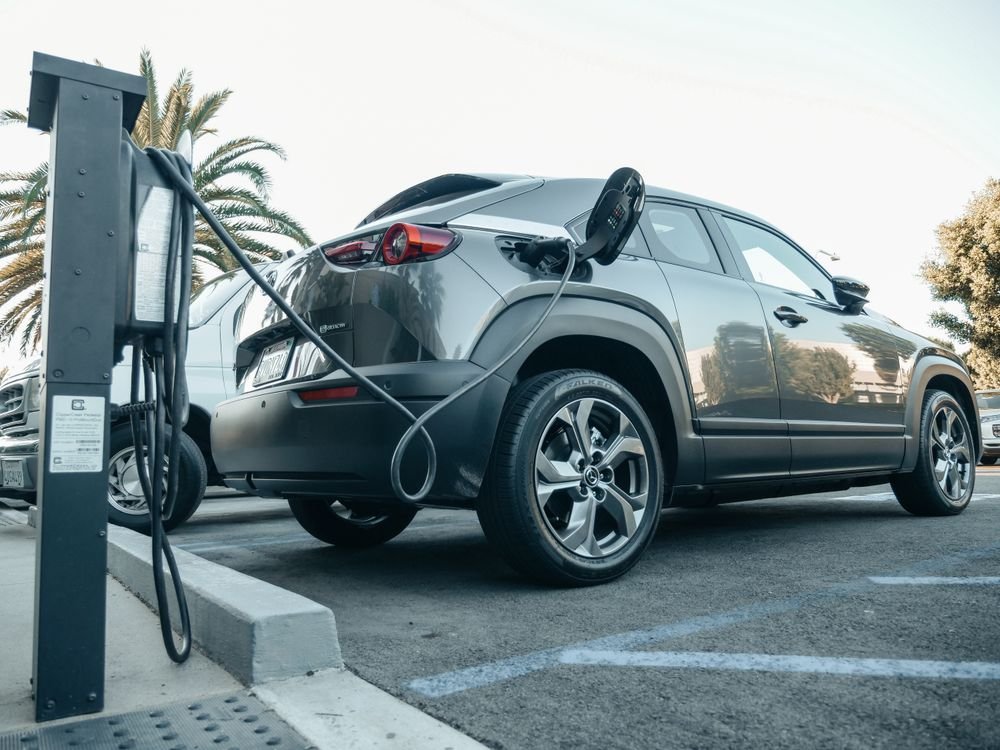
Electric car maintenance is simpler than petrol car maintenance, but it is not maintenance free. The short answer: an EV needs no engine oil change, no spark plugs, no exhaust service, and no fuel system service, yet it still needs tyre rotation, brake inspection, cabin filter changes, coolant checks, a 12 volt battery test, and software updates. Most makers suggest a service about once a year or every 15000 to 20000 miles, whichever comes first, and your handbook sets the exact interval for your model.
An EV has far fewer moving parts than a petrol car, so the service focuses on safety systems, the battery and its cooling, and the parts an EV shares with every car, like tyres, brakes, suspension, and steering. This guide explains what still needs doing, what you can safely skip, and the EV specific checks that protect range and battery life.
What an EV does not need
Stop paying for petrol car jobs on an EV. Your action: decline engine oil changes, spark plug changes, fuel filter changes, exhaust checks, and timing belt work on a pure EV, because those parts do not exist on it. A plug in hybrid is different, because it still has an engine, so check whether your car is a pure EV or a hybrid before you accept any engine job.
Do not assume that fewer jobs means no service at all. Your action: keep the annual or mileage service, because that visit checks brakes, suspension, steering, tyres, and high voltage safety systems that wear or age even when the motor itself needs little attention. Skipping service can also affect warranty terms, so keep the record even when the job list looks short.
Tyres, brakes, and suspension
EVs are heavy and deliver instant torque, so tyres wear faster than on a similar petrol car. Your action: rotate tyres roughly every 7500 miles, check pressure monthly, and check tread depth at the same time. Uneven wear can point to alignment or suspension wear, and catching it at rotation time saves a full set of tyres.
Regenerative braking extends pad life, but it can also let calipers seize from light use. Your action: ask for a brake inspection at each service, including caliper movement and pad thickness, even if the pads look barely worn. A caliper that sticks can drag, overheat a wheel, and cut range, so a brake check on an EV is about movement and condition, not just pad thickness.
Suspension takes extra load from battery weight. Your action: listen for knocks over bumps, note any change in ride height or handling, and ask for a suspension and steering check at each annual service. Early bush or damper wear is cheaper to fix than a tyre ruined by poor alignment.
Battery, cooling, and charging
Battery health is the most important EV check. Your action: ask for a battery health report at service time, showing state of health as a percentage, and keep those reports year by year. A gradual drop is normal, while a sudden drop or a large difference between cells deserves a maker check under warranty.
Cooling protects both the battery and the motor. Your action: ask for a battery thermal coolant check at service time, and plan a coolant change roughly every 2 to 4 years or as your handbook states, not on a petrol car schedule. Low or degraded coolant can cut charging speed and range, and can shorten battery life in hot weather.
Charging equipment needs a visual check too. Your action: inspect the charge port, cable, and home charger for damage, heat marks, or loose connections, and stop using a damaged cable at once. A clean, undamaged charge port and cable protect both the car and the charger, and a fault here is often visible long before it becomes a charging failure.
The 12 volt battery and software
An EV still has a small 12 volt battery that runs locks, lights, computers, and contactors. Your action: ask for a 12 volt test every year, because a dead 12 volt battery can strand an EV even when the main battery is fully charged. Replace a weak 12 volt battery before winter, not after the first cold morning failure.
Software is now part of maintenance. Your action: accept maker software updates when offered, check that charging, navigation, and driver aids work after an update, and report any new fault promptly. An update can change charging behaviour, range display, or regenerative braking feel, so drive gently for the first trip after a major update and note anything unusual.
For battery life in detail, read how long EV batteries last, for cabin filter timing read how often to change a cabin air filter, and for tyre pressure checks read how to check tyre pressure.
Lesson from everyday garage work
A common pattern in everyday garage work is that an EV owner skips service for two years because the car feels fine, then arrives with worn tyres, a seized caliper, and a dead 12 volt battery in the same visit. The lesson is that an EV service is a safety and wear check, not an engine service. Your action: keep the yearly visit, rotate tyres on time, and test the 12 volt battery annually, and the EV will stay cheap to run instead of turning into a single large bill.
Frequently asked questions
Do electric cars need oil changes
No, pure EVs have no engine oil to change. Your action: decline engine oil jobs on a pure EV, and check the handbook for drive unit fluid, which some models list as a long interval inspection rather than a routine change.
How often should I service an EV
Most makers suggest about once a year or every 15000 to 20000 miles, whichever comes first. Your action: follow your handbook for your model, rotate tyres roughly every 7500 miles, and keep the service record, because warranty terms often depend on it.
Do EV brakes last longer
Pads often last longer because regenerative braking does much of the slowing, but calipers and discs still need inspection. Your action: ask for a full brake inspection at each service, including caliper movement, and do not skip it just because pad thickness looks good.
What kills an EV battery fastest
Heat, constant fast charging, and sitting at very high or very low charge for long periods all age a battery faster. Your action: use home charging for daily use where possible, keep daily charge in the maker recommended range, and avoid leaving the car at 100 percent or near empty for days at a time.
Electric car maintenance is lighter, not absent. Rotate tyres, inspect brakes and suspension, test the 12 volt battery, check cooling and software, and keep the yearly service, and an EV will stay safe, efficient, and cheap to run for years.