
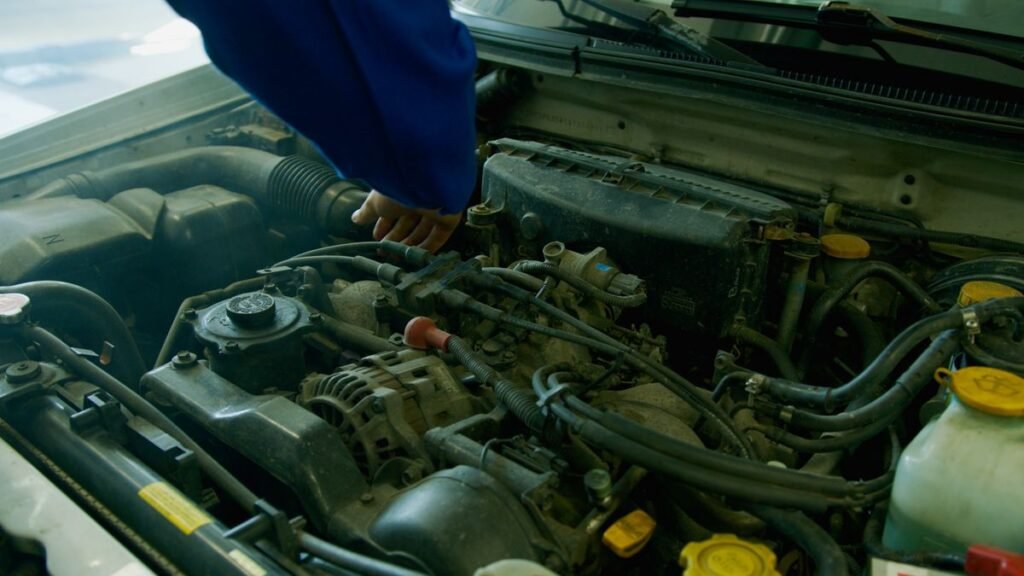
A whining noise when your car accelerates usually comes from a belt driven accessory, a low fluid level, or a worn transmission or differential part. The short answer: if the whine rises and falls with engine speed even when the car is parked, the cause is usually in the engine bay, and if it rises and falls with road speed and changes with gear, the cause is usually in the transmission or drivetrain. That speed test is the first check to do, because it splits the possible causes into two clear groups.
A whine is the sound of a rotating part under friction or starved of fluid. A power steering pump whines when air gets into low fluid, an alternator whines when a bearing wears out, a belt pulley whines when its bearing dries up, and a transmission whines when its fluid is low, old or contaminated. This guide walks you through the speed test, the fluid checks and the warning signs that mean stop and get help.
The speed test: engine speed or road speed
Park safely, apply the handbrake, and rev the engine gently in park or neutral. Your action: if the whine rises and falls with engine speed while the car is still, the cause is almost certainly a belt driven accessory in the engine bay, such as the power steering pump, the alternator, an idler pulley or a belt tensioner. If there is no whine at rest, drive at a steady speed and note whether the whine follows the speedometer, not the rev counter.
Next, test coasting in neutral on a quiet road, only where it is safe and legal to do so. Your action: if the whine fades when you lift off the accelerator and shift to neutral, the transmission is under suspicion, because its parts are no longer under load. If the whine stays and follows road speed in neutral, the differential or a wheel bearing moves up the list.
Also test steering. Your action: turn the steering wheel gently from side to side while parked, and note whether the whine gets louder at full lock. A whine that grows when you steer points strongly to the power steering pump or low power steering fluid, especially if the steering also feels heavy or jerky.
Engine bay whines: what to check first
Check the power steering fluid first on cars with hydraulic steering. Your action: find the reservoir, check the level against the marks with the engine off, and look for leaks around hoses and the pump. Top up only with the fluid type in your handbook, and if the level drops again within days, book a leak repair, because topping up a leaking system only buys a short quiet period.
Next, listen to the belt area with the engine running, from a safe distance, without touching moving parts. Your action: note whether the whine is a steady high pitch that follows revs, or a squeal that comes and goes. A steady whine with a charging warning light or dim lights can point to the alternator, while a whine joined by a worn or cracked belt points to the belt and its pulleys. Do not spray anything on a running belt to test it, because that can hide the fault and create a safety risk.
If your car has electric power steering, there is no power steering fluid to check. Your action: in that case, a steering related whine still needs a workshop check, because it can come from the electric motor or its mounting, and a fluid top up will not fix it.
Transmission and drivetrain whines: what to check first
Check transmission fluid where your car allows a dipstick check, and note colour and smell. Your action: healthy automatic transmission fluid is usually red or pink and clear, while dark brown fluid with a burnt smell points to old or overheated fluid that needs a service. If your car has no dipstick, do not guess the level, and ask a workshop to check it with the correct procedure for your model.
Note the gear pattern. Your action: if the whine appears in one gear only, or changes pitch sharply with each gear change, tell the shop exactly which gear and which speed, because that pattern helps them separate a bearing fault from a gear fault. If the whine is a howl that is loudest on steady cruising or on deceleration, mention the differential, because worn ring and pinion gears often howl under load and quieten when you lift off.
For related drivetrain and noise guides, read our guide on transmission slipping causes and checks if gear changes feel wrong, check power steering pump failure symptoms if steering is heavy or noisy, and read engine knocking causes and risks if the noise is a knock rather than a whine.
When to stop driving
Stop and call for help if a whine is joined by a burning smell, a transmission warning light, a loss of drive, a sudden loss of power steering, or a loud grinding noise. Your action: pull over safely, switch off, and check for fluid leaks under the car before you restart. Driving on with a transmission starved of fluid or a pump that has lost pressure can turn a fluid service into a full replacement.
Frequently asked questions
Why does my car whine only when accelerating
Acceleration loads the engine accessories, the transmission and the differential, so a worn bearing, a low fluid level or a slipping belt shows up under load first. Your action: do the speed test above, because a whine that follows engine speed points to the engine bay, while a whine that follows road speed points to the drivetrain.
Can low power steering fluid cause a whine
Yes, low fluid lets air into the pump, and that air causes a loud whine or groan, especially when turning. Your action: top up with the correct fluid, check for leaks, and book a repair if the level drops again, because a pump run low on fluid for long can fail.
Is a transmission whine serious
It can be. A whine from low or burnt fluid may be fixed by a service if caught early, but a whine from worn bearings or gears needs workshop diagnosis. Your action: check fluid condition where you can, note the gear and speed pattern, and do not keep driving long distances on a whine that is getting louder.
Why does my car whine when I turn the steering wheel
Turning loads the power steering pump, so a low fluid level, air in the system or a worn pump shows up first at full lock. Your action: check the fluid level, listen for a change at full lock, and have the pump and hoses inspected if the whine stays after topping up.
A whining noise when your car accelerates is a load and fluid warning, not background noise. Test whether it follows engine speed or road speed, check power steering and transmission fluid where you can, and act on a whine that grows louder, joins a warning light, or changes how the car steers or shifts. Early fluid and bearing checks are cheap, while a failed transmission or pump is not.