
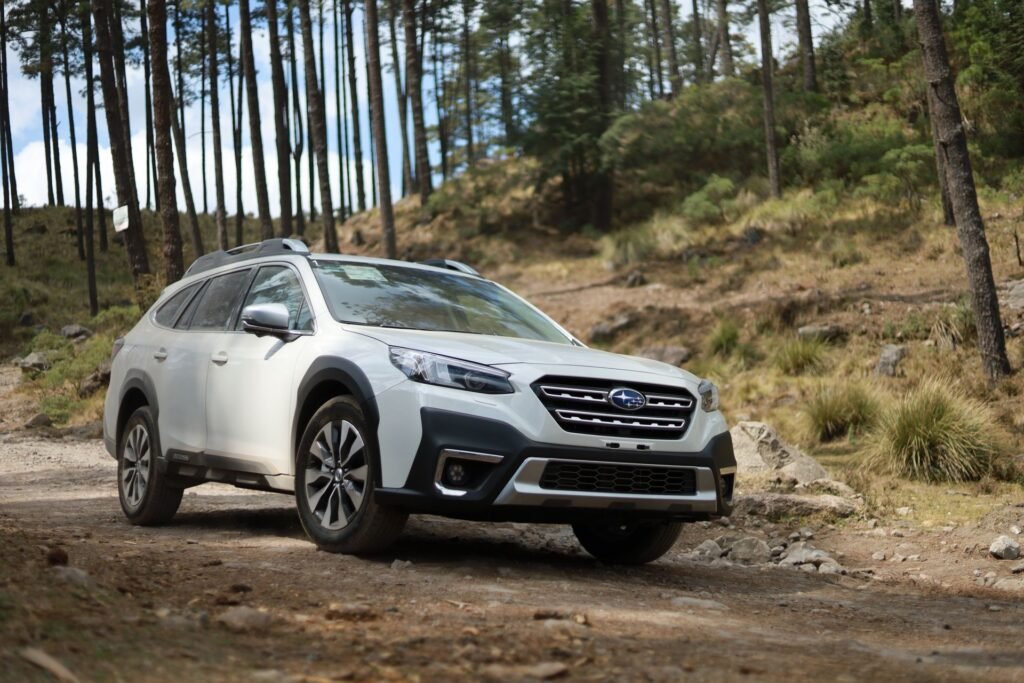
The sixth generation Subaru Outback, sold from the 2020 to the 2025 model year, is the most refined Outback wagon built, with a quiet, spacious cabin, a big 11.6 inch touchscreen, two strong engines, all wheel drive as standard and 8.7 inches of ground clearance. It is also the Outback with the most talked about weakness, a windshield that cracks too easily.
So who does it suit? Families who want wagon space and SUV clearance without SUV bulk. Drivers who face snow, gravel and rough roads. Used buyers who want a modern car with strong safety scores, provided they check the glass, the battery and the screen history carefully. Our Subaru Outback model guide compares every generation side by side.
This page covers the BT from 2020 to 2025: the engines, the gearboxes, the documented recalls and problems, which years to buy used, and what the car costs to run.
Subaru Outback 2020 to 2025 at a glance
| Item | Details |
|---|---|
| Generation and years sold | BT, the sixth generation. Production from July 2019 to 2025, model years 2020 to 2025. |
| Body style | 5 door station wagon. |
| Main engines | 2.5 litre FB25D boxer four with 182 hp. 2.4 litre FA24F turbo boxer four with 260 hp on XT and Wilderness cars. |
| Gearbox | Lineartronic continuously variable transmission with an 8 speed simulated manual mode on every car. |
| Drive | Symmetrical All Wheel Drive as standard on every car. |
| Seats | 5 |
| Ground clearance | 8.7 inches, 9.5 inches on the Wilderness. |
| Fuel economy highlights | 2.5 cars return 26 mpg city and 33 mpg highway in official EPA figures. Turbo cars return 23 mpg city and 30 mpg highway. |
| Safety highlights | 5 star ANCAP rating, Good scores in the main IIHS crash tests. |
| Towing | 2,700 pounds with the 2.5 engine, 3,500 pounds with the turbo engine. |
Engines and specs that matter
The 2.5 litre FB25D boxer four is the one to get if you are buying for reliability and balance. It makes 182 hp and 176 pound feet of torque, it pairs with a Lineartronic continuously variable transmission, and it offers Symmetrical All Wheel Drive as standard. It is a heavily revised engine with direct injection, and it fixed the oil consumption trouble of the earlier FB25 cars. For most buyers, a 2.5 Outback is the default right answer.
The 2.4 litre FA24F turbo four is the smart buy for pace, towing and motorway confidence. It makes 260 hp and 277 pound feet of torque, and it gives the Outback the strongest performance in its history. Buy the turbo if you tow, drive fully loaded, or climb steep grades often, because the extra torque makes a loaded wagon feel effortless and it raises the towing limit to 3,500 pounds. The turbo needs the closest oil checks, so ask for the full oil history before you buy.
The gearbox is the same across the range, a Lineartronic continuously variable transmission with an 8 speed simulated manual mode, and there is no manual option. It is a much better unit than the early Outback CVTs, with better cooling and revised software, but it is still the part that costs the most to fix if it is neglected. Test it cold and warm, and walk away from shudder, hesitation, slipping, or a delay when you select drive or reverse. Our guide to transmission slipping explains what shudder and hesitation are telling you on any automatic or CVT.
The 2023 refresh brought a new front fascia, wireless Apple CarPlay and Android Auto, and a third EyeSight camera on the Touring trim. The Wilderness joined the range as a 2022 model, with 9.5 inches of ground clearance, all terrain tyres and the turbo engine only. Which engine suits you? Want the safest modern buy, take a 2.5. Want the best pace, the 2.4 turbo is the answer. Want the toughest Outback, take a 2023 or 2024 Wilderness.
Common problems of this generation
The drivetrains on this generation are the healthiest part of the car. The problems live in the glass and the electronics, and every one of them is checkable before you buy.
Windshields that crack with little or no impact
The ceramic deicer element in the windshield creates stress fractures, often with no impact and sometimes from temperature changes overnight. The 2021 car had 97 visibility complaints with an average failure at only 821 miles. Subaru issued a warranty extension covering one windshield replacement on affected cars, so find out whether it has been used. A replacement costs 900 to 1,400 dollars. Inspect the glass closely at the deicer strip before you buy. Our guide to car windshield repair cost shows what a chip or a crack costs to fix and when a full replacement is the right call.
Batteries that drain and screens that freeze
The 12 volt battery dies young on many cars in this generation, sometimes after the car sits for only a few days, and a flat battery can shut down EyeSight and stiffen the power steering. A settled class action covered the 2020 model year, and a new class action filed in May 2026 names the 2021 and 2022 cars. The 11.6 inch Starlink touchscreen freezes and black screens often enough that Subaru extended head unit coverage to 8 years or 150,000 miles on 2020 to 2022 cars in January 2025. Test every screen and the battery after the car has sat.
CVT drive chain and other recalls
The 2020 model year carries six recalls, more than any other year in this generation, including a fuel pump recall and a CVT drive chain recall from July 2022 that can cause a loss of drive. Turbo cars carry the drive chain risk, and Subaru extended the 2020 turbo CVT warranty to 10 years or 100,000 miles. Other recalls cover an airbag sensor on 2020 to 2022 cars, a CVT inhibitor switch on 2021 to 2023 cars, and loose driveshaft bolts on 2023 cars. Run the VIN and confirm every recall is closed before you buy.
Early Wilderness and turbo checks
The early 2022 Wilderness cars showed oil pan leaks below 10,000 miles and cam phaser issues, so a 2023 or 2024 Wilderness is the sweet spot. On any turbo car, listen for cam phaser rattle on a cold start and check the oil level yourself, because the turbo needs strict 0W 20 oil and 6,000 mile change intervals. Walk away from any turbo car with a low oil level or missing service records.
Should you buy this generation
The 2023 to 2025 cars are the buys to aim for. They are past the windshield and battery trouble, and the 2024 car is the best year in the generation with zero recalls and only 69 owner complaints. The Wilderness is at its best from 2023 onward.
Who should skip it? If you cannot live with a big touchscreen controlling the heating, this car will frustrate you every day. If your budget only stretches to a 2020 car, the first year problems demand the full VIN and glass checks. If you tow heavy loads, the 2.5 tows only 2,700 pounds, so buy a turbo car instead.
The good buys are a 2023 or newer 2.5 for value, a 2024 car for the cleanest record, and a 2023 or 2024 Wilderness for off road use. A 2020 or 2021 car can still be a fine buy at the right price, but only with proof that every recall is closed.
Whatever the year, run through this checklist before you hand over money:
- Run the VIN through the Subaru recall checker and confirm every recall is closed, especially the CVT drive chain recall on turbo cars.
- Inspect the windshield closely for cracks at the deicer strip and ask whether the free replacement has been used.
- Test the 11.6 inch screen through every menu and check the reversing camera, because a slow screen predicts freezes.
- Test the battery after the car has sat, and ask about battery and parasitic drain history.
- Test the CVT cold and warm, and walk away from shudder, slipping or hesitation.
- On a turbo car, check the oil level yourself and listen for cam phaser rattle on a cold start.
Running and repair costs
The Outback is a mid range wagon to run, with parts easy to find and every independent garage familiar with the boxer engines. The common jobs are cheap, but the windshield and the CVT are the two bills that can hurt. Typical US prices for the common jobs look like this:
| Job | Typical cost in US dollars |
|---|---|
| Front brake pads, fitted | 150 to 300 |
| Four tyres, fitted | 500 to 900 |
| 12 volt battery, fitted | 150 to 250 |
| Major service at an independent garage | 300 to 600 |
| Windshield replacement | 900 to 1,400 |
| CVT fluid change, where the shop recommends it | Around 400 to 500 |
Used prices as a rough guide: 2020 cars run about 17,000 to 23,000 dollars and 2023 cars about 22,000 to 33,000 dollars, with prices varying by condition, mileage and region. The expensive bills come from a neglected CVT, repeated windshields, and battery drain diagnosis.
Questions and answers
Is the 2020 to 2025 Subaru Outback reliable?
Yes, with caveats. The engines, the gearboxes and the chassis have strong records, and the 2023 to 2025 cars are among the most dependable wagons on sale. The weak points are specific and avoidable: windshields that crack with little impact, batteries that drain early, and the 11.6 inch screen that freezes. Buy a 2023 or newer car with the recalls closed.
Which is the best year to buy used?
The 2024 car is the cleanest buy, with zero recalls and only 69 owner complaints, the lowest in the generation. The 2023 and 2025 cars are close behind, with the refreshed fascia, wireless phone pairing and the same sorted electronics. A 2022 car is fine with checks, but a 2020 car needs the full recall and glass checks and a price that reflects the risk.
What is the Outback windshield problem?
It is a pattern of windshields cracking with little or no impact, caused by the ceramic deicer element in the glass creating stress fractures. The 2021 car had 97 visibility complaints with an average failure at only 821 miles. Subaru issued a warranty extension covering one free replacement on affected 2020 to 2022 cars, so check whether it has been used.
Should I buy the 2.5 or the 2.4 turbo?
Buy the 2.5 if you want the lowest running costs with strong wagon practicality, because 182 hp is plenty for most drivers and it returns 26 mpg city and 33 mpg highway. Buy the 2.4 turbo if you tow, drive fully loaded, or climb steep grades often, because the extra torque makes the wagon feel effortless and it tows 3,500 pounds, provided the oil history is clean.