
Squeaky sounds when driving usually point to a worn brake pad, a dry or worn belt, or a worn suspension bushing. Note whether the squeak happens when you brake, when you turn, when you go over a bump, or only on a cold start. People describe it in different ways, car squeaks when driving, squeaky noise car, and squeak when turning, but the check is the same. Use the guide below to find the cause.
Start With When and Where the Squeak Happens
Drive slowly in a quiet street with the windows down and the radio off. Brake gently, turn left and then right, go over a small bump, and speed up slowly from a stop. Ask whether the squeak changes when you press the brake pedal or turn the wheel, whether it comes from the front or the rear, and whether it happens only when the car is cold. If you want a wider listen first, read our guide to car sounds so you can tell a squeak apart from a click, a grind, and a rattle.
Squeak Location Versus Likely Cause
Use this table as a starting point. A mechanic still needs to confirm the part.
| Where You Hear It | When It Happens | Likely Cause | Your Next Action |
|---|---|---|---|
| Front wheels | When braking | Worn brake pads | Book a brake check soon |
| Under the hood | On a cold start or when speeding up | Serpentine belt or a belt pulley | Check the belt for cracks and shine |
| Front or rear corners | Over bumps or on uneven roads | Worn suspension bushings | Ask for a suspension check |
| Near the steering wheel | When turning at low speed | Dry steering parts or low power steering fluid | Check the fluid level |
| Doors or body panels | Over bumps or when opening a door | Dry door hinges or dry rubber seals | Clean and lubricate the hinge and seal |
Brakes: The Most Common Cause of a Squeak When Driving
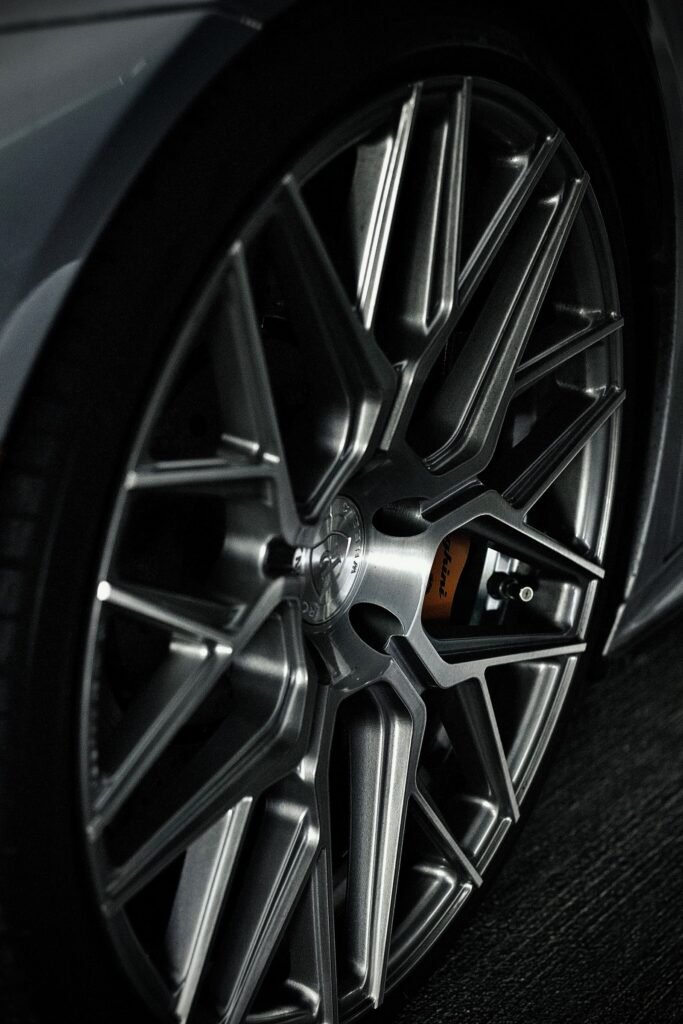
Brake pads have a small metal wear indicator that touches the rotor when the pad gets thin. That touch makes a high pitched squeak, and it often stops for a moment when you press the brake pedal firmly. Check whether the squeak comes from one wheel or both sides, and check whether a warning light is on. Look through the wheel spokes if you can see the pad. A very thin pad, a scored rotor, or a pad that looks uneven all mean the same action. Book a brake inspection, and read our guide on why brakes squeak to compare your sound first. If it stays after the brakes warm up, book a check at once.
Belts: A Squeak From Under the Hood
A serpentine belt drives the alternator, the power steering pump, the water pump, and the air conditioning compressor in many cars. When the belt gets old, glazed, cracked, or loose, it slips on the pulleys and makes a sharp squeak or chirp. The sound often appears on a cold start, when you turn the air conditioning on, or when you speed up. Open the hood with the engine off and look at the belt in good light. Cracks across the ribs, missing chunks, a shiny glazed surface, or frayed edges all mean the belt is near the end of its life. Most serpentine belts last 60,000 to 100,000 miles, so check your service record. Do not spray belt dressing on a worn belt and call the job done, because it does not fix cracks, and a belt that snaps can stop the alternator and the cooling system. Replace the belt, and ask the mechanic to check the tensioner and pulleys too.
Suspension: A Squeak Over Bumps and Uneven Roads
Suspension bushings are rubber cushions that sit between metal parts, and they absorb vibration and let the suspension move quietly. When the rubber dries, cracks, or splits, you hear a squeak or a creak over bumps, on speed humps, or when you turn into a driveway. Push down firmly on each corner of the car when it is parked and listen. A squeak during that bounce test points to that corner. Also look for uneven tyre wear, a car that leans more on one side, or a steering wheel that feels loose. Do not ignore it for months, because worn bushings can speed up tyre wear and make handling feel vague. Ask the shop to inspect the control arm bushings, the sway bar bushings, and the ball joints, and to name the worn part before they quote a price.
Steering, Doors, and Body Squeaks
A squeak when you turn at low speed can come from the steering system or from the suspension parts that move with the turn. Check the power steering fluid level if your car uses fluid, and top it up only with the fluid type listed in your owner manual. A leak needs a repair, not just a top up. Door squeaks are easier to fix. Open each door slowly, clean dirt from the hinge and the rubber seal, then apply a small amount of silicone lubricant to the hinge pin and to the seal. If the squeak is gone, you have found it.
Safe Checks You Can Do Yourself in 15 Minutes
Work only with the engine off, and keep your hands clear of the fan and the belt. Walk around the car and look at the tyres for uneven wear and low pressure. Open the hood and look at the serpentine belt for cracks, shine, and fraying. Check the power steering fluid level if your car has a reservoir, and look for a wet patch under the car that could point to a leak. Push down on each corner and listen for a squeak, then open and close each door and the boot and listen at the hinges and latches. Write down what you find. If you find a cracked belt, a fluid leak, a very thin brake pad, or a loose wheel nut, do not drive until a mechanic has seen it. For anything else, drive carefully to a nearby shop.
What It Costs to Fix a Squeak
Prices change with the car, the part, and the shop, so ask for a written quote for your exact car before you approve work. The ranges below come from reputable cost guides checked during this run, and they cover parts and labour for common cars in the United States. A serpentine belt replacement typically costs 70 dollars to 250 dollars in total, with the belt itself at 25 dollars to 75 dollars and labour at 50 dollars to 200 dollars. A brake pad replacement typically costs 150 dollars to 400 dollars per axle. Front suspension bushings typically cost 175 dollars to 233 dollars, and rear suspension bushings typically cost 170 dollars to 230 dollars. A wheel alignment after suspension work may add 75 dollars to 125 dollars. Use those ranges to judge a quote, and ask whether it covers one side or both sides.
When to See a Mechanic Right Away
Most squeaks are a warning, not an emergency, but some signs mean you should stop driving and call a mechanic the same day. See a mechanic right away if the squeak comes with a grinding noise, a burning smell, smoke, a brake warning light, or a steering wheel that pulls hard to one side. See a mechanic right away too if the brake pedal feels soft, sinks to the floor, or vibrates strongly, or if the car will not hold a straight line. If the squeak is steady, the brakes feel normal, the steering feels normal, and there is no warning light, you can usually drive to a nearby shop at low speed. If you are unsure, call for a tow or a mobile mechanic.
How to Talk to a Mechanic So the Squeak Gets Fixed First Time
Give the mechanic your written note from the road test, with the corner of the car, the speed, and the exact moment the sound appears. Ask them to road test the car with you in the passenger seat if the shop allows it, because you can point to the sound as it happens. Ask for the diagnosis in plain words, ask which part is worn and how they know, and ask to see the old part after the repair. If the shop suggests several parts at once, ask which part is the cause and which parts are preventive, and approve the cause first. After the repair, drive on the same road where you heard the squeak before, and check that it is gone. For other noises that sound close to a squeak, compare your sound with our guide to car clicking noises so you can describe the difference clearly when you book the visit.
Frequently Asked Questions
Why does my car squeak when driving at low speed
Low speed squeaks often come from the brakes, a dry belt, or a suspension bushing. Note whether the sound changes when you brake or turn, then book a brake check first if it changes with the pedal.
Is it safe to drive with a squeaky noise in my car
You can often drive carefully to a nearby shop if the brakes and steering feel normal and no warning light is on. Stop driving and call a mechanic the same day if you hear grinding, smell burning, see smoke, or feel the brake pedal sink or the steering pull hard to one side.
How much does it cost to fix a squeaky car
The cost depends on the cause, so get a written quote for your exact car. As a guide, a serpentine belt replacement typically costs 70 dollars to 250 dollars, brake pads typically cost 150 dollars to 400 dollars per axle, and suspension bushings typically cost 170 dollars to 233 dollars.
Can I fix a car squeak myself
You can fix a dry door hinge or a dry rubber seal yourself with cleaning and a small amount of silicone lubricant. Leave brake pads, belts, and suspension bushings to a mechanic because those parts affect braking, steering, and control.