
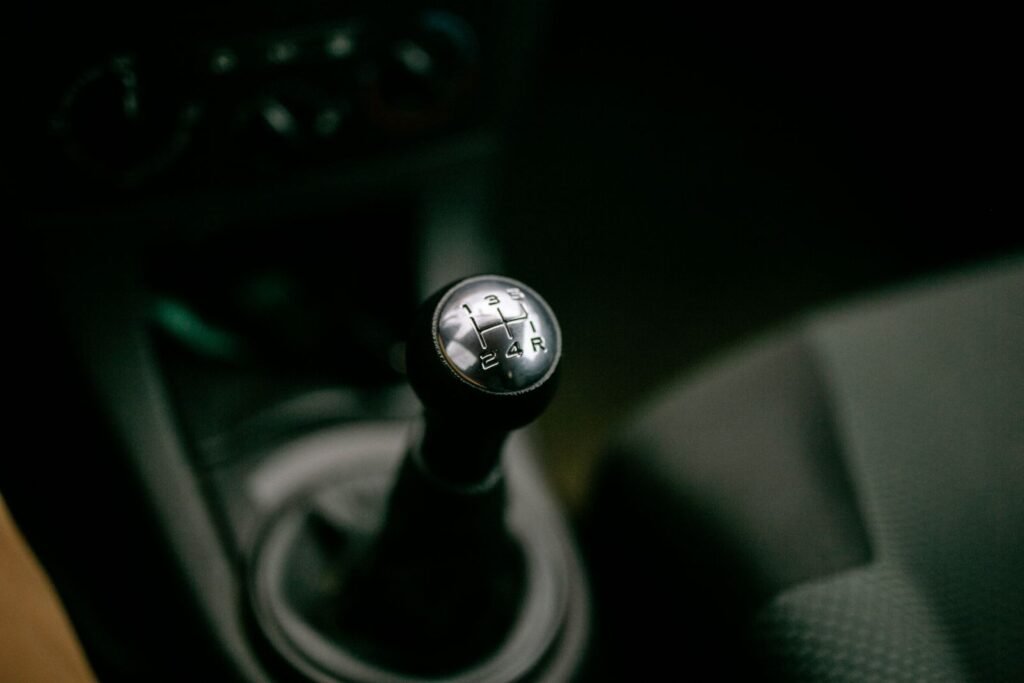
To drive a manual car, press the clutch pedal to the floor with your left foot, move the gear stick into first gear, and slowly lift the clutch until you feel the bite point, the spot where the engine starts to pull the car forward. Add a little gas, keep lifting the clutch smoothly, and the car will move off. That move is the hardest part of driving a stick shift, and once you can do it smoothly, the rest follows quickly.
A manual transmission, also called a stick shift, asks you to change gears yourself with a clutch pedal and a gear stick. It is a rare skill now. In 2023, only 1.7 percent of new cars sold in the United States had a manual transmission, according to Edmunds. That rarity is also the reward: full control over the car. This guide explains how to drive a manual car in plain steps, from the pedals to hill starts, so you can learn how to drive a manual gear car in an empty lot and build up to real roads.
Know the Three Pedals and the Gear Stick
A manual car has three pedals, and your feet each have one job. According to AAA, the pedal on the left is the clutch, and you control it with your left foot. The center pedal is the brake and the right pedal is the gas, and you control both of those with your right foot. Pressing the clutch breaks the connection between the engine and the wheels, so press it fully before you change gear or stop in gear.
The gear stick sits between the driver and passenger seats. Most cars use an H pattern, with first gear at the upper left, second below it, third at the upper middle, fourth below it, and fifth or sixth to the right, plus reverse at the far edge. Neutral sits in the middle of the H, where the stick moves freely side to side. If you are unsure which pedal does what, read our guide on which pedal is the brake before your first lesson, so your feet know their jobs before the car moves.
Get Comfortable Before You Start the Engine
Pick a flat, empty parking lot for your first lesson, and bring a patient teacher who drives a manual well. Sit so you can press the clutch fully to the floor without stretching. With the engine off, press the clutch and move the stick through each gear until you can find them without looking.
Start the Car and Find the Bite Point
To start the car, press the clutch to the floor with your left foot and the brake with your right foot, check that the gear stick is in neutral, and turn the key or press the start button. Most modern manual cars will not start unless the clutch is pressed, according to Edmunds, so make this a habit from day one. Once the engine is running, note the idle speed on the rev counter.
Now find the bite point, the spot where the clutch starts to connect the engine to the wheels. With the parking brake still on, press the clutch fully, select first gear, and lift the clutch very slowly. You will feel the car tug forward slightly, hear the engine note drop, and see the rev needle dip a little. That is the bite point. Press the clutch back down and repeat five or six times until you can find it by feel.
Move Off in First Gear, Step by Step
When you are ready to move, press the clutch fully, select first gear, and release the parking brake. Move your right foot from the brake to the gas and press gently until the revs rise to about 1,500 to 2,000 rpm, according to Edmunds. Now lift the clutch slowly to the bite point while you add a little more gas, and the car will start to roll. Keep lifting the clutch smoothly as you add gas, until the pedal is fully up.
Go slowly on purpose. The most common beginner error is lifting the clutch too fast, which stalls the engine, or pressing the gas too hard, which makes the car lurch. If the car stalls, do not panic. Press the brake and the clutch, put the stick back in neutral, start the engine again, and try once more. Stalling is normal when you learn.
Shift Up, Slow Down and Stop
First gear gets you moving, but it runs out quickly. When the revs climb to about 3,000 rpm, according to AAA, it is time to shift up. Lift your right foot off the gas, press the clutch fully to the floor, move the stick into second gear, and then release the clutch smoothly while you press the gas again. Do these moves as one flowing action: gas off, clutch in, shift, clutch out, gas on. Repeat the same pattern for higher gears as your speed rises. Listen to the engine too: a rising, strained sound means shift up.
To slow down, lift off the gas and press the brake with your right foot, just as you would in an automatic car. As your speed falls and the revs drop toward idle, press the clutch fully before the engine starts to shudder, and shift down to a lower gear that suits your new speed. To stop fully, press the brake and the clutch together, bring the car to a halt, then shift to neutral and release the clutch while you keep your foot on the brake. Apply the parking brake before you switch off, and leave the car in gear.
Hill Starts Without Rolling Back
A hill start worries beginners most, because the car can roll backward, so use the handbrake method. Stop on the hill with your foot on the brake, press the clutch fully, select first gear, and pull the handbrake on firmly. Move your right foot to the gas and raise the revs to about 1,500 to 2,000 rpm, then lift the clutch slowly to the bite point until you feel the car pull against the handbrake.
When you feel that pull, release the handbrake smoothly while you add a little more gas and keep lifting the clutch. The car will move forward up the hill with no rollback. Many newer cars have hill hold assist, which holds the brakes briefly after you release the foot brake, according to Edmunds. If you stall on a hill, press the brake, pull the handbrake on, restart the engine, and try again. Never hold the car on a hill by slipping the clutch, because that overheats the clutch and wears it fast.
Reverse With Confidence
Reversing uses the same clutch control as first gear, only slower. Press the clutch fully, select reverse, and check all around the car and in the mirrors before you move. Lift the clutch slowly to the bite point with no gas at all, or only a touch of gas, and let the car creep backward at walking pace. Keep your left foot ready on the clutch: if the car moves too fast, press the clutch in to cut the power and use the brake to stop. Never select reverse while the car is still rolling forward, so bring it to a full stop first.
Common Beginner Mistakes That Wear the Clutch
The clutch is a wear item, and bad habits shorten its life. The cost of learning that lesson late is real: RepairPal puts the average cost of a clutch replacement at 1,630 dollars to 2,047 dollars. Protect it with three simple rules. First, take your left foot fully off the clutch pedal when you are not changing gear. Resting your foot on the pedal, called riding the clutch, keeps it partly engaged and wears it out. Second, do not hold the car still on a hill with the clutch. Use the brake or the handbrake instead. Third, take your hand off the gear stick between shifts.
Watch for the warning signs of a worn clutch. If the revs rise but the car does not speed up, if you smell burning when you pull away, or if the bite point moves higher and higher up the pedal travel, the clutch is slipping and needs attention. Read our guide on transmission slipping to compare the symptoms, and book a mechanic for an inspection before the problem strands you.
Practice Plan: From Empty Lot to Real Roads
Do not rush onto busy roads. In your first session, practice the bite point and moving off in first gear in an empty lot. In your second session, add shifting up to third gear and stopping smoothly. In your third session, practice hill starts on a quiet slope and reversing into a bay. Only when you can start, shift, stop and reverse without stalling most of the time should you try a quiet street, then a busier road.
Before each practice session, check the basics: tires with enough air and good tread, working brake lights, and enough fuel. If you ever need to deal with a flat tire during practice, read our guide on how to change a tire so you know the steps before you need them. Practice a little each day rather than in one long session.
When to See a Mechanic
Some problems are not learning curve problems, and a mechanic should look at them. Book a visit at once if you smell burning from the clutch area, if the car grinds in every gear even with the clutch fully pressed, if the clutch pedal feels soft or sticks to the floor, or if the car will not move in gear at all.
Frequently asked questions
How long does it take to learn to drive a manual car?
Most learners can move off, shift and stop in an empty lot within a few practice sessions, and feel comfortable in light traffic within a few weeks of regular practice. Smooth driving on hills and in heavy traffic usually takes a couple of months.
Why does my manual car stall when I start?
A stall usually means the clutch came up too fast, or too little gas was added at the bite point. Lift the clutch more slowly, hold it at the bite point for a second, and keep the revs near 1,500 to 2,000 rpm, according to Edmunds. If it still stalls, ask a mechanic to check the clutch and the idle speed.
Is it bad to hold the clutch down at a red light?
Yes, holding the clutch down for a long time at a light wears the release bearing and tires your leg. Shift to neutral, release the clutch, and keep your foot on the brake instead. When the light changes, press the clutch, select first gear, and move off as normal.
Can I learn how to drive manual on my own?
You can learn the basics alone in a private lot, but a patient teacher who drives a manual well will help you far faster. Take a few lessons with an experienced driver, and consider a professional lesson for hill starts and busy traffic. Never practice on public roads without a valid license and, where your area requires it, a licensed driver beside you.