
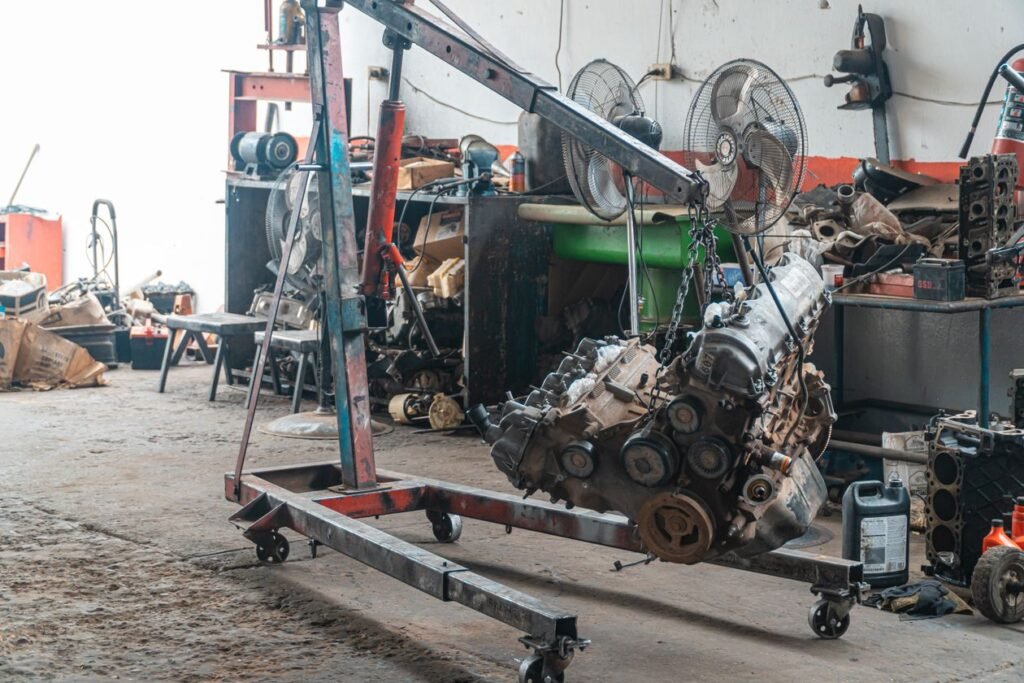
Your mechanic just said the engine is dead, and the quote has more zeros than you expected. This guide will show you what an engine swap really costs, which engine choice fits your budget, and when to walk away instead. Is a swap the smart move, or is your car worth more as it stands?
Most engine swaps cost 2,000 to 10,000 dollars or more, with the final bill depending on the engine you choose, the car you drive, and who does the work. For an everyday car with a used or rebuilt engine, a realistic budget is 2,500 to 6,000 dollars. Luxury and performance cars climb well past 10,000 dollars. That range is wide enough to hurt, so the sections below break it into parts you can price one by one.
What an Engine Swap Means, and the Four Engine Choices
An engine swap means removing your old engine and fitting a different one in its place. It is one of the biggest jobs a car can face, and the engine itself is the largest single cost. The four choices below cover almost every swap, and the right one depends on how long you plan to keep the car and how much risk you accept.
| Engine type | What it is | Engine only, typical price | Warranty, typical |
|---|---|---|---|
| Used or salvage | Pulled from a donor car, tested, not rebuilt | 500 to 3,000 dollars | 30 to 90 days, parts only |
| Rebuilt | Your engine or a donor engine taken apart, cleaned, and refitted with new wear parts | 1,500 to 4,500 dollars | About 12 months |
| Remanufactured | Rebuilt to factory specs with new parts and machining | 2,000 to 5,000 dollars | 1 to 3 years |
| New crate or OEM | A brand new engine from the maker, zero miles | 3,000 to 14,000 dollars or more | About 3 years |
A used engine is the cheapest way back on the road, but it carries the most risk, because its true mileage and history are hard to prove. A remanufactured engine costs more, but it arrives with a real warranty and a known standard, which is why it is the best value for most drivers who plan to keep the car. A new crate engine makes sense mainly on a late model car you plan to keep for years. Now that you know the engine choices, the next table shows what the whole job costs by car type.
Engine Swap Cost by Car Type
The same engine job can cost twice as much on one car as on another. Bigger engines, tighter engine bays, and luxury parts all push the bill up. Use this table as a planning guide for a fitted job, parts plus labor, with a used or remanufactured engine.
| Car type | Engine | Total fitted, typical range |
|---|---|---|
| Compact sedan, Civic or Corolla | Four cylinder | 2,500 to 4,500 dollars |
| Midsize sedan, Camry or Accord | Four cylinder or V6 | 3,000 to 5,500 dollars |
| Full size truck, F 150 or Silverado | V6 or V8 | 4,000 to 7,500 dollars |
| SUV, Explorer or Highlander | V6 | 3,500 to 6,500 dollars |
| Luxury sedan, 5 Series or E Class | Turbo four cylinder or inline six | 6,000 to 12,000 dollars |
| Luxury SUV, X5, GLE or Cayenne | V6 or V8 turbo | 8,000 to 15,000 dollars or more |
These are national planning ranges for 2026, and your quote will move with local labor rates and the exact engine your car needs. A dealer quote will sit at the top of each range, while an independent shop usually lands lower. If your quote falls far outside the range for your car type, ask the shop to explain why before you approve it. Next, we look at the labor itself.
Labor Costs and How Long the Job Takes
Labor is the second largest cost in a swap, after the engine itself. Professional labor for an engine swap typically runs 1,000 to 4,000 dollars, depending on the car and the shop. At an independent shop, labor often lands at 1,500 to 3,500 dollars, while a dealer often charges 2,500 to 5,000 dollars for the same job.
The job itself often takes 10 to 25 hours, with simple four cylinder cars at the low end and trucks, all wheel drive cars, and luxury models at the high end. Shop labor rates vary widely: a 2026 AAA labor rate guide reports that almost half of shops charge 120 to 159 dollars per hour, with rates nationwide ranging from below 100 dollars to above 200 dollars. Ask the shop how many hours it has booked for your car, and whether the quote is fixed or open ended, because an open ended labor quote can grow if rusted bolts or broken parts slow the work. Next, we cover the extras that catch many drivers by surprise.
Extra Costs People Forget
The engine and the labor are not the whole bill. A swap always needs fresh fluids, and it often needs new gaskets, belts, hoses, and engine mounts, because the old ones are worn or they break during removal. These extras can add 500 to 1,500 dollars, so ask whether your quote includes them or lists them separately.
Other extras to check are freight for the replacement engine, disposal of the old engine, a new clutch on a manual car while the engine is out, and a cooling system flush. If your car has a cooling problem as well, read our guide on car engine cooling system problems before you approve the swap, because a weak radiator or water pump can damage a fresh engine. Get every extra in writing, with the part, the labor, and the diagnostic fee listed separately, so a low headline quote cannot grow later. Next, we work through a real example.
A Real Example: A 2020 Honda Civic
A 2020 Honda Civic with a 1.5 liter turbo engine shows how the numbers stack up. A remanufactured engine for this car typically costs 2,200 to 3,000 dollars, and the total with labor typically lands at 3,800 to 5,200 dollars at an independent shop. That puts the Civic near the low end of the compact sedan range in the table above, which is what you should expect for a common four cylinder car with good parts supply.
Compare that with a luxury car and the gap becomes clear. A new crate engine for a 2022 Ford F 150 with the 5.0 liter V8 runs around 7,000 to 8,500 dollars for the engine alone, before labor. The lesson is simple: price the exact engine for your exact car before you decide anything, because a national average hides the spread between a common sedan and a rare or luxury model. Next, we judge whether the swap is worth it at all.
When a Swap Is Worth the Money
A swap is worth it when the rest of the car is sound and you plan to keep it. Use the 50 percent rule as a starting point: if the swap costs more than about half of what the car is worth, think hard before you approve it. A car worth 12,000 dollars with a 4,000 dollar swap is a different decision from a car worth 4,000 dollars with the same 4,000 dollar bill.
Look past the price too. Check the transmission, the suspension, the brakes, the body, and the rust, because a fresh engine in a car that needs a transmission next month is money lost. If the transmission is healthy, read our guide on transmission replacement cost to see what that job would cost if it failed later. A remanufactured engine with a 1 to 3 year warranty is usually the best choice when you plan to keep the car for years, because the warranty protects the largest part of the bill. If the car is otherwise solid and the numbers pass the 50 percent test, a swap can give you years of driving for less than a replacement car. Next, we cover the cases where walking away wins.
When to Walk Away
Walk away when the car has more than one major fault. Severe rust, a slipping transmission, worn suspension, and a dead engine together mean the swap fixes only one problem on a car that needs several. A high mileage car with oil leaks, a noisy engine, and a tired gearbox is a poor home for a fresh engine, and the money is better put toward a replacement car.
Listen to the engine story too. If the old engine failed from overheating, a thrown rod, or a seized bearing, ask the shop what caused it and whether that cause is fixed, because the same fault can kill the new engine. If you want the warning signs that lead to engine failure, read our guide on engine knocking. Selling or scrapping the car and buying a running one often costs less than a swap on a car with several worn systems. The choice is yours, but make it with the full bill in front of you, not just the engine price.
What to Ask Before You Approve the Job
Ask these questions before you sign anything, and get the answers in writing. First, what engine is it, used, rebuilt, remanufactured, or new, and what is its mileage and source? Second, what warranty covers the engine and the labor, and for how long? Third, does the quote include fluids, gaskets, belts, hoses, mounts, freight, and disposal, or are those extra?
Fourth, how many labor hours are booked, and is the quote fixed? Fifth, is there a core charge for the old engine, and is it refunded when you return it? Sixth, will the shop check the cooling system, the fuel system, and the mounts while the engine is out? A shop that answers clearly and in writing is a shop you can trust with a job this size. A shop that will not put it in writing is a warning sign. The final section answers the questions drivers ask most often.
Questions and Answers
How much does an engine swap cost on average?
Most engine swaps cost 2,000 to 10,000 dollars or more. For an everyday car with a used or rebuilt engine, a realistic budget is 2,500 to 6,000 dollars. A compact sedan typically costs 2,500 to 4,500 dollars fitted, a midsize sedan 3,000 to 5,500 dollars, a full size truck 4,000 to 7,500 dollars, and a luxury SUV 8,000 to 15,000 dollars or more, with final costs varying by car and labor rates.
Is it cheaper to rebuild an engine or swap it?
A used engine swap is usually the cheapest option, at 500 to 3,000 dollars for the engine alone, while a rebuilt engine typically costs 1,500 to 4,500 dollars and a remanufactured engine 2,000 to 5,000 dollars. Rebuilding your own engine can cost about the same as a swap once machining and labor are counted, so the better choice depends on the condition of your engine block and how long you plan to keep the car.
How long does an engine swap take?
An engine swap often takes 10 to 25 hours of shop time, with simple four cylinder cars at the low end and trucks, all wheel drive cars, and luxury models at the high end. Most shops need the car for 2 to 5 working days once the replacement engine has arrived, longer if parts are delayed or rusted bolts slow the removal.
Is an engine swap worth it on an old car?
It depends on the rest of the car. Use the 50 percent rule: if the swap costs more than about half of what the car is worth, think hard before you approve it. A swap is usually worth it when the transmission, suspension, brakes, and body are sound and you plan to keep the car for years. Walk away when the car has severe rust, a failing transmission, or several other worn systems.