
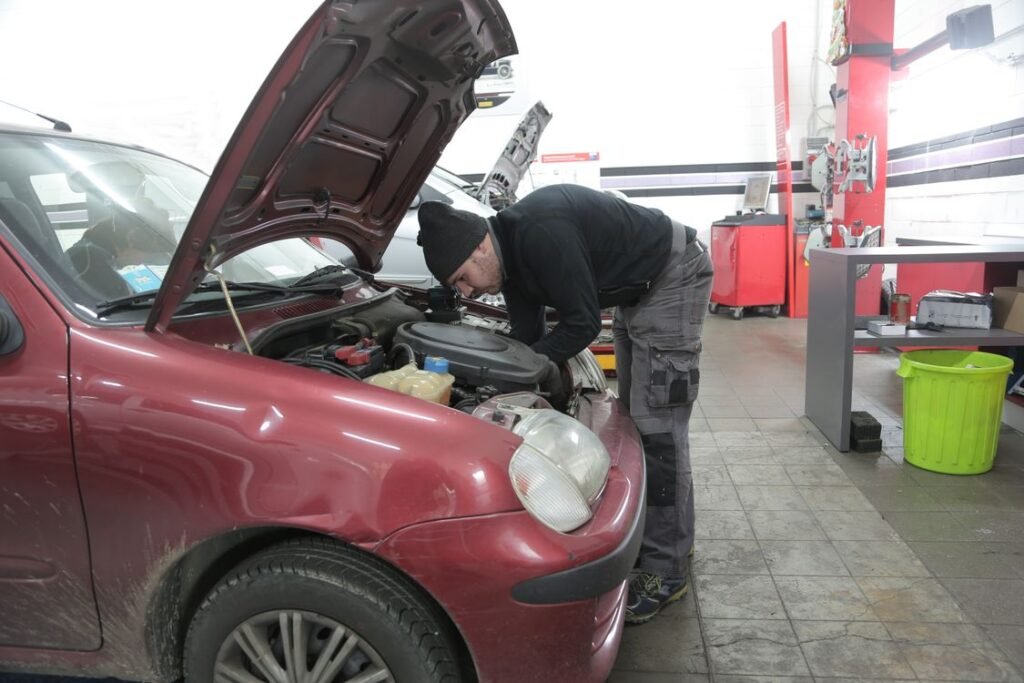
Quick answer: Choose a car mechanic who explains the work in plain language, gives a written estimate before work starts, shows proof of training, and stands behind the repair with a clear warranty. Start with a small job first, watch how the shop communicates, and keep the shop that treats your questions with respect.
Start Before You Need a Repair
The best time to find a mechanic is when your car is running well. When you are broken down on the side of the road, you will accept the first shop you find, and that pressure works against you. Use a calm week to ask friends, family, and coworkers who they trust, especially people who drive a car similar to yours. A recommendation from a driver with the same kind of car is worth more than a polished advertisement, because that shop has already handled the systems your car actually uses. Make a short list of two or three shops, then visit each one for a routine job such as an oil change or a tire check. A small job is a low risk trial. It shows you how the shop books appointments, how long the work takes, and whether anyone calls you before doing extra work. If a shop fails that small test, you have learned the lesson cheaply, and you can move on before a large repair is at stake.
Check Training and Experience in a Practical Way
Ask what training the technicians have and whether the shop works regularly on your make of car. Certification matters, but it is only one part of the picture. A shop that holds current certification from a recognized automotive service body shows that its technicians have passed formal tests and keep their skills current. Experience with your brand matters just as much, because modern cars use different diagnostic tools, software, and repair procedures from one maker to another. Ask directly how often the shop works on cars like yours and what diagnostic equipment it uses. A confident answer is specific. A vague answer that avoids the question is a warning sign. You do not need to understand every technical detail. You need to hear a clear explanation that makes sense, and you need to feel that the person speaking is not trying to rush you past the question.
Read Reviews the Right Way
Online reviews help, but only when you read them with care. Look for patterns across many reviews, not one angry review or one glowing review. A shop that repeatedly earns praise for clear communication, fair estimates, and work that stays fixed is showing a real pattern. A shop that repeatedly draws complaints about surprise charges, repeat visits for the same fault, or pressure to approve work on the spot is also showing a pattern. Check more than one review source, and check whether the shop replies to complaints in a calm and helpful way. A shop that answers a complaint with a clear offer to look at the car again is acting very differently from a shop that argues in public or ignores the complaint completely. Use reviews to narrow your list, then let your own trial visit decide the final choice.
Demand a Written Estimate Before Work Starts
Never approve a repair based on a verbal guess. Ask for a written estimate that breaks out parts, labor, and any extra charges, and ask which items are urgent and which items can wait. A good shop will separate safety work from maintenance work and from work that can be planned for a later visit. That separation is one of the clearest signs of honesty, because it gives you control over timing and spending. If a shop refuses to put the estimate in writing, walk away. If a shop finds extra work during the repair, it should call you before doing it, explain why the extra work is needed, and give you a revised estimate. Approving work after the fact is not a process you should accept. For a larger job, take the written estimate to a second shop and ask for a second opinion. A second opinion is not disloyalty. It is a normal part of spending money wisely, and a trustworthy shop will not be offended by it.
Watch How the Shop Explains the Problem
A good mechanic can explain a fault without hiding behind jargon. Ask what failed, why it failed, and what will happen if you delay the repair. Then ask what evidence supports the diagnosis. A strong answer points to a test result, a worn part you can see, a leak you can be shown, or a warning pattern that fits the symptom. A weak answer repeats the same phrase, changes the subject, or pressures you to decide at once. Pay attention to whether the shop offers options. For many repairs, there is a choice between new parts and quality replacement parts, between fixing now and monitoring a minor issue, or between doing a full service and doing only the safety critical part now. A shop that lays out those options and helps you weigh them is serving you. A shop that presents only one expensive option and calls every other option unsafe is trying to close a sale, not solve a problem. For guidance on a common wear job, read our brake pad replacement cost guide before you talk to a shop, so you know what questions to ask.
Understand the Warranty Before You Pay
Ask about the warranty on parts and labor before work starts, and get it in writing on the invoice. A warranty that covers both parts and labor for a reasonable period shows that the shop expects its work to last. Ask what happens if the same fault returns, whether you need to return to the same shop, and whether the warranty covers diagnostic time as well as the repair itself. Keep every invoice, and keep a simple record of dates, mileage, and work done. That record helps the next technician diagnose a repeat fault faster, and it helps you when you sell the car, because a buyer can see that the car was looked after. A shop that keeps its own clear records and gives you a detailed invoice is making that job easier. A shop that gives you a vague receipt with no breakdown is making future diagnosis harder, and that alone is a reason to choose a different shop next time.
Dealer, Independent Shop, or Chain?
Each type of shop has a place, and the right choice depends on your car and your situation. A dealer service department often has factory training, maker specific tools, and parts made for your model, which can matter for warranty work and for complex electronic faults. An independent shop often offers a closer relationship, more flexible scheduling, and a technician who gets to know your car over time, which can matter for routine care and for older cars. A chain shop can be convenient for a quick service, but quality can vary from one location to another, so judge the individual location, not the brand name. The decision rule is simple. Use the dealer when warranty coverage or maker specific equipment is the deciding factor. Use a trusted independent shop when you want a long term relationship and clear communication. Use any shop only after it passes the small job test and the written estimate test. Price alone should never decide the choice, because the cheapest repair that fails twice costs more than a fair repair done once.
Build the Relationship Over Time
Once you find a good mechanic, stay with that shop. A technician who knows your car history can spot a change faster than a stranger can, and can tell you whether a new noise is normal wear or the start of a real fault. Tell the shop about any change you notice, even a small one, and describe it in plain terms: when it happens, whether it is worse when the engine is cold or warm, and whether it changes with speed or with turning. That detail helps the technician diagnose the fault without guessing and replacing parts one by one. Check your tires regularly between visits, because tire condition affects safety, comfort, and fuel use. Our guide on how to check tire pressure shows a simple routine you can do at home. Bring the car in early when you notice a warning light, a new noise, or a change in braking or steering. Early action is almost always cheaper and safer than waiting for a small fault to become a large one.
Questions and Answers
When should I start looking for a mechanic?
Start when your car is running well, not after a breakdown. Use a routine service as a trial visit, watch how the shop communicates, and keep the shop that gives a written estimate and explains the work clearly.
Is a dealer always better than an independent shop?
No. A dealer can be the right choice for warranty work and for maker specific equipment, while a trusted independent shop can be the right choice for routine care and for a long term relationship. Judge the individual shop by its communication, its written estimates, and its warranty, not by its sign alone.
What should I do if a repair estimate feels too high?
Ask for the estimate in writing with parts and labor broken out, ask which work is urgent and which work can wait, and get a second opinion from another trusted shop before you approve a large job. Do not delay safety work while you shop around, but do not approve a large non urgent job under pressure.