
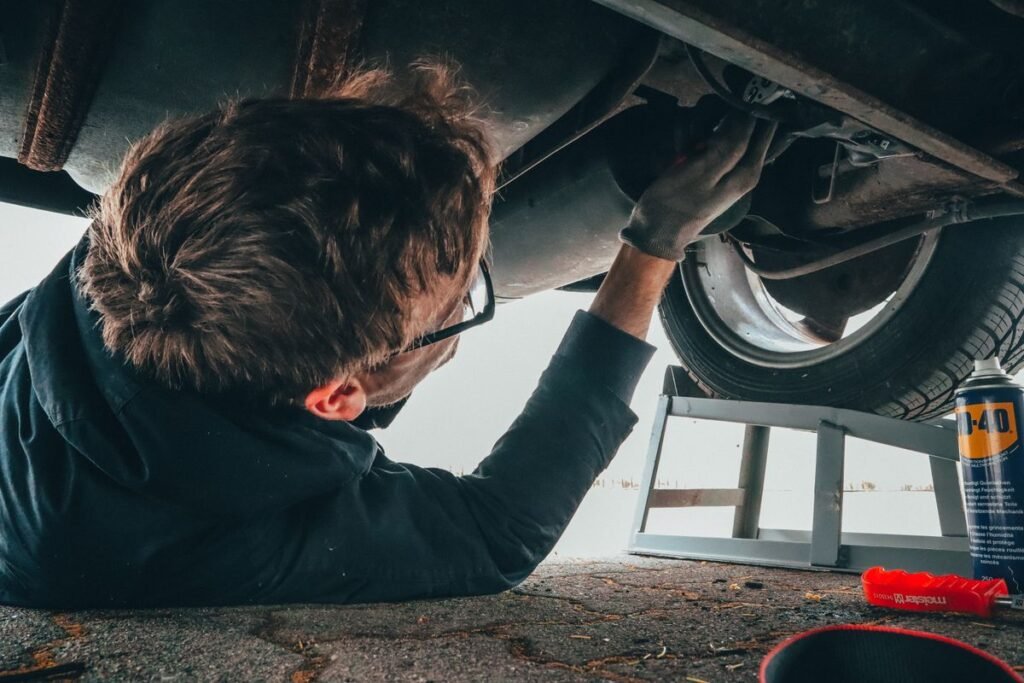
Water under or inside your car can be harmless, or it can be the first sign of a coolant leak that will overheat the engine. The short answer: first identify the fluid by colour, smell, and location, because clear water under the car after using the air conditioning is usually normal condensation, while coloured, sweet smelling fluid is coolant and needs attention before your next long trip. If the temperature gauge is rising, the coolant level is dropping, or water is soaking the cabin, stop and get the car checked rather than topping up and driving on.
This guide walks through each kind of water leak, how to tell them apart without tools, the simple checks you can do at home, and the point where a leak becomes urgent. The key skill is not guessing the part, it is reading the puddle.
Step 1: read the puddle
Your action: place a sheet of white paper or cardboard under the car overnight, then check colour, feel, and smell in daylight. Clear, odourless water that feels like water is usually condensation or rainwater. Green, orange, pink, or yellow fluid that feels slightly slippery and smells faintly sweet is coolant. Dark brown or black oily fluid is engine oil, not water, even when it looks wet. Blue fluid near the front is usually washer fluid. That one check prevents the two common mistakes, which are panicking over condensation and ignoring coolant because it looks like water.
Location matters as much as colour. Your action: note whether the puddle is under the front centre, under one wheel, under the middle of the car, or inside the cabin. Front centre leaks often point to the radiator, hoses, or water pump. A puddle under the middle of the car on a warm day, near the passenger side, often points to air conditioning condensation. Water inside the cabin, especially on the passenger footwell, often points to a blocked drain or a heater core leak, and those two need very different fixes.
Clear water under the car is usually normal
Air conditioning creates condensation, just like a cold drink on a warm day. Your action: if you see a small clear puddle under the middle of the car after a drive with the air conditioning on, and the coolant level is steady and the temperature gauge is normal, you can usually carry on and just keep an eye on it. The puddle should be small, clear, and odourless, and it should stop when the air conditioning has been off for a while.
Clear water after rain or washing is also normal when it drains from body panels. Your action: check whether the puddle appears only after rain or washing and whether the cabin stays dry. If the cabin stays dry and no warning light appears, the water is probably just draining as designed. If water appears inside the car after rain, move to the cabin leak checks below, because a seal or drain is letting water in.
Coloured fluid means coolant, and coolant leaks are urgent
Coolant carries heat away from the engine, so losing it can overheat the engine fast. Your action: check the coolant reservoir with the engine cold, never when hot, and compare the level with the minimum and maximum marks. If the level is dropping week by week, or you have to top it up more than once, there is a leak even when you cannot see a puddle, because small leaks can evaporate on a hot engine before they reach the ground.
Common coolant leak sources are hoses, the radiator, the water pump, the thermostat housing, and the reservoir itself. Your action: look for coloured stains, white crusty deposits, or wet spots around hose ends and the radiator edges, and listen for a faint hiss after a drive. A pressure test at a shop finds leaks that are invisible at home, so if the level keeps dropping and you cannot find the source, book a pressure test rather than adding sealant and hoping.
For coolant leak detail and costs, read our guide on coolant leak repair cost and our guide on coolant level low car, which explains what to check when the level is low and when to stop driving. If the temperature gauge climbs into the red, pull over safely, switch off, and wait for the engine to cool fully before opening anything, because opening a hot cooling system can cause serious burns.
Water inside the car
Water in the cabin usually comes from rain getting past a seal, a blocked sunroof or windscreen drain, or a heater core leak. Your action: first check whether the wet carpet smells sweet and feels slightly oily, because that points to coolant from the heater core, and that car should go to a shop promptly. If the water is clear and odourless, check door seals for tears, check that sunroof drains are clear, and check whether the wet patch appears only after rain or washing.
A blocked air conditioning drain can also soak the passenger footwell. Your action: if the footwell is wet after using the air conditioning, and the outside drain under the car is dry when it should be dripping, tell the shop, because the drain may be blocked and water is backing up inside. Do not ignore a wet carpet, because trapped water damages wiring, causes mould, and rusts the floor from inside.
Water around the boot usually comes from a boot seal, a light seal, or a blocked drain. Your action: dry the boot, check the seal for cracks or trapped debris, and check after the next rain whether water returns. A seal clean or replacement is a small job, but a boot that stays wet will rust and can damage the spare wheel well.
Other fluids that look like water
Washer fluid is usually blue and smells faintly of cleaning fluid. Your action: if blue fluid appears near the front, check the washer reservoir and its hoses, and test the washers. A split washer hose is a small fix, and it is worth fixing because a dry windscreen in dirty weather is a safety problem.
Oil leaks can look wet and dark, and they are easy to mistake for water on a dark road. Your action: touch the puddle with a paper towel. If it is dark, oily, and slow to dry, treat it as oil, not water. For oil leak detail, read our guide on oil leak repair cost and check the oil level before your next drive, because low oil damages the engine even faster than low coolant in some cases.
What a water leak repair costs
Cost depends entirely on the source, so a diagnosis should come before a quote. Current repair guides checked during this run put coolant leak diagnosis at roughly 60 to 88 dollars, with a radiator hose replacement at roughly 498 to 558 dollars, a water pump replacement at roughly 891 to 1135 dollars, a radiator replacement at roughly 400 to 1550 dollars depending on the vehicle, and a head gasket replacement at roughly 2572 to 3386 dollars. A loose clamp or a cleared drain can cost far less than those figures, while an internal engine leak can cost more. Your action: ask the shop to name the leaking part and show you the stain or pressure test result before you approve a large repair, because a hose and a head gasket are very different jobs with very different bills.
What to avoid
Do not keep topping up coolant without finding the leak, because the leak will worsen and the engine may overheat without warning. Do not rely on a sealant product for a radiator, water pump, or head gasket leak, because sealant can block narrow passages and hide the real fault. Do not open a hot radiator cap or coolant reservoir, because pressurised hot coolant can scald. Do not drive with the temperature gauge in the red, because a few minutes of overheating can warp the cylinder head and turn a hose job into an engine job.
Frequently asked questions
Is water dripping under my car after using the air conditioning normal
Usually yes, when the water is clear, odourless, and under the middle of the car, and the coolant level and temperature gauge are normal. Your action: check the coolant level once, then relax, but get the car checked if the puddle is coloured, oily, or large, or if the coolant level starts dropping.
Can I drive with a small coolant leak
Only a short distance to a shop when the temperature gauge is normal and the coolant level is above minimum, and only with a bottle of the correct coolant in the car. Your action: stop at once if the gauge rises, steam appears, or the level drops fast, and call for a tow rather than risking overheating.
Why is my car leaking water inside after rain
Usually a worn door or boot seal, a blocked drain, or a windscreen seal problem. Your action: check seals for tears and debris, dry the area fully, and note whether the leak returns after the next rain, because that pattern helps the shop find the entry point fast.
How do I find a leak I cannot see
Use the paper test overnight, check the coolant and oil levels weekly, and look for coloured stains and white crusty deposits around hoses and the radiator. Your action: if levels keep dropping and no source is visible, book a pressure test, because that test finds leaks that evaporate on a hot engine before they reach the ground.
Read the puddle first, then act on what it tells you. Clear water after air conditioning use is usually normal, coloured sweet fluid is coolant and needs a prompt check, and water inside the car should never be left to soak. Found early, most water leaks end as a hose, seal, or drain fix. Ignored, a coolant leak can end as an overheated engine.