
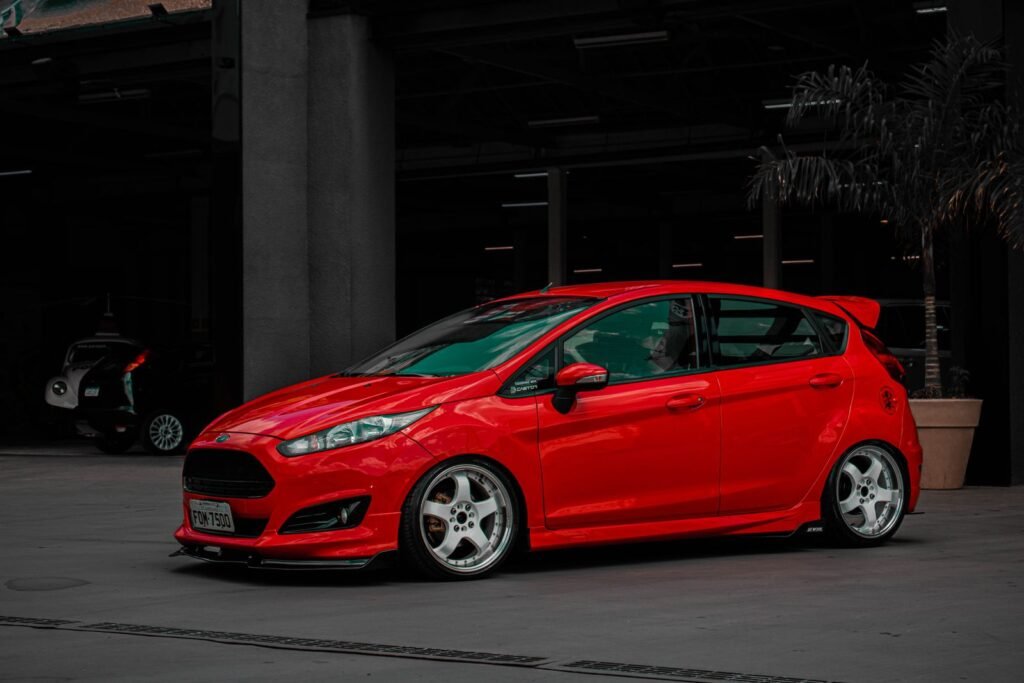
The Ford Fiesta is the small car that Britain bought more than any other. On sale from 1976 until production ended in July 2023, it was the UK’s best selling car every year from 2009 to 2020, and Ford sold over 22 million of them worldwide. It earned that success the honest way: by being fun to drive, cheap to run and easy to live with, generation after generation.
So who does it suit? New drivers who want a car that is enjoyable rather than just transport, and cheap to insure. City drivers who need something small and nimble. Enthusiasts on a budget, because the ST models are among the best hot hatches ever made. And used buyers, because the Fiesta is now a used only car with enormous second hand supply and rock bottom parts prices.
One thing to know before you read on: the Fiesta was discontinued in 2023, so every car you buy is used. That is actually good news, because it means huge choice and soft prices. This page covers the generations from 2002 onward, the engines worth having, the problems owners actually report, the versions to buy, and what the car costs to run.
Ford Fiesta at a glance
The quick facts first. British sources often number the generations one higher than the official count; this page uses the official numbering.
| Item | Details |
|---|---|
| Generation count and years sold | 7 generations total, 1976 to 2023. This page covers the fifth generation onward, 2002 to 2023. |
| Body styles | 3 and 5 door hatchback. Some markets also got a 4 door saloon. |
| Main engines | 1.25, 1.4 and 1.0 EcoBoost petrols, 1.4 and 1.5 litre diesels, and the 1.6 and 1.5 EcoBoost ST performance engines |
| Gearboxes | 5 and 6 speed manual, 6 speed PowerShift dual clutch on some sixth generation cars, and a conventional automatic on late cars |
| Drive | Front wheel drive |
| Seats | 5 |
| Boot space range | 290 litres in the sixth generation with the seats up, about 290 to 310 litres in the seventh |
Generations explained
Three generations cover every Fiesta built from 2002 to the end of production. The sixth and seventh are the ones almost every buyer will meet.
| Generation | Years | What changed |
|---|---|---|
| Fifth generation | 2002 to 2008 | Simple and tough. The 1.25 and 1.4 petrols earned a famously reliable reputation. Now only a very cheap used buy. |
| Sixth generation | 2008 to 2017 | The global Fiesta, sold in America too. Brought the 1.0 EcoBoost and the brilliant first ST. Facelifted in 2013. Avoid the PowerShift automatic. |
| Seventh generation | 2017 to 2023 | The best Fiesta ever made: better cabin, sharper handling, and the superb 1.5 EcoBoost ST. The 3 door was dropped in 2022. Production ended July 2023. |
The sixth generation car, sold from 2008 to 2017, is the Fiesta most used buyers will meet first. It was Ford’s first truly global Fiesta, sold in the US as well as Europe, and the 2013 facelift brought the 1.0 EcoBoost three cylinder that won engine awards all over the world. The ST version from 2013 to 2017 is a modern classic: 180 bhp from its 1.6 EcoBoost, with a 197 bhp ST200 special edition, and handling that embarrassed far more expensive cars. The facelifted cars from 2013 to 2017 are the best of the older Fiestas, especially with a manual gearbox.
The seventh generation car ran from 2017 to 2023 and is the consensus sweet spot. Everything got better: the cabin finally felt grown up, the ride and handling balance was superb, and the 1.0 EcoBoost in 100, 125 or 140 PS form gave real world economy in the mid 50s mpg. The ST grew a 1.5 litre three cylinder with 197 bhp and cylinder deactivation, and it is one of the great hot hatches. These are the newest, safest and most refined Fiestas, and the ones the buying guides recommend first.
Engines and specs that matter
The 1.25 and 1.4 litre petrols are the budget heroes. With 60 to 96 PS depending on version, they are not quick, but the guides describe them as bulletproof cheap runabouts. They are simple engines with no turbo and no complex emissions kit, which means there is very little to go wrong and everything is cheap to fix. For a first car or a cheap second car, a sixth generation 1.25 manual is one of the safest used buys in the class. Buy one with history and it will simply keep going.
The 1.0 EcoBoost three cylinder is the engine that defines the modern Fiesta. With 100, 125 or 140 PS, it gives the pull of a bigger engine with the economy of a small one, and owners report real world economy in the mid 50s mpg. It suits everyone from commuters to families. The checks that matter: early engines had coolant pipe failures that caused coolant loss and overheating, addressed by recalls, and the seventh generation cars use a wet timing belt that runs in oil inside the engine. Ford’s schedule says 10 years or 150,000 miles for the belt, but specialists recommend 6 years or 100,000 miles, because a failed belt starves the engine of oil and kills it.
The ST engines are for drivers who care about driving. The sixth generation ST used a 1.6 EcoBoost with 180 bhp, rising to 200 PS with overboost, plus a 197 bhp ST200 special edition. The seventh generation ST used a 1.5 EcoBoost three cylinder with 197 bhp, 0 to 62 mph in 6.5 seconds and cylinder deactivation for economy. These are genuinely thrilling cars with strong reputations. Buy on condition above all: check for clutch wear, listen for judder, and prefer a car with full history over a cheaper one without, because STs get driven hard.
The diesels are the niche choice. The 1.4 and 1.6 TDCi in the sixth generation and the 1.5 TDCi in the seventh are economical on long runs, but injector failures are documented and costly, and the exhaust filter punishes town driving. For most Fiesta buyers a petrol does the same job with fewer worries, so only choose the diesel if you genuinely cover big annual mileage.
Which engine suits you? Want the cheapest reliable runabout, a 1.25 or 1.4 manual petrol is the answer. Do mixed driving and want modern economy, the 1.0 EcoBoost 125 with a manual is the consensus pick. Want the most fun you can have for the money, find a well kept ST. Whatever you choose, avoid the sixth generation PowerShift dual clutch automatic, especially cars from around 2011 to 2015, because the shuddering and clutch failures are extensively documented. And if a car you test drive has a heavy or juddering clutch, budget for replacement before you buy, because our guide to clutch replacement cost shows it is not a cheap job on these cars.
Common problems by generation
The Fiesta has a good reputation overall, but there are specific faults you must know, including one gearbox to avoid completely. These are the issues that come up again and again in owner reports and buying guides.
Fifth generation, 2002 to 2008
The guides describe the 1.25 and 1.4 petrols as famously reliable, and there is no big documented fault that defines this generation. At this age it is all about condition: rust around the wheel arches and sills, electrical niggles, and worn suspension. These cars are cheap enough that a pre purchase inspection costs a large fraction of the car, so inspect carefully yourself instead: check for rust, listen for knocks, and make sure everything electrical works. A cared for fifth generation car is honest cheap transport.
Sixth generation, 2008 to 2017
The PowerShift dual clutch automatic is the fault to know. Owners report shuddering, jerky shifts, slipping and delayed engagement, with expensive clutch pack replacement as the cure. Those symptoms match the classic transmission problems signs and symptoms every buyer should recognise, and on this gearbox they point at the clutch pack. The US cars from 2011 to 2016 are the worst documented, with class actions and warranty extensions, and the UK guides say specifically to avoid the sixth generation PowerShift 1.6 automatic. Manuals are completely unaffected, which is why the guides keep saying: buy the manual.
On the 1.0 EcoBoost, check the coolant level and look for residue around the engine, because coolant pipe failures caused coolant loss and overheating on early engines, mostly fixed under recall. Diesel buyers should listen for misfiring and fluctuating idle and sniff for diesel smells, because injector failures on the 1.4 and 1.6 TDCi are costly. Other documented items: clutch wear and slipping on manuals, tricky selection of first and reverse, prematurely worn steering racks and track rod ends, door seals coming away, alloys buckling on potholes, blocked washer jets, and rust around rear arches and the tailgate on older cars. Check the recalls too: exhaust fumes entering the cabin on cars built July to November 2011, rear suspension bolts on September 2011 builds, and a glow plug fire risk on 2010 to 2011 diesels.
Seventh generation, 2017 to 2023
The wet timing belt on the 1.0 EcoBoost is the key maintenance item. The belt runs in oil inside the engine, and while Ford’s schedule is generous, specialists recommend replacement at 6 years or 100,000 miles. Ask for proof of a belt change on any car over 6 years old; a failed belt kills the engine. Early cars can suffer coolant loss from the same pipe issue as the previous generation, mostly fixed under warranty. Clutch judder appears on hard driven manuals, especially the ST. Otherwise this generation has a strong record, which is why it is the recommended buy.
Which Ford Fiesta should you buy
On a tight budget, look at a sixth generation 1.25 or 1.4 manual petrol from 2013 to 2017. The facelifted cars are the best of the older Fiestas, the engines are described as bulletproof, and prices are low because supply is huge. Just make sure it is a manual, never the PowerShift automatic.
In the middle ground, a seventh generation 1.0 EcoBoost 125 with a manual gearbox from 2017 to 2021 is the sweet spot the guides name again and again. You get the modern cabin, mid 50s mpg in real driving, and cheap insurance. Check the wet belt history on cars over 6 years old. Drivers who want fun should look at the ST, either generation, with full history.
Versions to be careful with are any sixth generation car with the PowerShift automatic, especially from around 2011 to 2015, and any seventh generation EcoBoost over 6 years old without proof of a timing belt change. The ST models are enthusiast picks with strong reputations, but check for clutch wear and hard use.
Whatever the car, run through this checklist before you hand over money:
- Confirm it is a manual gearbox, and walk away from any sixth generation PowerShift automatic.
- On a seventh generation EcoBoost over 6 years old, demand proof of a wet timing belt change.
- Check the coolant level and look for residue or leaks around the engine.
- Feel the clutch for heaviness, judder or slipping on the test drive.
- Listen for misfiring or uneven idle on diesels, and sniff for diesel smells.
- Check the steering for knocks and the door seals for gaps or wind noise.
- Look for rust around the rear wheel arches and the tailgate.
- Try every electrical item, including the washers, the lights and the infotainment.
- Look at all four tyres and wheels for uneven wear and buckled alloys.
Running and repair costs
Running costs are one of the Fiesta’s biggest selling points. Parts are among the cheapest in the class because volumes were enormous, every garage knows the car, and most jobs are simple. Insurance is kind too, with the normal models sitting in low groups, though the ST costs more as you would expect. Read our guide to clutch replacement cost before you buy any manual, so you know what a worn clutch means for your budget. Typical US prices for the common jobs look like this:
| Job | Typical cost in US dollars |
|---|---|
| Front brake pads, fitted | 120 to 250 |
| Four tyres, fitted | 300 to 600 |
| Major service at an independent garage | 250 to 450 |
| Wet timing belt change, EcoBoost | 600 to 1,000 |
| Clutch replacement, fitted | 700 to 1,200 |
The two big ticket items are the wet timing belt on the EcoBoost and the clutch on any manual, so price those into your purchase decision. Everything else is cheap: brakes, suspension parts and electrics are all plentiful and inexpensive. One more cost saver: check the wheel alignment cost guide if your test drive shows uneven tyre wear, because alignment is cheap and it saves your tyres.
Questions and answers
Is the Ford Fiesta reliable?
Yes, with the right gearbox. The manual petrol cars across all three generations have strong reputations, and the 1.25 and 1.4 engines are described as bulletproof. The exception is the sixth generation PowerShift dual clutch automatic, which has extensively documented shuddering and clutch failures. Buy a manual and the Fiesta is one of the most dependable small cars of its era.
Which Fiesta is the best to buy used?
The seventh generation 1.0 EcoBoost 125 with a manual gearbox is the consensus pick: the best Fiesta ever made, with a modern cabin, mid 50s mpg and strong reliability. On a smaller budget, a facelifted sixth generation 1.25 or 1.4 manual from 2013 to 2017 is excellent value. Enthusiasts should look at the ST with full history.
Should I avoid the PowerShift automatic Fiesta?
Yes. The sixth generation PowerShift dual clutch, especially on cars from around 2011 to 2015, is documented for shuddering, jerky shifts, slipping and expensive clutch pack replacement. The manual gearbox is completely unaffected and is what the buying guides recommend. If you need an automatic small Ford, look at the later conventional automatic instead.
What is the wet timing belt issue on the EcoBoost?
The 1.0 EcoBoost in seventh generation Fiestas uses a timing belt that runs in oil inside the engine. Ford’s schedule is 10 years or 150,000 miles, but specialists recommend 6 years or 100,000 miles, because a failed belt starves the engine of oil and destroys it. Always ask for proof of a belt change on a car over 6 years old, and budget 600 to 1,000 dollars for the job if it has not been done.