
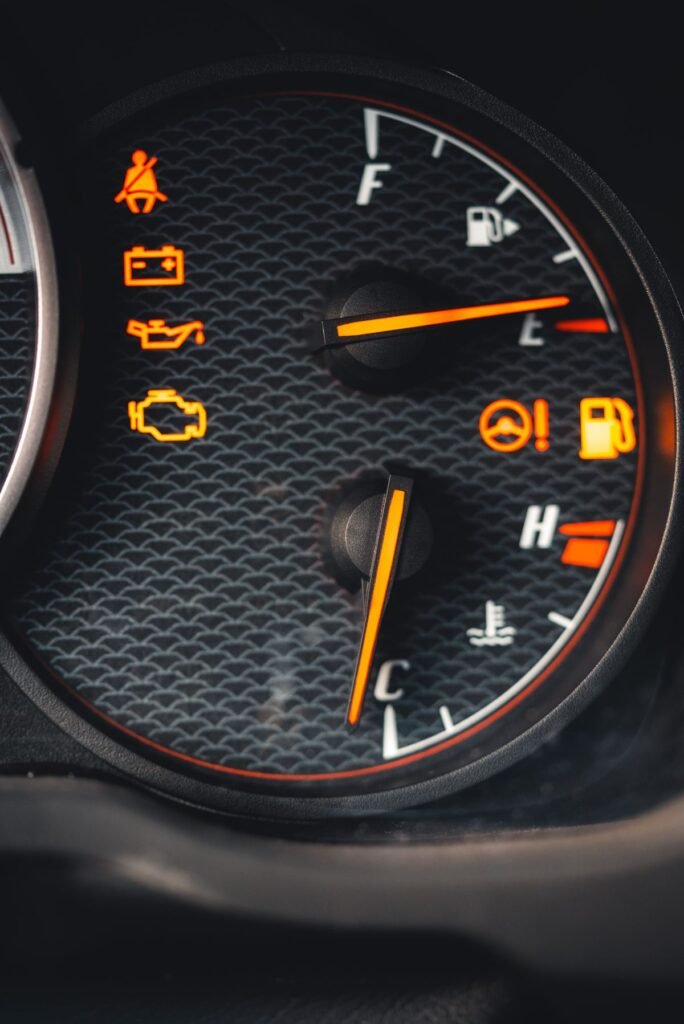
A check engine light flashing on your dashboard means the engine is misfiring badly enough to damage the catalytic converter, and it is the one warning light you should treat as urgent. A steady light means a fault is stored and you should book a check soon, but a flashing check engine light means slow down now, avoid hard acceleration, and get the car looked at the same day if you can. Driving on can turn a simple spark plug or ignition coil repair into a bill for a new catalytic converter.
This guide explains why the light flashes, what to do in the first minutes, the most common causes, and what the repairs usually cost. It also explains why simply clearing the light without fixing the cause is a mistake.
Flashing versus steady: why the difference matters
When the light glows steadily, the engine computer has found a fault, often something modest like a loose fuel cap or a tired sensor. The car usually drives normally, and the repair can wait a few days. Our guide to why your check engine light is on covers those everyday causes in detail.
A blinking check engine light is a different category of problem. It almost always means one or more cylinders are misfiring, so unburned fuel is being pushed into the exhaust. That fuel burns inside the catalytic converter, heating it far beyond its design temperature. A converter can overheat and fail in minutes of hard driving, and a replacement costs $900 to $2,500 on many cars. The flashing is the car asking you to protect it right away.
What to do when the light starts flashing
- Ease off the accelerator and reduce speed. Avoid motorway speeds and steep hills.
- Turn off heavy loads like the air conditioning to reduce strain on the engine.
- If the car shakes, loses power, or the light keeps flashing, pull over somewhere safe and switch the engine off.
- Do not keep driving for days hoping it will clear. Short, gentle trips only, and only if the car feels stable.
- Have the fault codes read the same day. Many parts stores will scan codes free of charge, and a mechanic can pinpoint the misfiring cylinder.
Safety warning
If the flashing light comes with heavy shaking, a strong fuel smell, smoke, or a big loss of power, stop driving and arrange a tow. An overheating catalytic converter sits close to the ground and can be a fire risk on dry grass or leaves, so park on a hard surface away from anything flammable.
Common causes of a flashing check engine light
- Worn spark plugs. Old plugs fire weakly or not at all, and they are the most common and cheapest cause.
- A failed ignition coil. Modern engines have one coil per cylinder, and a dead coil stops that cylinder completely.
- Faulty spark plug wires. On older cars, cracked wires leak spark and cause misfires, especially in damp weather.
- A clogged or failed fuel injector. A cylinder that gets no fuel cannot fire, producing the same misfire warning.
- Low compression. Worn valves or piston rings are less common but more serious, and need proper mechanical diagnosis.
- A bad sensor reading. A failing crankshaft or camshaft sensor can confuse the computer about engine timing.
Most of the time the fix is at the top of this list. Spark plugs and coils are wear items, and replacing them is routine work. The misfire only becomes expensive when it is ignored and the converter pays the price.
What the repairs usually cost
| Repair | Typical cost | Notes |
|---|---|---|
| Diagnostic scan and inspection | $0 to $150 | Some parts stores scan codes for free |
| Spark plugs, full set fitted | $150 to $350 | Price depends on engine layout and plug type |
| One ignition coil fitted | $150 to $350 | Many owners replace all coils on high mileage cars |
| Spark plug wires fitted | $120 to $300 | Mostly older cars |
| Fuel injector replacement | $300 to $700 | Per injector, cleaning sometimes works first |
| Catalytic converter replacement | $900 to $2,500 | The bill you avoid by acting quickly |
These are general ranges for common cars in the United States, and prices vary by car model and region. A V8 or a tightly packed engine bay will sit at the higher end of each range.
Why you should not just clear the light
It is tempting to erase the code and hope for the best, and our page on how to reset the check engine light explains how it is done after a repair. But resetting a flashing light without fixing the misfire only hides the warning while the damage continues. The code will also return within a few drives, because the computer tests the system constantly. Always record the code before clearing anything, since that code is the mechanic’s best clue.
Frequently asked questions
Can I drive with the check engine light flashing?
Only gently and only for a short distance to reach help, and only if the car is not shaking or losing power badly. The flashing light signals an active misfire that can overheat and destroy the catalytic converter, so treat every extra mile as a risk and get the car scanned the same day.
Why is my check engine light flashing and the car shaking?
The shaking is the misfire itself. With one cylinder not firing, the engine runs unevenly and vibrates, especially at idle and under load. Worn spark plugs and a failed ignition coil are the most likely causes, and both are routine repairs when caught early.
Will a flashing check engine light turn off by itself?
The light may stop flashing if the misfire pauses, for example when the engine warms up, but the fault is still stored and the misfire will return. A light that has stopped flashing is not a fixed car. Have the codes read and the cause repaired.
A flashing check engine light feels alarming, but it is actually your car protecting itself by warning you early. Slow down, get the codes read, and fix the misfire promptly, and in most cases you will be back on the road with nothing more than new plugs or a coil, instead of a converter bill you never needed to see.