
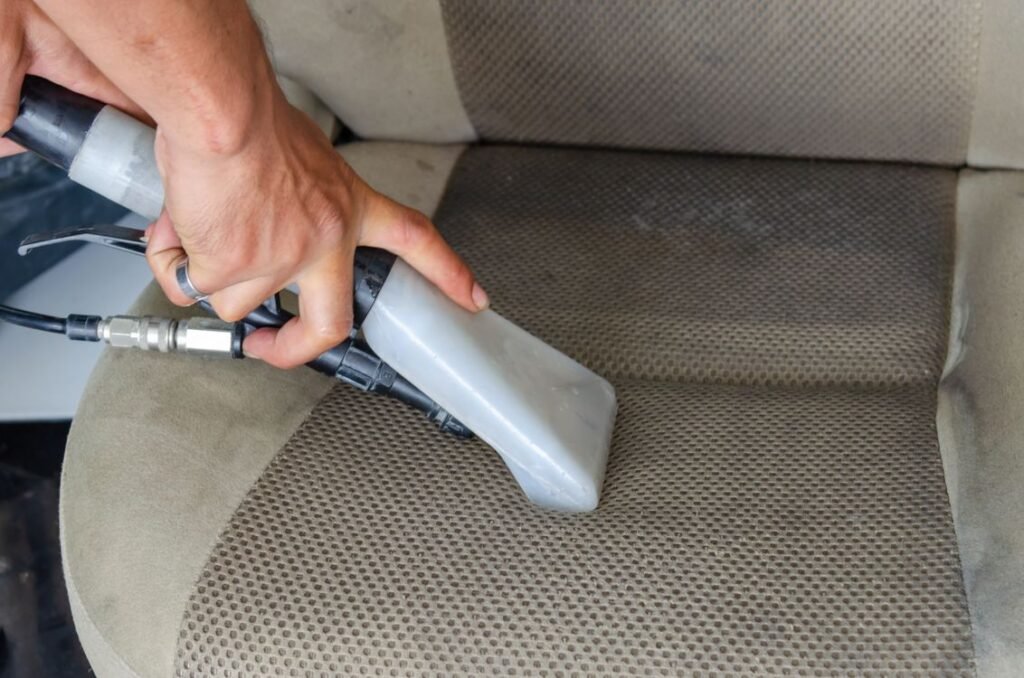
Learning how to clean cloth seats in the car is worth the effort, because cloth holds dust, sweat, food crumbs and spilled drinks in a way leather never does. A good clean lifts the stains you can see and the smell you cannot see, and it leaves the fabric soft again instead of stiff and patchy. You can do the whole job at home in an afternoon with a vacuum, an upholstery cleaner and a brush.
This guide shows you how to clean fabric car seats from start to finish, how to get car seat stains out without soaking the foam underneath, and when to let a professional take over. Vacuum first, test your cleaner on a hidden spot, clean in small sections, and let the seats dry fully before you drive again.
What Cloth Seats Need That Leather Does Not
Cloth is woven fabric over foam, so dirt and liquid sink in instead of sitting on the surface. That is why a quick wipe does so little, and why a stain that looks small on the surface can be much larger inside the fabric. Lift dirt out of the fibres, do not push it deeper with too much water. Work in small sections, use a light mist of cleaner, and blot with a clean towel instead of rubbing hard. Check first for worn spots, loose stitching and tears.
What You Need Before You Start
Gather your supplies first: a vacuum with a crevice tool and an upholstery nozzle, an upholstery cleaner made for car fabric, a soft bristle brush, several clean microfibre towels, a spray bottle with plain water, and a bucket. Read the cleaner label to confirm it suits cloth seats, and do not use bleach, because it fades colour and weakens fibres. Test any cleaner on a hidden spot first, such as the side of the seat base, and wait ten minutes to check for colour change before you clean the visible areas.
How to Clean Cloth Car Seats, Step by Step
Remove everything from the seats and footwells, including mats, covers, coins and rubbish. Vacuum slowly, using the crevice tool along the seams, under the headrest posts and where the seat back meets the seat base, because that is where crumbs and dust collect. Vacuum the back, base and sides, then vacuum again in the other direction to lift fibres that were lying flat. A seat that looks clean will often fill the vacuum with dust, so do not skip this step.
Spray a light mist of cleaner onto one small section, about the size of a dinner plate, and let it sit for two to three minutes. Do not spray the whole seat at once, because cleaner that dries on the fabric leaves rings and stiff patches. Brush gently in small circles, then blot with a clean towel, pressing down to lift dirt and cleaner out of the fabric. Turn the towel to a clean side often. When the seat is clean, go over it once more with a towel dampened with plain water to lift cleaner left behind, because cleaner left in the fabric attracts dirt. Open all the doors and let the seats dry fully with doors open before driving, because a seat that feels dry on the surface can still be damp inside. On a warm day this takes two to four hours, so plan the job for a morning when you do not need the car straight away. If you want to freshen the cabin while the seats dry, read our guide on how to freshen your car interior for simple ways to clear stale smells.
How to Remove Coffee Stains
Coffee is the most common stain on cloth seats, and it responds well to fast action. Blot a fresh spill at once with a clean towel, pressing down instead of rubbing, because rubbing spreads the coffee wider and pushes it deeper into the fibres. Then mist the area with upholstery cleaner, wait two minutes, brush gently and blot again. Repeat until the towel comes away clean, then rinse with a damp towel and let the area dry. For an old stain, dampen the spot lightly with plain water first, apply cleaner, leave it for five minutes, then brush, working from the outside edge toward the centre.
How to Remove Food and Drink Stains
Food stains vary, so match the method to the stain. For crumbs and dried food, vacuum first, then use a small stiff brush to loosen the dried pieces before you apply any cleaner. For greasy food, blot the grease with a dry towel first, then use upholstery cleaner and a soft brush, because water alone will not lift grease. For juice, milk or a soft drink, blot the spill, clean with upholstery cleaner, and rinse well, because milk and juice leave a sour smell if any residue stays in the fabric. When you are learning how to get the stains out of car seats after a food spill, do not use hot water on a fresh stain, because heat sets some stains.
How to Remove Pet Stains and Hair
Pet hair comes first, before any cleaner. Use a rubber glove, a damp hand or a pet hair brush to gather hair into clumps you can lift off, then vacuum slowly with the upholstery nozzle. A vacuum alone leaves a lot of hair woven into cloth, so the glove pass is worth the extra minutes. For pet urine, blot up as much as you can, then clean with an upholstery cleaner made for pet stains, testing on a hidden spot first. Blot, do not rub, and rinse with a damp towel. For muddy paw prints, let the mud dry fully first, then vacuum and brush it away before you use cleaner, because wet mud spreads. If the smell stays after cleaning and drying, the stain has reached the foam, and a professional detail is the better next step. Clean cabin air also helps after a pet clean, so check our guide on how often to change a cabin air filter if the cabin still smells stale.
How to Remove Sweat and Salt Marks
Sweat and salt marks show up as pale rings on dark cloth, often on the seat base and lower seat back where a driver sits every day. They are salt and body oil left behind when sweat dries. Clean them with the same routine, mist, wait, brush and blot, but give the cleaner about five minutes to work before you brush. Salt from winter roads can also reach the seats on shoes and clothing, leaving white crusty marks on the lower edges. Vacuum the crust away first, then dampen lightly and clean with upholstery cleaner. Do not pour water on a salt mark, because that water carries salt deeper into the foam.
How to Clean Car Upholstery Without Soaking the Foam
Knowing how to clean car upholstery well means knowing when to stop adding water. The foam under cloth seats soaks up liquid fast and dries slowly, and wet foam breeds smell and mildew that no air freshener will fix. Use a light mist, never a pouring jug, and blot after every pass. If you press a towel onto the seat and it comes away soaking wet, you have used too much liquid, so stop, blot with dry towels, and leave the doors open to dry before you add more cleaner. A wet and dry vacuum helps here, because it pulls dirty water out of the fabric instead of leaving it in the foam. If you are learning how to get stains out of car fabric for the first time, a light touch and two gentle passes will always beat one heavy soaking pass.
DIY Cleaning vs a Professional Detail
| Option | Typical cost | Time | Best for |
|---|---|---|---|
| Do it yourself | Supplies you already own or buy for this job | Two to four hours including drying | Light dirt, fresh stains, regular cleaning |
| Professional interior detail | 50 to 350 dollars in 2026 US guides | A few hours at the shop | Deep stains, pet smell, soaked foam, full interior refresh |
Do the job yourself when the seats are dirty from normal use, when the stains are fresh, and when you have a dry day to let the seats dry fully. Book a professional when the stain has reached the foam, when a smell stays after cleaning and drying, or when the seats are heavily stained across every panel. A professional uses an extractor that pulls dirty water out of the fabric, which is hard to match at home, and the result is worth it for a car you plan to sell. If you lease your car, check our guide on lease car maintenance before you book a detail, because a clean interior helps at return inspection.
Frequently asked questions
How do I get car seat stains out without a machine?
You can learn how to get car seat stains out with a vacuum, an upholstery cleaner, a soft brush and clean towels, and no machine is needed. Vacuum first, test the cleaner on a hidden spot, mist one small section, brush gently and blot. Repeat once if needed, rinse with a damp towel, and let the seat dry fully with the doors open.
Can I use dish soap to clean cloth car seats?
Yes, a small amount of mild dish soap in warm water works for light cleaning, but use it sparingly and rinse well, because soap left in the fabric attracts dirt. Test the mix on a hidden spot first, use a light mist instead of a soaking wash, and blot dry. For tough stains, a cleaner made for car upholstery is the better choice.
How long do cloth car seats take to dry?
Plan on two to four hours on a warm dry day with all the doors open, and longer on a cool or humid day. A seat can feel dry on the surface while the foam underneath is still damp, so wait until the fabric feels dry right through before you drive. Never close the doors on a damp seat, because trapped moisture breeds smell and mildew.
Why does my car seat still smell after cleaning?
A smell that stays after cleaning usually means the stain reached the foam, or the seat did not dry fully. Let the seat dry again with the doors open, and check whether the smell is stronger in one area. If it stays, a professional detail with an extractor can pull the dirty water out of the foam, which towels alone cannot do.