
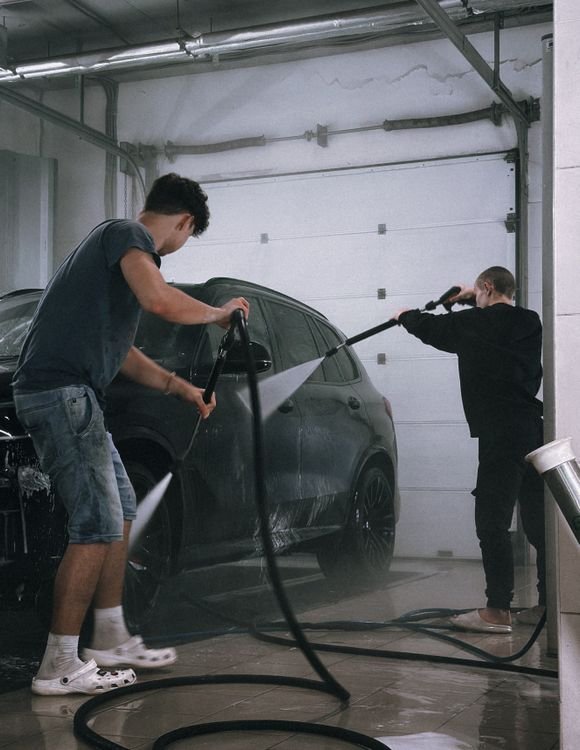
A basic automatic wash costs 10 to 25 dollars. Pick a touchless wash if your paint is new or dark, pick a soft touch tunnel if your car is only lightly dusty, and skip the wash entirely if your car is covered in heavy mud or grit. The right choice protects your paint, and the wrong one can leave swirl marks that cost far more to fix than the wash itself.
This guide covers the four wash types, what to check before you drive in, the routine to follow inside, and what to skip. If you wash your car at home too, read our guide on the best car shampoo soap first, because the soap you use matters as much as the wash you choose.
Which Wash Type Suits Your Car
There are four main ways to wash a car at a carwash, and each one suits a different car and a different level of dirt. Use the table below to match the wash to your car before you pay.
| Wash type | Typical cost | Best for | Main risk |
|---|---|---|---|
| Touchless automatic | 10 to 25 dollars | New paint, dark paint, light road dust | May leave a light film on heavy dirt |
| Soft touch tunnel | 10 to 25 dollars | Lightly dusty cars with normal road grime | Brushes can mark paint if grit is trapped |
| Self service bay | 5 to 15 dollars | Drivers who want full control | High pressure wand held too close can mark trim |
| Full service wash | 25 to 45 dollars | Drivers who want inside and outside cleaned | Check the finish before you leave |
Unlimited monthly plans cost 20 to 40 dollars, and they make sense only if you wash at least twice a month at the same site. If you wash once a month or less, pay per wash instead. Check the plan terms before you sign up: some plans limit you to one wash per day, and some exclude the premium wash options.
Choose touchless when your car is new, freshly waxed, or dark colored, because nothing touches the paint except water and soap. Choose a soft touch tunnel only when the brushes look clean and your car has no caked on mud. Choose a self service bay to rinse the lower panels yourself first, and choose full service when you want the interior cleaned too.
What to Check Before You Enter
Do a slow walk around your car before you join the queue. Look for loose trim, a cracked mirror housing, a loose roof rack, a hanging mud flap, or a wiper blade lifting off the glass. Any loose part can catch on a brush or a dryer and tear off inside the tunnel, so fix it or remove it before you enter. If you spot a scratch or a dent, note where it is, so you can tell later whether the wash caused it.
Close every window fully, close the sunroof, and fold in your side mirrors if your car lets you fold them. Turn off the rain sensing wipers, because a wiper that starts inside the tunnel can bend or snap. Remove the antenna if it unscrews, remove loose items from the roof rack, and close the fuel flap.
Check the wash entrance for a height or width sign, and compare it with your car. Large SUVs, roof boxes, and roof mounted bikes may not fit a tunnel built for small cars. If your car is too tall, use a self service bay instead. Also check that your tires are firm and your steering is straight before you roll onto the conveyor, because a flat tire or a turned wheel can jam the track.
How to Wash a Car at the Carwash, Step by Step
Start outside the tunnel, not inside it. If your car is covered in heavy mud, thick dust, or road grit, rinse it first with a hose or a self service bay before you enter any automatic wash. Brushes and cloths press grit into paint, and a touchless wash cannot lift heavy mud on its own. If the car is only lightly dusty, you can drive straight in.
At the pay station, pick the wash level that matches your car. The basic wash covers soap, rinse, and a dryer, and that is enough for a car that is washed often. Pay for wax or an underbody rinse only when the car has road salt on it or you want extra protection before winter.
Follow the attendant or the signs as you enter. Put the car in neutral, take your foot off the brake, and keep your hands off the steering wheel unless the signs tell you to steer. Steering or braking inside can push the car off the track. Switch off the engine only if the instructions tell you to, and keep the windows closed throughout.
Stay inside the car and watch the mirrors and the roof as the wash runs. If you hear a loud scrape or a part comes loose, stay calm and wait for the tunnel to end, then stop in the exit area and check the damage before you drive away. Do not open a door or a window inside the tunnel, because soap and water will flood the interior.
At the exit, drive slowly to the drying area and check the finish in daylight. Look for missed spots on the lower doors, the rear bumper, and around the mirrors, where water and soap collect. Dry those spots with a clean microfiber towel. If the dryer left heavy water spots, wipe the roof and hood now, because water spots bake into the paint in strong sun.
Can You Use Dish Soap to Wash Your Car
No, do not use dish soap to wash your car. Dish soap is made to strip grease from plates, and it does the same job on your car: it strips wax and sealant from the paint, dries out rubber trim and plastic, and leaves the paint open to sun and water damage. One wash will not ruin a car, but repeated use fades the finish and forces you to wax the car again far sooner than you should.
Use a car shampoo instead. Car shampoo lifts dirt without removing wax, and it rinses clean without leaving a film. It costs only a few dollars more than dish soap per bottle, and one bottle lasts many washes, so there is no saving in using dish soap. At a self service bay, use the soap the bay supplies or bring your own car shampoo.
If someone already washed your car with dish soap, the fix is simple. Wash the car again with proper car shampoo, dry it fully, and apply a coat of wax to replace what the dish soap removed. Check the rubber seals around the doors and windows as well, because dish soap dries them out, and a rubber conditioner will keep them soft.
What to Skip at the Carwash
Skip wheel cleaner on hot brakes. If you just drove a long distance or down a hill, your brake discs are hot, and wheel cleaner sprayed on a hot disc can stain the wheel and damage the brake finish. Wait until the wheels are cool to the touch, then clean them.
Skip harsh brushes on a dirty car. If the car is covered in grit, a brush drags that grit across the paint and leaves fine scratches. Rinse first, then wash. If the tunnel brushes look dirty, torn, or clogged with mud, pick a touchless wash or a self service bay instead.
Skip the wash if your paint is damaged. If the clear coat is peeling, a panel has a fresh scratch down to metal, or a repair is still curing, an automatic wash can lift the peeling edge and make the damage worse. Wash that panel by hand with a soft mitt, or wait until the repair is fully cured. If you already have scratches from a bad wash, read our guide on car scratch repair cost to see what a fix may cost before you book it.
After the Wash, What to Check Before You Drive Away
Walk around the car once more in the drying area. Check the mirrors, the door handles, the fuel flap, and the roof rails for soap residue or water trapped in crevices. Open each door briefly and wipe the door edges, because water trapped there drips onto clean paint as you drive and leaves streaks.
If you paid for a full service wash, check the interior before you leave the site. Look at the dashboard, the seats, the mats, and the windows for missed dust or streaks, and tell the crew at once if something is not done. Our guide on how to freshen car interior covers simple steps you can do yourself between full service visits.
Finally, check the paint again the next day. If swirl marks appear after a tunnel wash, switch to touchless for the next few washes. If one site keeps marking your car, change sites rather than paying to fix the same damage again.
Frequently asked questions
How much does a basic automatic car wash cost?
A basic automatic exterior wash costs 10 to 25 dollars. A full service wash costs 25 to 45 dollars, a self service bay costs 5 to 15 dollars, and an unlimited monthly plan costs 20 to 40 dollars. Pay per wash if you wash once a month or less.
Can I use dish soap to wash my car?
No, do not use dish soap on your car. Dish soap strips wax and sealant from the paint and dries out rubber trim and plastic. Use a car shampoo instead, because it lifts dirt without removing wax and rinses clean. If dish soap was already used, wash again with car shampoo and apply wax to replace the protection.
Is a touchless car wash better than a soft touch tunnel?
A touchless wash is better for new, dark, or freshly waxed paint, because nothing touches the paint except water and soap. A soft touch tunnel cleans better on normal road grime, but only when the brushes are clean and the car has no heavy mud. If your car is very dirty, rinse it first, then choose touchless.
What should I do before entering an automatic car wash?
Fold the mirrors, close all windows and the sunroof, turn off rain sensing wipers, remove the antenna if it unscrews, and remove loose items from the roof rack. Walk around the car first and note any loose trim or existing scratches. If the car is covered in heavy mud or grit, rinse it before you enter.