
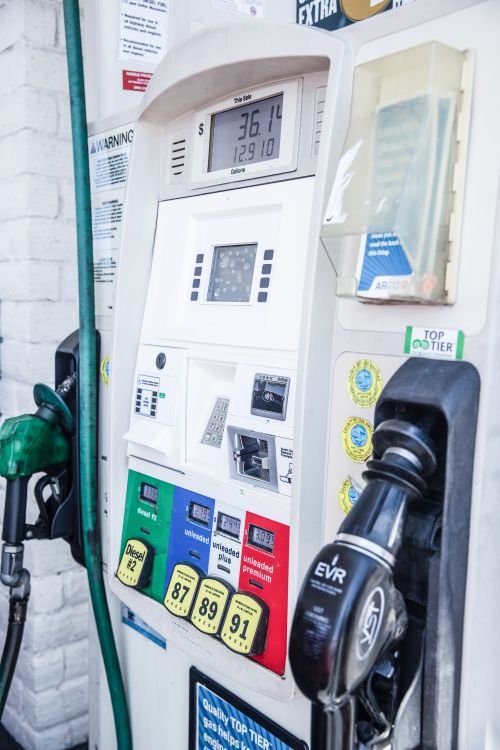
Quick answer: US gas prices change your running costs through three numbers: how far you drive, how efficient your car is, and what fuel costs where you live. To protect your budget, work out your own monthly fuel cost from those three numbers, then cut waste by driving smoothly, keeping tires correct, and planning trips, rather than guessing at national price headlines.
Work Out Your Own Fuel Cost First
National gas price headlines are interesting, but they do not tell you what you will pay. Your fuel cost comes from a simple calculation you can do with your own numbers. Take the miles you drive in a month, divide by your real world miles per gallon, and multiply by the price per gallon at the stations you actually use. That result is your monthly fuel cost. If you drive more miles, use a less efficient car, or pay a higher local price, that number rises. If you drive fewer miles, improve efficiency, or find a lower local price, that number falls. Do this calculation with your last few months of driving, not with a single unusual week. A holiday road trip or a week off work will distort a single month, while an average over several months gives you a budget number you can trust. Once you know that number, you can decide how much a change in driving, maintenance, or car choice is actually worth to you.
Understand Why Prices Move
Gas prices move for reasons that are mostly outside any single driver control. The US Energy Information Administration explains that retail gasoline prices are mainly affected by crude oil prices and by the amount of gasoline available to meet demand. When crude supply tightens, when a refinery goes offline, when a pipeline is disrupted, or when seasonal demand rises, prices tend to rise. When supply is plentiful and demand is lower, prices tend to ease. Prices also vary by region, because taxes, transport costs, and fuel blends differ from one state to another. Summer blends, which are made to reduce evaporation in warm weather, cost more to produce than winter blends, and summer driving demand is higher, so prices often rise in spring and peak in summer before easing in fall. Understanding those drivers helps you avoid two mistakes: panicking at a short spike, and assuming a low price will last forever. Your budget should use a realistic local price, not the lowest price you saw last month and not the highest price in the news.
See How Efficiency Protects You From Price Swings
Efficiency is your best protection against price swings, because it reduces the gallons you buy no matter what the price is. A car that uses fewer gallons per mile costs less to run at any price, and the saving grows as prices rise. That is why two drivers in the same city can face very different fuel bills. One driver in an efficient car and with smooth driving habits buys fewer gallons. Another driver in a thirstier car and with aggressive driving habits buys many more gallons, and every price rise hits that larger gallon count harder. You do not need to buy a new car to gain some of that protection. Driving smoothly, keeping tires at the correct pressure, removing extra weight and drag, and keeping the engine maintained all cut gallons used. Each gallon saved is a gallon you do not buy at the current price, whatever that price happens to be. That logic is the core of fuel budgeting: control gallons first, then worry about price.
Cut Gallons With Daily Habits
Start with habits that cost nothing. Drive smoothly, look ahead in traffic, and avoid hard acceleration and hard braking. Keep a steady speed on the highway where it is safe, and leave a gap that lets you slow gently instead of stopping and starting. Check tire pressure when tires are cold, and use the pressure on the door sticker, because underinflated tires waste fuel every mile. Remove heavy items you do not need and take a roof box off when you are not using it. Combine errands into fewer trips to cut cold starts, and turn the engine off during a long wait when it is safe to do so. Our guide on how to check tire pressure shows how to make tire checks a quick weekly habit. None of these habits requires a new car or a large spend. Together, they reduce the gallons you buy each month, which is the only part of the fuel equation you fully control every day.
Plan for High Price Periods in Your Budget
Fuel prices will rise and fall, so build that movement into your budget rather than reacting to each change. Set a monthly fuel budget using a price slightly above your recent average local price, not the lowest price you remember. If prices fall below that budget, set the saving aside for the next rise. If prices rise above it, you already have a plan: cut non essential trips, combine errands, carpool where practical, and delay a long discretionary drive until prices ease. For work travel you cannot cut, look at whether a more efficient route, a different departure time that avoids heavy traffic, or a shared trip can cut gallons. For a long term decision, compare cars on total running cost, not on purchase price alone. A cheaper car that uses far more fuel can cost more over years of driving than a slightly more expensive efficient car, especially if you drive many miles. Use your own miles and your own local price in that comparison, because national averages can hide a large local difference.
Decide When a Car Change Makes Sense
A car change purely to save fuel only makes sense when the total cost works. Add up the cost of buying, insuring, maintaining, and fueling each option over the time you plan to keep it, using your own miles and local fuel price. If the fuel saving does not cover the extra purchase and ownership cost within a reasonable time, the change does not pay for itself on fuel alone. If you already need to change cars for age, reliability, or family needs, then efficiency should be a major factor in the choice, because you will live with that fuel bill every month. Check real world efficiency from owners with similar driving patterns, not just a single advertised figure, and test drive on roads like the ones you use daily. A car that is efficient in gentle highway driving may not be efficient in your daily stop and start commute. The decision rule is simple: buy efficiency when you already need a car, and buy it based on your own miles and price, not on a headline. For maintenance that supports efficiency, read our cost of vehicle tune up guide and plan the jobs that keep your current car running efficiently while you decide.
Questions and Answers
How do I calculate my monthly fuel cost?
Divide your monthly miles by your real world miles per gallon, then multiply by the price per gallon at stations you actually use. Average the result over several months for a budget number you can trust.
Why do gas prices differ from one state to another?
Prices differ because taxes, transport costs, refinery supply, and fuel blends vary by region. A state farther from refineries or using a special blend can face higher costs, while strong local competition can help keep prices lower.
Should I change cars just because gas prices rose?
Not on fuel alone. Compare total ownership cost over the time you plan to keep the car, using your own miles and local price. Change cars for fuel saving only when the saving covers the extra ownership cost within a reasonable time, or when you already need a replacement car.