
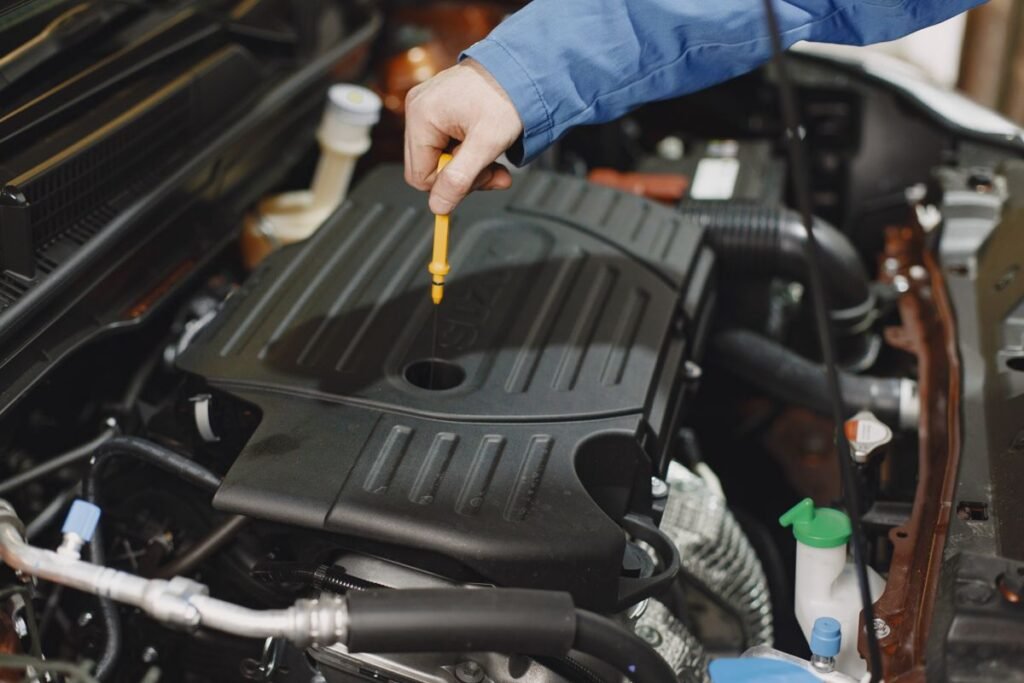
Learning how to check transmission fluid is one of the simplest jobs you can do to protect your gearbox. On most cars with a dipstick, you park on level ground, warm the engine up, pull the transmission dipstick, wipe it, push it back in, and read the level and color of the fluid against the marks. The whole check takes about five minutes, and catching a low or burnt fluid problem early can save you from a repair bill in the thousands.
What you need before you start
You do not need a workshop full of tools for this job. A clean lint free cloth or a few paper towels are enough, plus a pair of gloves if you want to keep your hands clean. It also helps to have your owner manual nearby, because the exact procedure differs a little from one make to another. Some cars need the engine running in Park, others need it in Neutral, and the manual will tell you which one applies to your car.
- A clean white cloth or paper towel, so you can judge the fluid color properly
- Your owner manual, for the correct gear position and fluid type
- A funnel, only if you end up needing to top up
- A flashlight, because the dipstick tube can sit deep in the engine bay
One safety point matters here. The engine and the fluid will be hot after a drive, and hot fluid can burn skin. Work calmly, keep loose clothing away from belts and fans, and never reach blindly around a running engine.
Step by step: how to check transmission fluid
Step 1: Warm the car up and park on flat ground
Transmission fluid expands when it gets hot, and it is measured at working temperature. Drive for about 10 to 15 minutes so the gearbox reaches normal operating temperature, then park on a level surface and set the parking brake. A slope can make a correct level look low or high, so flat ground really matters.
Step 2: Find the dipstick and run through the gears
With the engine still running, press the brake and move the gear lever slowly through each position, pausing for a couple of seconds in each one, then back to Park (or Neutral, if your manual says so). This fills every passage in the gearbox with fluid. Now open the hood and find the transmission dipstick. On most rear wheel drive cars it sits toward the back of the engine, and on front wheel drive cars it is usually near the transaxle. It often has a red, yellow, or black handle and is thinner than the engine oil dipstick.
Step 3: Read the level
Pull the dipstick out and wipe it clean. Push it all the way back in, then pull it out again and hold it level. The fluid should reach the area marked HOT, FULL, or between the two upper dots or holes. If it sits down at the ADD or COOL marks while the fluid is hot, the level is low and needs topping up with the exact fluid type your manual specifies.
Step 4: Judge the color and smell
Rub a drop between your fingers and look at it on the white cloth. Healthy fluid is pink or red and mostly see through. The table below shows what each condition usually means.
| Fluid condition | What it means | What to do |
|---|---|---|
| Bright pink or red, clear | Healthy fluid | No action needed |
| Dark red or light brown | Aging fluid | Plan a fluid change soon |
| Dark brown or black, burnt smell | Worn out fluid, possible internal wear | Get the gearbox inspected promptly |
| Milky pink or foamy | Coolant or water contamination | Stop driving and have it towed to a shop |
| Gritty feel between fingers | Metal or clutch material in the fluid | Have a transmission specialist check it |
What if your car has no dipstick
Many modern cars, including a lot of European models and newer trucks, have a sealed transmission with no dipstick at all. On these, the level is checked from underneath the car through a fill plug while the fluid is at a specific temperature, which is a job for a lift and a scan tool. If you cannot find a dipstick, check your manual before you go hunting for one that does not exist. For sealed units, most makers suggest an inspection every 30,000 to 60,000 miles at a shop, whatever the lifetime fluid claims say.
How often should the fluid be checked and changed
A quick level check once a month is a good habit, and it costs you nothing. As for changing it, intervals vary widely. Many makers suggest somewhere between 30,000 and 100,000 miles depending on the gearbox and how the car is used, and towing or heavy city traffic shortens that. Our full guide on how often to change transmission fluid walks through the intervals by transmission type so you can match the schedule to your car.
What low fluid is trying to tell you
Transmission fluid does not get used up the way engine oil can. If the level is low, the fluid went somewhere, and that almost always means a leak from a pan gasket, a cooler line, or a seal. Topping up without fixing the leak is a short term patch at best. Running low for long causes slipping, harsh shifts, and overheating, which wear the gearbox out quickly. If you spot red puddles under the car or the level keeps dropping, read our guide on how to fix a transmission fluid leak to find where it is escaping and what the repair usually involves.
What a fluid check and change can cost
Checking the fluid yourself is free. If you pay a shop, here are typical US price ranges, and remember that prices vary by car model and region.
| Service | Typical cost |
|---|---|
| Shop fluid level inspection | Free to $50, often free with other work |
| Drain and fill fluid change | $90 to $250 |
| Full fluid flush with a machine | $150 to $400 |
| Transmission filter and pan gasket service | $150 to $350 |
Frequently asked questions
Should the engine be running when I check transmission fluid?
On most cars with a dipstick, yes. The engine should be running, the car in Park or Neutral as the manual states, and the fluid fully warmed up. A small number of models are checked with the engine off, so always confirm with your owner manual first.
Can I drive with low transmission fluid?
It is risky. Low fluid can cause slipping gears, delayed shifts, and overheating, and even a short drive can add wear. Top it up with the correct fluid type before driving, and have the leak found and fixed as soon as you can.
What color should healthy transmission fluid be?
Healthy automatic transmission fluid is pink or red and fairly clear. Brown fluid is old and due for a change, black fluid with a burnt smell points to heavy wear, and milky fluid means contamination that needs urgent attention.
Five minutes with a dipstick once a month is cheap insurance for one of the most expensive parts of your car. Check the level, look at the color, and act early on anything that looks or smells off.