
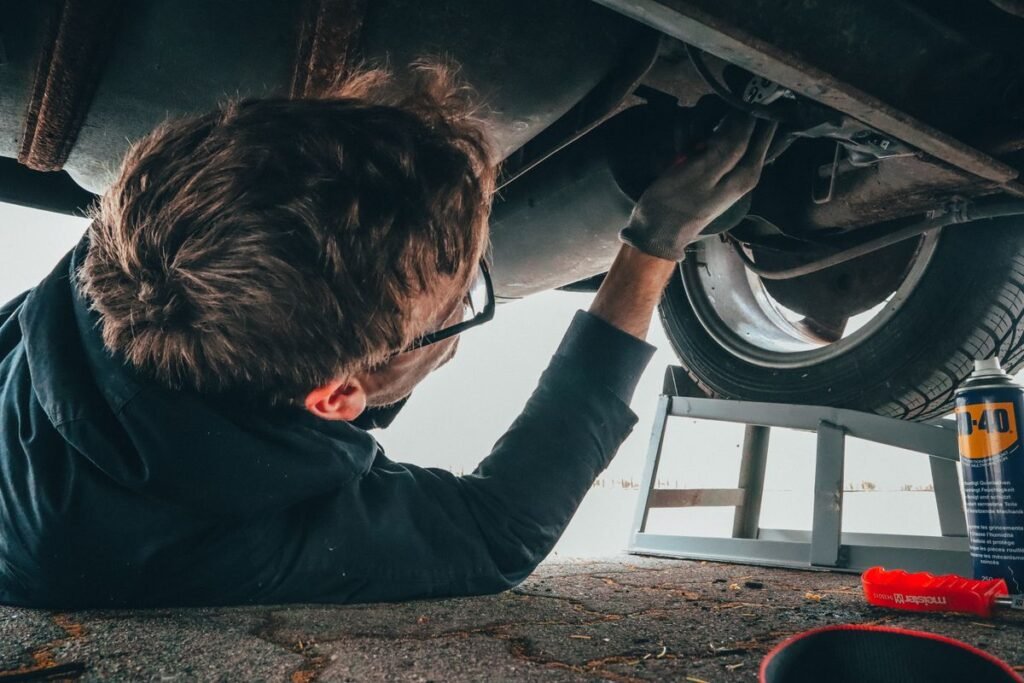
A clutch replacement on most cars costs between 800 and 2,500 dollars in total, with the parts kit usually running 200 to 600 dollars and labor making up the rest. Small front wheel drive cars sit at the cheaper end, trucks, all wheel drive models and performance cars can pass 3,000 dollars, and the job normally takes a full day in the shop. If your clutch is slipping badly, budget for the full job rather than a quick fix, because there is no cheap repair that restores a worn clutch.
What you are actually paying for
A clutch kit is not one part. A proper kit includes the clutch disc, the pressure plate and the release bearing, and those three parts should always be changed together. The disc is the friction surface that wears out, the pressure plate clamps it against the flywheel, and the release bearing is what your pedal pushes on every time you change gear. Leaving an old bearing in place to save 50 dollars is poor economy, because if it fails later the whole gearbox has to come out again to reach it.
On top of the kit, a good shop will inspect the flywheel. A lightly scored flywheel can be resurfaced for around 50 to 100 dollars. A damaged or heat cracked one must be replaced, and that adds 200 to 600 dollars for a standard single mass flywheel, or 600 to 1,200 dollars for a dual mass flywheel fitted to many modern diesels and turbocharged petrol cars. While the gearbox is out, many mechanics also suggest a new rear main oil seal and fresh gearbox oil, both cheap parts that are expensive to reach at any other time.
Cost breakdown
| Item | Typical cost |
|---|---|
| Clutch kit, disc, pressure plate and release bearing | 200 to 600 dollars |
| Flywheel resurfacing | 50 to 100 dollars |
| Replacement flywheel if needed | 200 to 1,200 dollars |
| Labor, usually 5 to 9 hours | 500 to 1,500 dollars |
| Gearbox oil and small parts | 40 to 120 dollars |
| Total for a typical family car | 1,000 to 2,000 dollars |
Where you live and where you go matter. A main dealer charges more per hour than an independent shop, and labor rates in big cities run higher than in small towns. The car itself matters too. On a simple hatchback the gearbox drops out fairly easily. On an all wheel drive car the extra driveshafts and transfer case add hours, and on some models the engine subframe has to come down before the gearbox can move at all.
Warning signs your clutch is wearing out
- Slipping: the engine revs climb when you accelerate in a high gear, but the car does not speed up to match.
- A burning smell after hill starts or heavy traffic, caused by the disc overheating as it slips.
- The biting point has moved very high, so the pedal is nearly fully released before the car starts to move.
- Juddering or shaking as you pull away in first gear, especially when the engine is cold.
- Gears becoming hard to select, or crunching when you change down.
- A squealing or rumbling noise when you press the pedal that stops when you release it, a classic sign of a worn release bearing.
- The pedal feeling spongy, heavy or uneven compared with how it used to feel.
One simple test tells you a lot. Drive at about 30 miles per hour in fourth or fifth gear and press the accelerator hard. If the rev counter jumps up quickly but the road speed barely changes, the clutch is slipping and is near the end of its life. Not every shifting problem is the clutch though. Whining in gear, jumping out of gear or grinding that happens even with the pedal fully down can point inside the gearbox itself, and our guide to transmission problems, signs and symptoms helps you separate gearbox faults from clutch faults before you spend money.
How long a clutch lasts
There is no fixed mileage. A clutch used gently on open roads can last 150,000 miles or more. The same clutch in a city car that does hill starts, school runs and stop and go traffic every day may be done by 60,000 miles. Riding the clutch, meaning resting your foot on the pedal while driving, wears the release bearing and lets the disc slip slightly the whole time. Holding the car on the clutch at lights instead of using the handbrake cooks the friction material. Towing heavy loads, oversize tires and aggressive launches all shorten clutch life as well.
Can you keep driving on a slipping clutch
For a short time, gently, yes. As a long term plan, no. A slipping clutch only gets worse, and every mile of slipping generates heat that can damage the flywheel surface and turn a resurface into a full replacement. Eventually the disc wears to the point where the car will barely move, usually at the worst possible moment, such as pulling out into traffic or climbing a hill. Book the job while the car still drives normally enough to get itself to the shop, and you also avoid a tow bill.
Since the gearbox is already out, this is also the one sensible moment to change the gearbox oil if it is due. Old oil is far easier to drain and refill on the bench than under the car, and our guide to transmission flush cost explains what fluid services normally cost so you can judge the quote you are given.
How to keep the bill down
- Get two or three quotes for the complete job, and make sure each one includes the full kit, flywheel work and new gearbox oil.
- Approve changing the release bearing and any cheap seals while the gearbox is out, even if they are not the main fault.
- Ask whether the flywheel can be resurfaced instead of replaced, and ask to see the old parts.
- Do not delay for months. A worn disc left slipping scores the flywheel and adds real money to the final bill.
- Consider a trusted independent transmission shop. Clutch work is their daily bread and their labor rate is usually lower than a main dealer.
Doing it yourself is possible with a jack, axle stands, an engine support and a clutch alignment tool, and keen home mechanics do save the labor charge. Be honest with yourself though. The gearbox is heavy, the job takes most of a weekend the first time, and a disc fitted slightly off center means doing the whole job twice.
Frequently asked questions
How long does a clutch replacement take
Most shops finish in one working day. The book time is usually 5 to 9 hours depending on the car, so a car dropped off in the morning is often ready the same evening or the following morning.
Does the flywheel always need replacing
No. A flywheel with light wear can be resurfaced and reused. It needs replacing if it is cracked, heat damaged, warped or worn beyond the maker limit, and dual mass flywheels are usually replaced rather than repaired.
Can a worn clutch be adjusted instead of replaced
On older cars with a cable clutch, a small adjustment sometimes helps pedal feel, but it cannot restore worn friction material. Modern hydraulic clutches adjust themselves, so once one starts slipping, replacement is the only real cure.