
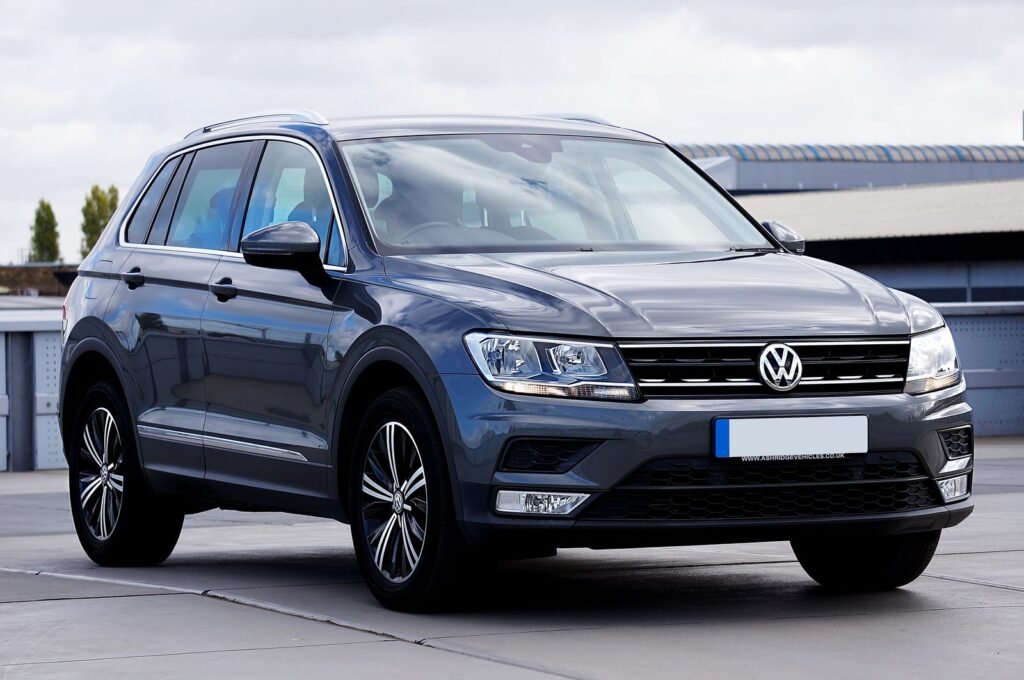
The Volkswagen Tiguan is the thinking family’s answer to the crossover question. Where rivals sell on style or value, the Tiguan sells on being properly engineered: solid build, a wide choice of engines, and the feeling that someone in Wolfsburg actually cared about the details. On sale since 2007 through three generations, it has become one of the best selling SUVs in Europe.
So who does it suit? Families who want a premium feel without paying premium brand prices. Buyers who tow caravans or trailers, because the diesels and the four wheel drive system handle that work well. Long distance commuters who live on highways, and used buyers who want the huge choice that comes from three generations of strong sales.
People search for the Tiguan because it sits between the mass market and the premium brands. This page covers all three generations, the engines worth having, the problems owners actually report, the years to buy, and what the car costs to run.
Volkswagen Tiguan at a glance
The quick facts first. Engine outputs vary by market and model year, so treat figures as guides and check the exact car.
| Item | Details |
|---|---|
| Generation count and years sold | 3 generations, on sale since 2007 and still in production today |
| Body styles | 5 door crossover SUV. The second generation also came as the Tiguan Allspace, a longer 7 seat version. |
| Main engines | 1.4 and 1.5 litre TSI turbo petrols, 2.0 litre TSI and TDI, and plug in hybrid versions in the newer cars |
| Gearboxes | 6 speed manual, 6 and 7 speed DSG dual clutch automatics. The US cars use a conventional 8 speed automatic. |
| Drive | Front wheel drive standard, 4Motion four wheel drive widely available |
| Seats | 5, or 7 in the Allspace |
| Boot space range | 615 litres in the first two generations, 652 litres in the current generation, with the rear seats in use |
Generations explained
Three generations cover the Tiguan story. The second generation is the used buy most people will meet, and the first generation is now a budget play for careful buyers.
| Generation | Years | What changed |
|---|---|---|
| First generation, 5N | 2007 to 2018 | The original Tiguan. Compact, well built, but the early 2.0 TSI petrols carry the famous timing chain weakness. Facelifted in 2012. |
| Second generation, AD and BW | 2016 to 2024 | Bigger on the MQB platform, with the Allspace 7 seat version and the plug in eHybrid from the 2020 facelift. The generation with the deepest used supply. |
| Third generation, CT1 | 2024 to present | Newest design with mild hybrid petrols, stronger plug in hybrids with about 100 km of electric range, and a much nicer cabin. Too new for long term verdicts. |
The second generation car, sold from 2016 to 2024, is the Tiguan most used buyers will meet first. It grew noticeably over the first generation, and the long wheelbase Allspace version added a proper 7 seat option with up to 700 litres of boot space in 5 seat mode. The 2020 facelift brought sharper looks, the 316 hp Tiguan R for enthusiasts, and the eHybrid plug in for company car drivers. This is the generation with the most choice on the used market and, from 2019 onward, the most sorted cars.
The first generation car ran from 2007 to 2018 and is now a budget buy rather than a mainstream choice. It is well built and feels solid even at high mileage, which is exactly why people are tempted. The catch is the early 2.0 TSI petrol engines from around 2009 to 2013, where timing chain tensioner failure can destroy the engine. That one fault turns a bargain into a disaster, so first generation cars demand the most careful buying of the three.
Engines and specs that matter
The engines to know first are the 1.4 and 1.5 litre TSI turbo petrols, because they power most of the cars you will see. In the second generation the 1.4 TSI came with 123 or 148 hp and the 1.5 TSI with 128 or 148 hp. These are pleasant, smooth engines with enough pull for family work. The 1.5 can hesitate at low speed in some cars, the well known kangaroo effect, so feel for that on a test drive.
The 2.0 litre TSI petrols are the strong choice for drivers who want pace or who tow. Outputs range from about 178 to 243 hp depending on version and year, with the Tiguan R at 316 hp for those who want a genuinely fast SUV. The warning belongs to the early first generation 2.0 TSI cars, where the timing chain tensioner and oil consumption issues live. A post 2014 car is a different story from a 2010 car, so buy on year and history, not just on price.
The diesels are the towing and high mileage pick. The 2.0 TDI in its many tunes, from 148 to 197 hp plus a 237 hp bi turbo, is a strong relaxed cruiser that returns excellent highway economy and tows happily. The smaller 1.6 TDI at 113 hp is the economy choice. The same rule as every modern diesel applies here: these engines need regular long runs to keep the exhaust filter and emissions system healthy. A diesel Tiguan that has lived in town is a repair bill waiting to happen, so match the engine to your driving or choose a petrol instead.
The plug in hybrids suit a specific buyer. The second generation eHybrid pairs a 1.4 TSI with a 13 kWh battery for about 241 hp, while the current generation cars use a 19.7 kWh battery and claim about 100 km of electric range with 204 or 272 hp. These make sense if you can charge at home and your daily driving fits inside the electric range. If you cannot charge regularly, buy a straight petrol instead, because a plug in you never plug in is just a heavy expensive petrol.
Which engine suits you? Do mostly town and school run driving and the 1.5 TSI petrol is the easy pick. Tow a caravan or cover big highway miles and the 2.0 TDI diesel is the tool for the job, as long as it gets the long runs it needs. Want the simplest ownership with the fewest expensive surprises, a 2019 or newer 1.5 TSI or 2.0 TSI petrol is hard to beat. And if the gearbox on your test drive jerks or hesitates at low speed, remember that fluid history matters on these automatics, and our guide on how often to change transmission fluid explains what good maintenance looks like.
Common problems by generation
The Tiguan is well built, but it is a complex German car, and complex German cars reward buyers who check the known faults. These are the issues that come up again and again in owner reports and buying guides.
First generation, 2007 to 2018
The timing chain tensioner on early 2.0 TSI petrols is the fault that defines this generation. On cars from around 2009 to 2013, the tensioner can fail and let the chain skip, which can destroy the engine. This is widely documented, so treat it as the first question for any early petrol car: has the timing chain and tensioner been replaced with the updated parts, and is there a receipt? No receipt means no purchase. The same early engines are also known for excessive oil consumption, so check the oil level on the dipstick and ask the seller directly whether the car uses oil between services.
The rest of the first generation list is about cooling and age. Water pump and thermostat housing leaks are common, so look for coolant residue around the front of the engine and check the coolant level is correct. Turbocharger failures, intake manifold problems and carbon buildup on the intake valves all appear in owner reports. The 7 speed DSG can feel jerky in stop and go traffic, which is a trait of the design, but a mechatronic fault feels worse and costs far more, so test drive in traffic.
Second generation, 2016 to 2024
The plastic water pump and thermostat housing are the repeat fault here too, common on cars from around 2014 to 2021, so the same coolant checks apply: level correct, no residue, no sweet smell from the engine bay. The first year 2018 cars suffered electrical gremlins, freezing infotainment screens and sensor faults, which is why the guides tell you to approach 2018 carefully and prefer 2019 onward. On the diesels, the exhaust filter and AdBlue system punish short urban use, so a diesel that has lived in town is a risk. Clogged panoramic sunroof drain tubes can let water into the cabin across the generations, so check the carpets and the headlining for damp after rain, and run the sunroof through its full travel.
Third generation, 2024 to present
It is early for long term data, but the first reliability surveys are a warning worth hearing. The October 2026 What Car? reliability survey of nearly 40,000 owners named the current generation Tiguan the least reliable used car up to 5 years old, with three quarters of owners reporting problems centred on the 12 volt battery, bodywork, brakes, engine electrics and infotainment. Petrols fared best and diesels worst in that survey. A flat 12 volt battery causes a surprising number of warning lights, and our guide on how long car batteries last explains when to replace one before it strands you. Buy a current generation car for the warranty and the dealer backup, not on the assumption that new means trouble free.
Which Volkswagen Tiguan should you buy
On a tight budget, look at a 2014 to 2017 first generation facelift car with a full service history and proof the cooling system has been attended to. These are solid, well built cars for little money, but only with the paperwork. A first generation diesel with records is the cheap tower’s pick.
In the middle ground, a 2019 to 2021 second generation car is the sweet spot the guides keep naming. The early electrical niggles are behind it, the engineering is mature, and you get the modern cabin and safety kit. The 1.5 TSI or the 2.0 TDI are the engines to look for, matched to your driving.
Years to be careful with are 2009 to 2013 for the timing chain tensioner and oil consumption on the 2.0 TSI, and 2018 as the first year of the second generation with its electrical bugs. The current generation is too new to recommend as a used buy on reliability alone; buy it new with a warranty if you want one.
Whatever the generation, run through this checklist before you hand over money:
- On any early 2.0 TSI, demand a receipt for timing chain and tensioner replacement with updated parts.
- Check the engine oil level yourself and ask the seller directly if the car uses oil between services.
- Check the coolant level and look for residue or leaks around the water pump and thermostat housing.
- Test drive in traffic and feel for DSG jerking, hesitation or harsh shifts.
- On a diesel, ask about the driving pattern and walk away from a town only car.
- Check the carpets and headlining for damp, and run the panoramic sunroof through its full travel.
- Try every electronic feature: the media screen, the parking sensors, the tailgate and the keyless entry.
- Look at all four tyres for uneven wear, which points at alignment or suspension wear.
- Check every recall is closed by running the VIN through the Volkswagen recall checker for your country.
Running and repair costs
Running a Tiguan costs more than running a Japanese rival, and you should budget honestly for that. Parts cost more, labour at a dealer costs more, and the complex engines have more to go wrong. An independent VW specialist is the smart move for servicing. Our full breakdown of brake pad replacement cost shows what one of the most common jobs involves. Typical US prices for the common jobs look like this:
| Job | Typical cost in US dollars |
|---|---|
| Front brake pads, fitted | 200 to 400 |
| Four tyres, fitted | 500 to 900 |
| Major service at an independent specialist | 400 to 700 |
| Water pump and thermostat housing | 500 to 900 |
| DSG service, fluid and filter | 300 to 500 |
Two costs deserve special attention. The water pump and thermostat housing job is common enough that you should price it into any purchase without a receipt for recent work. And the DSG service is not optional: skipped services are behind many of the gearbox complaints owners report.
Questions and answers
Is the Volkswagen Tiguan reliable?
It depends on the year you buy. The 2019 to 2024 second generation cars are the strongest of the range, with mature engineering and average to good reliability scores. The 2009 to 2013 first generation 2.0 TSI cars are the weak point because of the timing chain tensioner fault, and the current generation scored poorly in the October 2026 What Car? survey. Buy the right year with records and it is a solid car.
Which Tiguan engine is the best to buy used?
For most buyers, the 1.5 TSI petrol from 2019 onward is the sweet spot: smooth, economical and free of the early faults. Drivers who tow or cover big miles should look at the 2.0 TDI diesel, as long as it gets proper long runs. The 2.0 TSI petrol suits drivers who want pace, and the plug in hybrid suits buyers who can charge at home.
Should I avoid the early 2.0 TSI Tiguan?
Treat the 2009 to 2013 cars with extreme caution. The timing chain tensioner failure can destroy the engine, and these cars are only worth considering with a receipt proving the chain and tensioner were replaced with updated parts. Without that receipt, choose a later car. A post 2014 car with records is a completely different proposition.
Is the Tiguan Allspace worth finding?
Yes, if you need the seats. The Allspace adds a stretched wheelbase with up to 7 seats and up to 700 litres of boot space in 5 seat mode, which makes it one of the most practical family cars of its era. It costs a little more than the standard car and is slightly less nimble, but for a growing family the extra space is worth it. Check the third row folds flat and the mechanism works smoothly.