
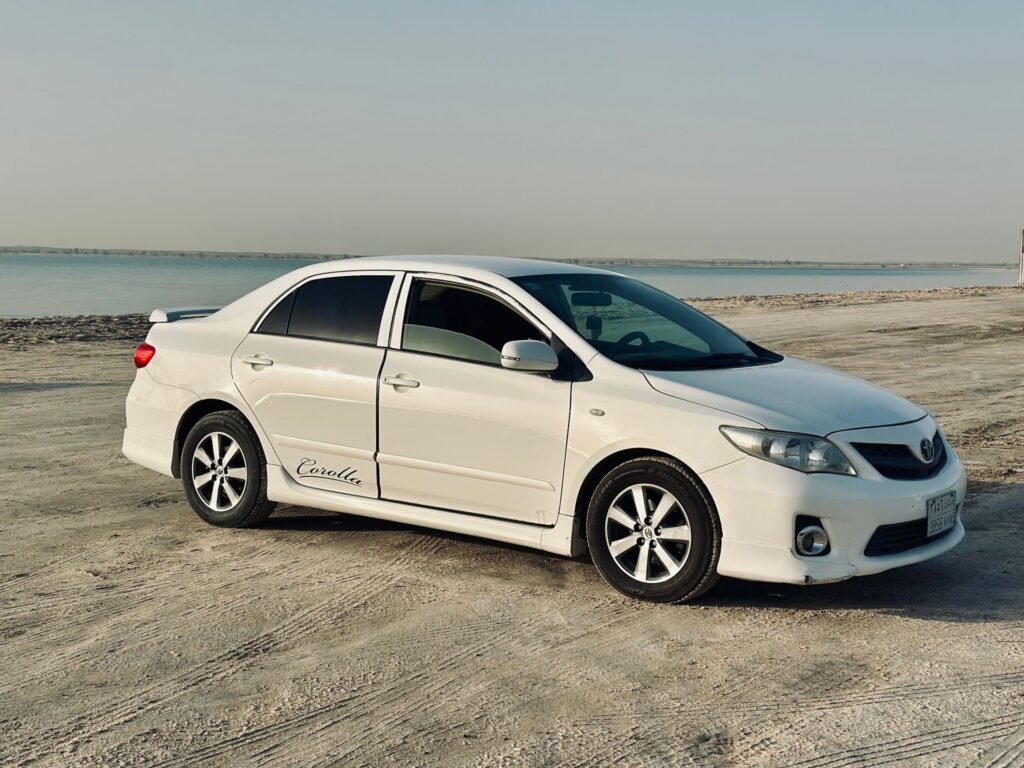
The twelfth generation Corolla is the car that finally put the old boring appliance joke to rest. Built on Toyota’s TNGA platform, the E210 arrived as a 2019 model hatchback in the US, with the sedan and the first ever North American Corolla hybrid following for the 2020 model year. It looks sharper and drives better than the car it replaced, while keeping the reliability reputation that sells a million of these cars a year.
So who does it suit? Commuters who want a car that sips fuel and asks for nothing. First time buyers who want modern safety kit without a premium price. Used buyers who want near new technology, including a hybrid option, with old school Toyota durability underneath. Our Toyota Corolla model guide compares every generation side by side.
This page covers the E210 from 2019 to the present: the three US engines, the gearboxes, the documented recalls and problems, which years to buy used, and what the car costs to run.
Toyota Corolla 2019 to present at a glance
| Item | Details |
|---|---|
| Generation and years sold | E210, the twelfth generation. On sale in the US from the 2019 model year for the hatchback and the 2020 model year for the sedan. Still in production today. |
| Body styles | 5 door hatchback and 4 door sedan in the US. A wagon version called the Touring Sports is sold in Europe only. |
| Main engines | 1.8 litre petrol with 139 hp on L, LE and XLE sedans. 2.0 litre petrol with 169 hp on SE, XSE and all hatchbacks. 1.8 hybrid with 121 hp combined on the LE Hybrid sedan. |
| Gearboxes | Dynamic Shift CVT with a physical launch gear on petrol cars, a six speed manual on 2.0 SE and XSE models, and an eCVT on the hybrid. |
| Drive | Front wheel drive only. |
| Seats | 5 |
| Boot space | Sedan about 13 cubic feet, hatchback 361 litres. |
| Safety kit | Toyota Safety Sense 2.0 is standard on every car: pre collision with pedestrian detection, lane departure alert with steering assist, adaptive cruise control, lane tracing assist and road sign assist. |
| Fuel economy highlights | Hybrid sedan up to 53 mpg city. 2.0 SE CVT sedan 31 city and 40 highway. Hatchback SE CVT 32 city and 42 highway. |
Engines and specs that matter
The 2.0 litre engine is the one to get if you are buying petrol. Toyota’s Dynamic Force unit makes 169 hp and 151 pound feet of torque, pulls strongly from low revs and returns around 40 mpg on the highway in the SE sedan. It is standard on every hatchback and on the SE and XSE sedans, and it is the only engine you can pair with the six speed manual, a proper rev matching box.
The 1.8 litre engine is the carryover unit from the previous generation, now with 139 hp and 126 pound feet of torque. It is CVT only and comes on the L, LE and XLE sedans. It will not excite anyone, but it is simple port injected technology with a long record, and it suits buyers who drive gently and value purchase price over performance.
The hybrid is the smart money, and it was the first Corolla hybrid ever sold in North America. It borrows the Prius powertrain, a 1.8 litre engine with electric motors and 121 hp combined, and it is rated up to 53 mpg city and 52 highway in the sedan. If you do big city miles, the fuel saving over the petrol cars is enormous, and Toyota’s hybrid system has decades of proven durability behind it.
The gearboxes deserve attention because the petrol CVT is unusual. The Dynamic Shift CVT uses a real physical first gear for pulling away, then hands over to the belt drive once moving. Even so, Toyota calls the fluid lifetime fill, and our guide on how often to change transmission fluid explains why a used buyer should still have the CVT serviced: clean fluid is cheap insurance on a gearbox you cannot afford to replace.
Which engine suits you? Do mostly town driving and want the lowest fuel bills, take the hybrid. Want the liveliest Corolla with a manual gearbox, take the 2.0 SE with the six speed. Want the cheapest way into a new generation car and drive gently, the 1.8 LE is fine.
Common problems of this generation
This is a reliable car with a short list of documented issues, every one of them checkable before you buy. Recalls are the headline, so run the VIN through the Toyota recall checker on any car you consider.
Denso low pressure fuel pump recall on 2019 and 2020 cars
The 2019 Corolla Hatchback and the 2020 Corolla were included in Toyota’s Denso low pressure fuel pump recalls (NHTSA campaigns 20V012 and 20V682). The pump can fail without warning, the engine can stall while driving and may not restart, and Toyota replaces the pump free of charge. Confirm with the VIN that this recall is closed before you buy any 2019 or 2020 car.
Airbag ECU recall on 2019 cars
The 2019 Corolla, including the new hatchback, was swept into the airbag control unit recall (NHTSA 20V024) covering 2011 to 2019 Corollas. In certain crashes the airbag ECU can malfunction and disable airbag or seatbelt pretensioner deployment. The fix is a noise filter fitted by the dealer, free of charge. Again, confirm it is done by VIN before money changes hands.
Infotainment glitches, 12 volt battery and rear brake corrosion
The smaller annoyances cluster around electrics. Early cars had infotainment glitches on the Entune 3.0 system, mostly sorted by software updates, so test the touchscreen, phone pairing and reversing camera thoroughly. Hybrids use a small 12 volt battery that can go flat if the car sits unused, and hybrid rear brake discs are prone to corrosion because regenerative braking barely uses the friction brakes. If the rear discs look rusty and scored, budget for replacement, and our brake pad replacement cost guide shows what that job typically involves.
Oil use and carbon buildup at high mileage
Buying guides note that cars past 50,000 miles can start to use a little oil, so check the dipstick yourself on any used example. On very high mileage hybrids, carbon can accumulate in the EGR system after years of short trip driving, causing rough idle and a check engine light. Insist on full service records and monitor oil and coolant levels yourself.
Should you buy this generation
This Corolla suits reliability first buyers who want modern tech. If you want a car that starts every morning, costs little to run and holds its value, the E210 is one of the strongest used buys in the class. Commuters doing big miles should look hard at the hybrid, and drivers who enjoy driving should try the 2.0 with the manual before assuming all Corollas are dull.
Who should skip it? If you need all wheel drive, Toyota does not offer it on this Corolla in the US. If you regularly carry tall cargo, the hatchback helps but the boot is still compact car sized. And if your budget only stretches to the earliest cars, 2019 and 2020 models carry the fuel pump recall history, which is manageable but demands the VIN check described above.
The good buys are the 2021 and newer cars: past the fuel pump recall build dates, with the early software niggles sorted. A 2021 or 2022 2.0 hatchback with the manual is the enthusiast pick, and a 2021 or newer LE Hybrid sedan is the economy pick. Years to be careful with are 2019 and 2020, where you must verify the recalls are closed.
Whatever the year, run through this checklist before you hand over money:
- Run the VIN through the Toyota recall checker and confirm the fuel pump and airbag ECU recalls are closed.
- Check the engine oil level yourself and ask the seller directly if the car uses oil between services.
- Check the coolant level and look for leaks or overheating history.
- On a hybrid, ask for a battery health check printout from a Toyota dealer and test the 12 volt battery.
- Look at the rear brake discs for heavy corrosion, a common hybrid issue.
- Insist on full service records; a car with missing history is not worth the small saving.
Running and repair costs
Cheap running costs are the main reason people buy this car. Parts are everywhere, every independent garage knows the engines, and the hybrid system needs no more servicing than the petrol cars in normal use. Typical US prices for the common jobs look like this:
| Job | Typical cost in US dollars |
|---|---|
| Front brake pads, fitted | 150 to 300 |
| Rear brake discs and pads, fitted, hybrids prone to corrosion | 200 to 400 |
| 12 volt battery, fitted | 150 to 250 |
| Four tyres, fitted | 400 to 800 |
| Major service at an independent garage | 300 to 600 |
The hybrid adds almost nothing to the servicing bill in normal use. Verify the recalls are closed, then enjoy one of the cheapest cars to own in America.
Questions and answers
Is the 2019 to present Toyota Corolla reliable?
Yes. The engines, gearboxes and hybrid system have strong records, and 2021 and newer cars are among the most dependable compacts on sale. The weak points are specific and avoidable: the Denso fuel pump recall on 2019 and 2020 cars, the airbag ECU recall on 2019 cars, and minor electrical niggles on early builds. Buy the right year with the recalls closed and it is superb.
Should I buy the Corolla hybrid or the 2.0 petrol?
Buy the hybrid if most of your driving is in town or mixed, because the economy advantage is biggest there and Toyota’s hybrid system is proven over decades. Buy the 2.0 if you mostly cruise highways or want the manual gearbox, because it is livelier and cheaper to buy.
What is the Denso fuel pump recall on the Corolla?
It is a safety recall covering the 2019 Corolla Hatchback and 2020 Corolla, where the low pressure fuel pump inside the tank can fail and stall the engine without warning. Toyota replaces the pump free of charge under NHTSA campaigns 20V012 and 20V682. If you are considering a 2019 or 2020 car, run the VIN through the Toyota recall checker and confirm the work is done before you buy.
Which is the best Corolla E210 year to buy used?
A 2021 or newer car is the cleanest buy: past the fuel pump recall build dates, with early software issues sorted and full modern connectivity. The 2.0 hatchback with the manual is the pick for drivers, the LE Hybrid sedan is the pick for economy. A 2019 or 2020 car can still be a fine buy at the right price, but only with written proof that both recalls are closed.