
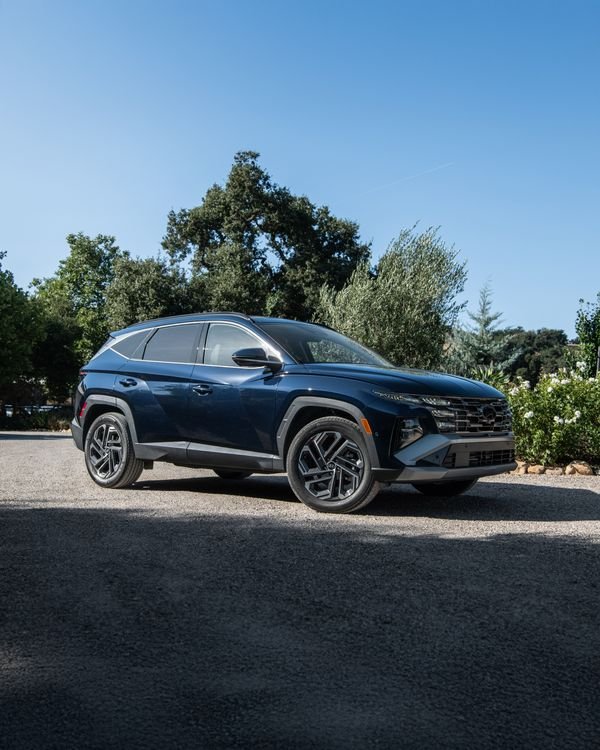
The fourth generation Tucson is the car that made Hyundai a design leader. Launched for the 2022 model year with concept car styling, hidden daytime running lights in the grille and a tech heavy cabin, the NX4 Tucson still sits in showrooms today as the 2026 model. It offers something for everyone: a 2.5 liter petrol, a hybrid, and a plug in hybrid with real electric range.
So who does it suit? Style conscious families who want to stand out from the RAV4 crowd. Tech lovers, for whom the big screens and driver assists are a big draw. Commuters who can charge at home, for whom the plug in hybrid can cover the daily drive on electricity. Used buyers who check the oil and the recall history, because the early cars have two issues you need to know. Our Hyundai Tucson model guide puts the generations side by side.
This page covers the 2021 to present generation in detail: the three powertrains, the oil consumption issue on early 2.5 liter cars, the recalls, the 2025 facelift changes, which ones to buy, and what the car costs to run.
Hyundai Tucson 2021 to present at a glance
| Item | Details |
|---|---|
| Generation and years sold | NX4, the fourth generation. US model years 2022 to present, long wheelbase version for North America. Facelifted for the 2025 model year. Still on sale new. |
| Body style | 5 door SUV only. |
| Main engines | 2.5 liter four cylinder with 187 hp and 178 pound feet of torque. 1.6 liter turbo hybrid with 226 hp combined on 2022 to 2024 cars, 231 hp combined from 2025. Plug in hybrid with 261 hp combined at launch, 268 hp combined from 2025, and 32 miles of electric range. |
| Gearboxes | Eight speed conventional automatic on the 2.5 liter. Six speed conventional automatic on the hybrid and plug in hybrid. No dual clutch in the US. |
| Drive | Front wheel drive or all wheel drive on the 2.5 liter. All wheel drive standard on hybrid and plug in hybrid. |
| Seats | 5 |
| Boot space | 38.7 cubic feet behind the rear seats, best in class legroom in the back. |
| Fuel economy highlights | 2.5 liter rated around 25 mpg city and 33 highway. The hybrid is the economy pick and the plug in can do the school run on electricity alone. |
Engines and specs that matter
The 2.5 liter is the volume engine and the one most used buyers will meet. With 187 hp and 178 pound feet of torque through an eight speed conventional automatic, it is smooth and refined rather than quick. Economy of around 25 city and 33 highway is honest for the class. It can tow up to 2,750 pounds, the most of the range.
The hybrid is the smart buy for most families. The 1.6 liter turbo pairs with an electric motor for 226 hp combined on 2022 to 2024 cars and 231 hp combined from the 2025 facelift, all through a six speed conventional automatic with standard all wheel drive. It is quicker than the 2.5, quieter in town, and meaningfully more economical. Towing is rated at 2,000 pounds.
The plug in hybrid suits drivers who can charge at home. With 261 hp combined at launch and 268 hp from 2025, a 13.8 kWh battery and 32 miles of electric range, it can handle the daily commute without using fuel at all, then work as a normal hybrid on longer trips. A full charge takes under two hours on a home wall box.
The 2025 facelift brought worthwhile changes beyond the power bumps: a revised front end, physical buttons back for the climate controls, a column mounted gear selector that frees console space, and a bigger wireless charging pad. If you are choosing between used cars, the facelift cars feel noticeably more polished inside.
Which one suits you? Maximum value, take a 2024 or newer 2.5 liter with verified oil history. Best all rounder, the hybrid in any year. Home charging available, the plug in hybrid can slash your fuel bills. Latest tech, the 2025 and 2026 facelift cars. Note that the US cars all use conventional torque converter automatics, so none of the dual clutch worries of the previous generation apply here.
Common problems of this generation
The NX4 is a modern, generally well built car, but the 2022 and early 2023 cars have two issues to check, plus a pair of recalls. Read this section before you look at any early car.
Oil consumption on early 2.5 liter cars
The 2.5 liter engine in 2022 and early 2023 cars has owner reports of excessive oil consumption, traced to faulty piston rings. Hyundai quietly revised the ring design during 2023 production without issuing a formal recall. The defense is simple and non negotiable: check the oil level on the dipstick yourself on every 2.5 liter car you consider, ask the seller directly about top ups between services, and favor 2024 and newer cars built after the revision. Our guide to car oil leak causes and fixes helps you tell consumption from an actual leak.
Eight speed automatic complaints, 2022 to 2024
Some owners of 2022 to 2024 cars report delayed shifts, harsh shifts and valve body issues from the eight speed automatic. A 2022 technical service bulletin updated the transmission software calibration, which helped many cars. On your test drive, feel for smooth, timely shifts in town traffic. If you feel anything odd, our guide to transmission problem signs and symptoms explains how to tell a software trait from a gearbox with real trouble.
Recalls to verify by VIN
Two recalls matter here. Certain 2023 cars built between late October 2022 and late April 2023 were recalled for a transmission electric oil pump controller fault that carries a fire risk, with dealers replacing the pump and harness free and owners told to park outside until fixed. And certain 2022 to 2024 cars fitted with the optional trailer wiring harness were recalled for moisture entering the harness module, again with a fire risk. Run the VIN through the NHTSA recall checker and confirm both are closed where they apply.
Smaller issues to know
Owner reports describe spontaneous windshield cracking with no identifiable impact on some cars, with replacement costing around 1,500 dollars and no official recall. The 2025 facelift cars have had reports of the digital instrument cluster rebooting or blanking while driving, addressed by an over the air software fix, so confirm the update was applied. None of these are deal breakers, but they are worth checking.
Should you buy this generation
This Tucson suits buyers who want modern design and technology without paying a premium badge price. A 2024 2.5 liter with verified oil history is a lot of car for the money, the hybrid is one of the best family SUVs you can buy used, and the plug in hybrid suits a specific but growing group of home chargers.
Who should skip it? Buyers who will not check the oil should avoid the 2022 and early 2023 2.5 liter cars, because the consumption issue punishes inattentive owners. Anyone who needs maximum towing should note the hybrid and plug in are limited to 2,000 pounds. If you want the absolute lowest purchase price, the previous TL generation costs far less.
The good buys are 2025 and 2026 facelift cars: more power on the hybrids, the better interior, and past the early production issues. A 2024 2.5 liter built after the piston ring revision is the value pick. The hybrid in any year is the pick for most families.
Whatever the year, run through this checklist before you hand over money:
- Run the VIN through the NHTSA recall checker and confirm all campaigns are closed.
- Check the engine oil level yourself on every 2.5 liter car and ask about top ups.
- On a 2022 to 2024, drive in town traffic and feel for smooth shifts from the eight speed.
- Inspect the windshield for cracks or recent replacement.
- On a 2025 or 2026, confirm the instrument cluster software update was applied.
- On a plug in hybrid, ask for a battery health check and confirm home charging suits your routine.
- Check the air conditioning blows properly cold.
- Ask for full service history with regular oil changes.
Running and repair costs
Running an NX4 is reasonable for the class, and the long Hyundai warranty helps: 5 years or 60,000 miles basic, 10 years or 100,000 miles on the powertrain, and 10 years or 100,000 miles on the hybrid battery for original owners. Typical US prices for the common jobs look like this:
| Job | Typical cost in US dollars |
|---|---|
| Front brake pads, fitted | 150 to 300 per axle at a dealer, around 216 mobile |
| Eight speed transmission fluid change | 170 to 204 |
| Four tyres, fitted | 650 to 1,200 |
| 12 volt battery, fitted | 120 to 300 |
The hybrid and plug in hybrid cost a little more when things do need doing, but they save far more in fuel for most drivers. The expensive mistake is buying a 2022 or early 2023 2.5 liter that drinks oil; the purchase price saving will not cover the aggravation or a potential engine repair.
Questions and answers
Is the 2022 to 2026 Hyundai Tucson reliable?
Mostly yes, with a clear split by build date. The 2024 and newer cars, and the 2025 facelift cars, have good records. The 2022 and early 2023 2.5 liter cars have the documented oil consumption issue from faulty piston rings, and there are two fire risk recalls to verify. Buy a late build car with the recalls closed and it is a dependable, well equipped SUV.
Does the 2.5 liter Tucson burn oil?
Some 2022 and early 2023 cars do, because of faulty piston rings that Hyundai revised during 2023 production. There was no formal recall. Check the dipstick yourself on every 2.5 liter car, ask about oil change history and top ups, and favor 2024 and newer cars.
Should I buy the hybrid or the plug in hybrid?
Buy the hybrid if you cannot charge at home: it is quicker and more economical than the 2.5 with no lifestyle changes. Buy the plug in hybrid if you have home charging and a short commute: 32 miles of electric range can cover the daily drive on electricity. Both use a conventional six speed automatic, so neither has the dual clutch worries of the old car.
What changed in the 2025 facelift?
More than a styling refresh. The hybrid and plug in hybrid gained power, the front end was revised, physical buttons returned for the climate controls, the gear selector moved to the steering column, and the wireless charging pad grew. The facelift cars feel more polished inside and are the ones to buy if your budget stretches.