
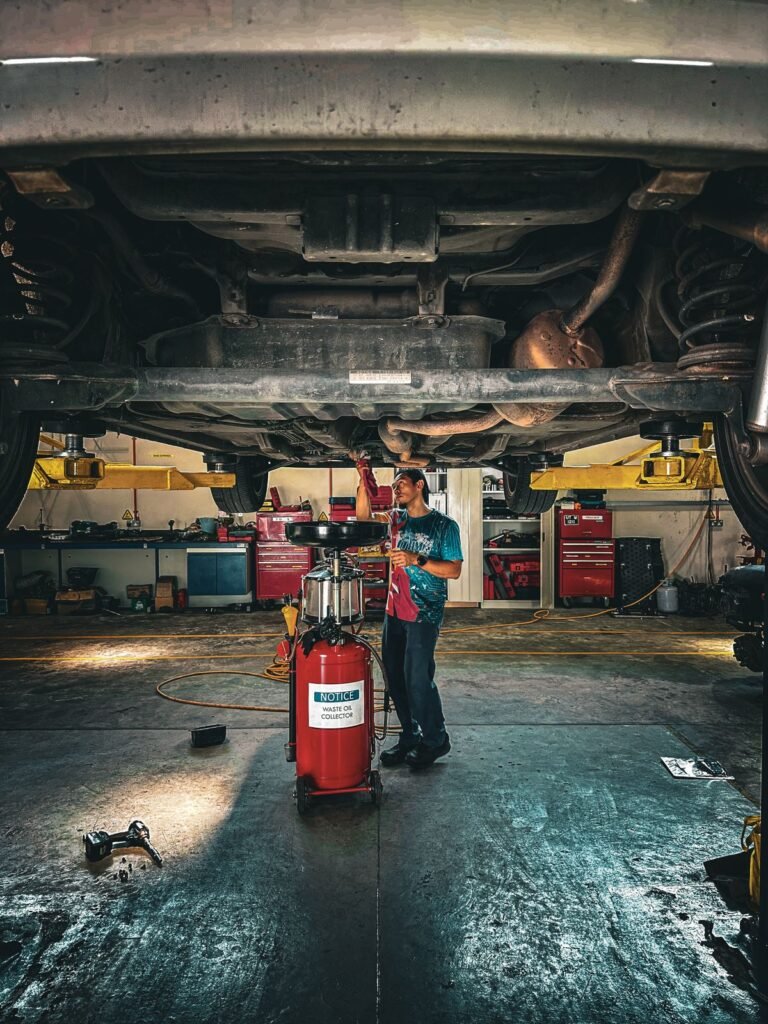
If your engine oil is leaking, the cause is usually a worn seal, a tired gasket, or a loose drain plug, and the dark puddle under your car is your engine slowly losing the oil it needs to survive. A small oil leak rarely stops a car today, but it always gets worse with time, and running an engine low on oil can destroy it. The good news is that most leaks come from a short list of common parts, and several of them are cheap to fix once you know where the oil is coming from.
How to tell it is engine oil and not another fluid
Engines hold several fluids, and each one leaks a different color. Fresh engine oil is amber and slippery, while old oil turns dark brown or black. Transmission fluid is usually red or pink, coolant is green, orange, or pink and feels watery, and brake fluid is clear to pale yellow. If the puddle under the front or middle of your car is brown or black and feels slick between your fingers, you are almost certainly looking at an oil leak. Slide a piece of white cardboard under the engine overnight and check it in the morning. The color, the spot it lands on, and how much oil is there will tell a mechanic a lot before anyone opens the hood.
The most common causes of an oil leak
Rubber and cork seals harden as they age, and heat cycles make them shrink and crack. Once a seal stops pressing tightly against metal, oil finds its way out. These are the usual suspects, roughly in order of how often they fail:
- Valve cover gasket: sits on top of the engine and is one of the most common leaks. Oil often runs down the side of the engine and may drip onto the hot exhaust, which causes a burning smell.
- Oil drain plug and washer: the plug is removed at every oil change, and a worn washer or a plug that was not tightened correctly will seep steadily.
- Oil filter: a filter that was installed loosely, double gasketed, or damaged will leak, often right after a recent oil change.
- Oil pan gasket: seals the pan at the bottom of the engine. Road damage to the pan itself can also crack it and cause a leak.
- Front and rear main seals: these seal the crankshaft where it leaves the engine. The rear main seal sits between the engine and transmission, which makes it expensive in labor even though the part is cheap.
- Camshaft and crankshaft seals: smaller seals at the front of the engine, often replaced together with a timing belt service.
- Oil pressure sender: a small sensor that can crack and leak, and it can be confused with a bigger problem. If oil is also low, read our guide on what to do when the oil pressure light comes on while driving.
How to find where the leak is coming from
Oil spreads as it drips, so the lowest wet spot is not always the source. Start by cleaning the engine with degreaser and a rinse, then drive for a day and look again with a flashlight. Fresh oil trails lead back to the highest and furthest forward wet point, and that is usually where the leak starts. Many shops add a fluorescent dye to the oil and check with an ultraviolet light, which makes even a slow seep easy to spot. This dye test typically costs between 40 and 90 dollars as part of a diagnostic visit, and it is money well spent before replacing parts on a guess.
What the common fixes cost
Repair prices depend far more on labor than on the part itself. A gasket may cost 20 dollars but sit behind three hours of work. These are typical ranges at an independent shop in the US:
| Repair | Typical cost range |
|---|---|
| Drain plug and washer | 20 to 60 dollars |
| Oil filter replacement | 30 to 80 dollars |
| Valve cover gasket | 150 to 450 dollars |
| Oil pan gasket | 250 to 600 dollars |
| Oil pressure sender | 100 to 250 dollars |
| Rear main seal | 600 to 1,200 dollars or more |
Prices vary by car model and region, and a dealer will usually charge more than an independent shop for the same job.
Can you drive with an oil leak
A slow seep that leaves a spot the size of a coin each night is not an emergency, but it does need a repair plan. Check the dipstick every week and top up the oil so the level never drops below the minimum mark. A leak that drips steadily, leaves a large puddle, or makes the oil level fall between checks is more serious. If the oil pressure warning light ever comes on, stop the engine as soon as it is safe, because driving without oil pressure can ruin an engine in minutes. Also keep in mind that a red or pink puddle points to a different problem, so if the fluid turns out to be transmission fluid, see our guide on fixing a transmission fluid leak instead.
Stop leak additives and quick fixes
Oil stop leak products swell rubber seals slightly and can slow a small seep on an older engine. They are a temporary measure, not a repair, and they will not fix a cracked pan, a torn gasket, or a loose plug. Tightening a drain plug or replacing a filter is a genuine fix you can do in a driveway. Almost everything else is best confirmed with a proper diagnosis first, because replacing the wrong gasket wastes money and the leak stays exactly where it was.
Frequently asked questions
How serious is a small oil leak
A small leak is not an emergency, but it never heals itself. It will slowly grow, lower your oil level, and can damage rubber hoses and belts it drips onto. Fix it at your next service at the latest, and keep an eye on the dipstick until then.
Why does my car leak oil after an oil change
The most common reasons are a drain plug washer that was reused instead of replaced, a plug that was under or over tightened, or an oil filter whose old gasket stayed stuck to the engine. Go back to the shop that did the change and ask them to correct it.
Can an oil leak cause a fire
It is uncommon but possible. Oil dripping onto a hot exhaust manifold usually just smokes and smells, yet a heavy leak near very hot parts is a real risk. Any leak that produces smoke should be repaired promptly rather than watched.
An oil leak is your engine asking for attention early, while the fix is still cheap. Find the source, repair the right part once, and the puddles and top ups become a thing of the past.