
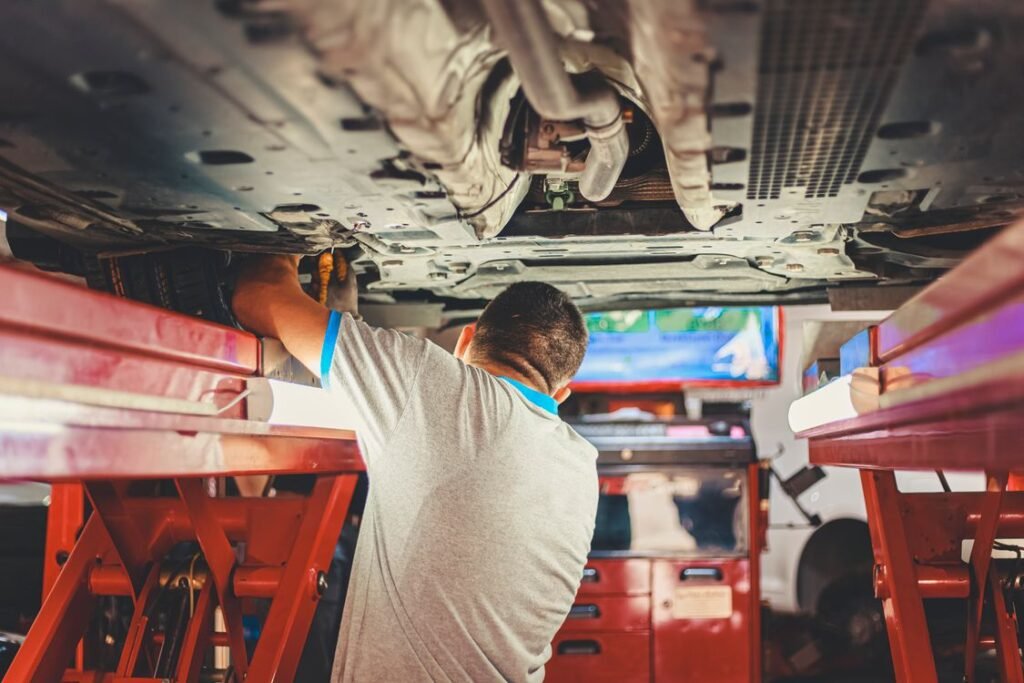
Clicking when you turn, vibration when you speed up, and grease sprayed inside a wheel are classic signs that a CV axle is failing, and the repair is usually more urgent than it first sounds. The short answer: replacing one CV axle costs most drivers between $300 and $800 at an independent shop for a common car, with the axle itself and labor making up that total. RepairPal based guides put the average higher, around $1,026 to $1,176, because they often reflect a fuller parts and labor job at a wider range of shops. Luxury cars, all wheel drive cars, and cars that need an original equipment part can pass $1,000 per axle. The first decision is whether you need one axle or two, and whether a torn boot was caught early enough to save the joint.
A CV axle, also called a constant velocity axle, carries power from the transmission to a driven wheel while the wheel steers and moves up and down. Each axle has two CV joints, one near the transmission and one near the wheel, and each joint is packed with grease and sealed by a rubber boot. When the boot tears, grease escapes, dirt and water get in, and the joint wears fast. That is why a small rubber tear can turn into a full axle replacement if it is ignored for weeks.
Signs your CV axle is failing
The most telling sign is a clicking or knocking sound when you turn at low speed, especially in a tight turn in a parking lot. Vibration or shuddering when you speed up is another warning, and it often feels different from a tire balance problem because it grows with power, not just with speed. Grease on the inside edge of a tire or on the wheel well points to a torn boot, even if you hear no sound yet. Your action: check the boots with a flashlight when you notice any of these signs. If the boot is torn but the joint is still quiet, get it inspected that week. If the joint already clicks, plan for a full axle replacement, not just a boot, because dirt has already done damage inside the joint.
Other signs include a car that pulls to one side, handling that feels loose, and a clunk when you shift between drive and reverse. These signs overlap with suspension and steering problems, so a shop should confirm the axle before you approve the job. For a related noise check, read our guide on car noises when turning to compare the sound you hear with other turning noises before you book the repair.
Average costs at a glance
Costs vary because the part itself varies so much. An aftermarket axle for a common car can cost $60 to $250, while an original equipment axle can cost $300 to $500 or more, and some luxury axles pass $1,000 for the part alone. Labor usually takes 1.5 to 3 hours per axle at shop rates that range from about $75 to $170 per hour depending on location.
| Job | Parts | Labor | Typical total |
|---|---|---|---|
| One axle, common car, aftermarket part | $60 to $250 | $150 to $450 | $300 to $800 |
| One axle, RepairPal based average | $700 to $900 | $250 to $350 | $1,026 to $1,176 |
| One axle, luxury or all wheel drive car | $500 to $1,500 | $300 to $600 | $900 to $1,800 plus |
| Both front axles, common car | $120 to $500 | $300 to $900 | $600 to $1,400 |
| Boot only, caught very early | $30 to $100 | $150 to $350 | $200 to $450 |
Your action: ask the shop to quote the axle brand and whether the price covers one axle or a pair. A quote that looks cheap because it uses a low quality axle can fail early and cost you the labor twice, so ask for an established aftermarket brand or an original equipment part on a car you plan to keep.
Replace the axle or just the boot
Most shops now replace the whole axle assembly rather than rebuilding a joint, because a new assembly is faster to fit and more dependable than a rebuilt joint. A boot replacement makes sense only when the boot was torn very recently, the joint is still quiet, and there is no grit inside it. Once the joint clicks, a boot will not save it. Your action: if a shop offers only a boot on a clicking joint, get a second opinion. The cheaper boot job will usually fail, and you will pay the labor again for the axle you needed in the first place.
One axle or both
You do not always need both axles. If one boot is torn and the other side is dry, quiet, and tight, replacing the bad side alone is normal. If the car has high mileage and both boots show cracks, doing both sides in one visit can save a second round of labor later, but it is not required for safety. Your action: ask the shop to show you both boots. Replace the side that is torn or clicking now, and only add the second side if it shows the same damage.
What makes the price go up or down
Front wheel drive versus all wheel drive
Front wheel drive cars usually have two CV axles at the front, and access is straightforward. All wheel drive cars can have four axles, and rear axles can be harder to reach. Your action: confirm which axle the quote covers, front or rear, left or right, so you are not comparing a front axle price with a rear axle price.
Aftermarket versus original equipment
Aftermarket axles suit most common cars and keep the bill down. Original equipment axles match the factory part exactly and suit luxury cars, cars with vibration complaints, and cars you plan to keep for many years. Your action: on a common car, a quality aftermarket axle is usually the value choice. On a luxury car, ask whether an aftermarket axle has caused vibration complaints for that model before you choose it.
Alignment after the job
Axle work often disturbs suspension parts, and many shops recommend an alignment afterward. An alignment usually adds $186 to $273 based on current national guides, and it is not always included in the axle quote. Your action: ask whether alignment is included, and get it done if the shop removed suspension parts to reach the axle. For what an alignment covers, read our guide on wheel alignment cost before you approve the extra charge.
DIY or workshop
A CV axle swap is possible for an experienced home mechanic with the right tools, and it can save $150 to $450 in labor per axle. The hard parts are breaking loose a tight axle nut, separating suspension parts without damaging a boot or a sensor, and torquing everything correctly afterward. Your action: if you DIY, buy the axle nut and any seals the manual calls for, and do not reuse a damaged nut. If the car has seized hardware, rust, or an all wheel drive rear axle, a shop is the safer choice.
Frequently asked questions
Can I drive with a bad CV axle
A quiet axle with a freshly torn boot can sometimes get you to a shop nearby if you drive gently and avoid hard turns, but a clicking axle should not be driven far. A failed joint can break, and a broken axle can leave you with no drive to that wheel and a loss of control. Your action: book the repair as soon as the joint clicks, and avoid highway driving until it is fixed.
How long does a CV axle replacement take
Most shops finish one axle in half a day, with 1.5 to 3 hours of actual labor plus time for a road test. Rust, seized hardware, or an all wheel drive rear axle can push the job to a full day. Ask whether the quote includes a road test with turns at low speed, because that is how a clicking joint shows up.
Does a CV axle failure affect safety
Yes, because the axle carries drive power and helps locate the wheel. A worn joint can cause vibration, pulling, and in a severe failure, a loss of drive. Your action: treat clicking, strong vibration under power, and grease on a tire as safety warnings, not just noises, and get the car inspected promptly.
A CV axle repair is a job where timing decides the bill. Catch a torn boot early and you may save the joint. Wait until it clicks and you are paying for a full axle. Confirm which axle is bad, compare the part brand and the labor hours across quotes, and ask about alignment before you approve the work.
Pingback: Car Making a Clicking Noise: What It Could Be and What to Do