
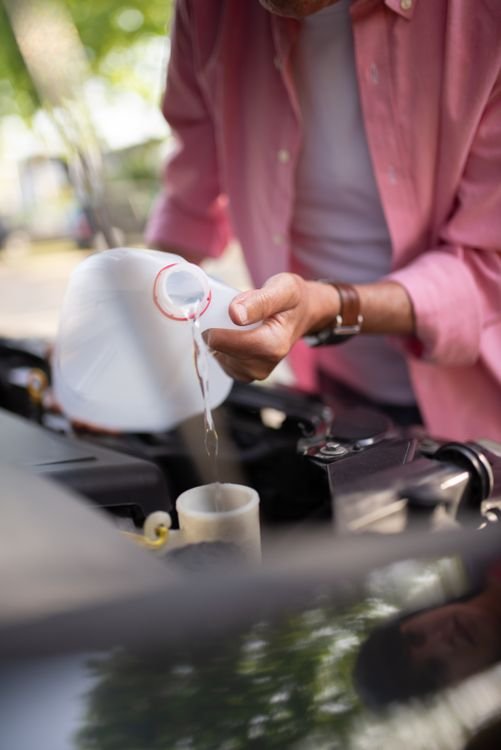
A low coolant level means your engine has less fluid to carry heat away, and that puts the engine at risk of overheating. The short answer: do not open a hot cooling system, wait until the engine is cool, top up with the correct coolant to the maximum mark, then watch the level closely. If the level drops again within days, if you see a puddle, or if the temperature gauge climbs, stop driving and get the car checked. A small slow drop over many months can be normal, but a level that keeps falling always means a leak or an internal fault that needs finding.
Coolant, also called antifreeze, does three jobs: it carries heat from the engine to the radiator, it stops the system freezing in cold weather, and it protects metal parts, hoses, and seals from corrosion. The coolant reservoir is usually a translucent plastic tank in the engine bay, marked with minimum and maximum lines. Your action: check that level when the engine is cold, on level ground, and compare it with the marks on the tank. A level below minimum is a clear call to act before your next long journey.
First, is it safe to drive
Your decision depends on how low the level is and whether the engine is already hot. If the level is below minimum, do not drive until you have topped it up. Even a short trip in traffic or warm weather can push a low system into overheating, and sustained overheating can damage a head gasket, which is a major repair. If the level sits between minimum and maximum but near the bottom, a short careful drive to a nearby shop can be acceptable, provided the temperature gauge stays normal and you pull over at once if it climbs.
Your action: if the temperature warning light is on, if steam is coming from the engine bay, or if the gauge is in the red zone, switch the engine off, pull over safely, and call for a tow. Do not try to limp home with an overheating engine. If you see a puddle under the car, or if the level dropped sharply after a recent top up, do not drive either, because an active leak will drain the system faster than you can top it up.
How to check the level safely
Never open a radiator cap or a reservoir cap on a hot engine. The system is pressurised, and hot coolant can spray out and cause serious burns. Your action: wait at least 15 to 20 minutes after switching the engine off, and longer if the engine was overheating. Then open the bonnet, find the coolant reservoir, and read the level against the minimum and maximum marks without opening the cap. The reservoir is translucent, so you can usually see the coloured fluid through the side of the tank.
Also look at the colour and condition of the coolant. Fresh coolant is usually green, pink, orange, or blue, depending on the type your car uses. Rusty, brown, or muddy coolant, or coolant with floating debris, means the fluid is old or contaminated. Your action: if the coolant looks rusty or oily, do not just top it up and carry on. Book a cooling system check, because rust points to corrosion and an oily or milky look can point to a head gasket or oil cooler fault that a top up will not fix.
How to top up correctly
Use only the coolant type listed in your owner manual or on the under bonnet label. Mixing different coolant types can form a gel that blocks narrow passages and the heater core, so this detail matters. Your action: if you are unsure which type your car needs, check the manual before you buy, or buy a premixed coolant that matches your car specification exactly. Premixed coolant is already diluted to the right strength, which removes the risk of mixing it wrong.
When the engine is cool, open the reservoir cap slowly, pour coolant in until it reaches the maximum mark, and refit the cap firmly. Do not overfill above maximum, because the system needs room for the fluid to expand as it heats up. Your action: after topping up, run the engine for a few minutes with the heater on, switch it off, let it cool, and check the level again. A small drop after the first run can be air working its way out, but a level that keeps falling after that points to a leak.
For a full service, including when a flush is better than a simple top up, read our guide on engine coolant flush and compare the flush cost and interval with a drain and refill before you book.
Common causes of a low coolant level
External leaks are the most common cause, and they often leave evidence. Cracked or split hoses, a leaking water pump, a cracked radiator, a damaged reservoir, or a cap that no longer holds pressure can all let coolant escape slowly. Your action: look under the car for coloured puddles, check hoses for damp spots or white crusty deposits around joints, and check around the water pump and radiator for wet patches. A sweet smell after driving is another clue, because coolant has a sweet smell when it leaks onto a hot engine.
Internal leaks are harder to spot because there is no puddle. A failed head gasket can let coolant into the combustion chamber or into the oil passages. Your action: watch for white smoke from the exhaust that does not clear, a milky substance on the oil filler cap or dipstick, bubbles in the reservoir while the engine runs, or a level that falls steadily with no visible leak. Any of those signs means a workshop diagnosis, not another top up, because driving with an internal leak can damage the engine further.
Slow evaporation and heat cycles can cause a very small loss over a long period, often only a few ounces over a year. Your action: if the level drops slightly between annual services and then holds steady after a top up, note the date and mileage and check it again monthly. If you need to top up every few weeks or every month, treat that as a leak, even if you cannot see it, and book a pressure test. A pressure test pressurises the cooling system and reveals leaks that only appear under pressure.
What a coolant leak repair costs
Cost depends entirely on the cause, so do not accept a single price before diagnosis. A new reservoir cap or a hose is usually a small job. A water pump, radiator, or heater core replacement costs more, because parts and labour are larger. A head gasket repair is a major job and can run into thousands, which is why catching a leak early matters so much. Your action: ask the workshop to find the leak first, show you the failed part or the pressure test result, and quote parts and labour separately before you approve work beyond the diagnosis.
For leak causes, warning signs, and repair options in more detail, read our guide on coolant leak repair cost so you can judge whether a quote for your car is reasonable for the part involved.
What to avoid when coolant is low
Do not keep topping up for weeks without finding the cause. Each top up hides the leak for a few days, while the leak itself gets worse and the risk of overheating grows. Do not use plain water for long periods, except as an emergency measure to reach a safe place, because water dilutes the corrosion protection and the freeze protection. Do not mix coolant types to save a trip to the shop, because a gel blockage can cost far more than the correct bottle of coolant.
Do not ignore a low coolant warning light because the car still drives normally. The light means the level has fallen below the sensor threshold, and the engine is already running with less cooling capacity than it was designed for. Your action: treat the light as a same day check, not as a next service item. Check the level when cool, top up with the correct coolant, and book a leak check if the level falls again.
Frequently asked questions
Can I drive with the coolant level slightly low
If the level is between minimum and maximum, with no leak and a normal temperature gauge, a short drive to a shop is usually acceptable. Your action: top it up first if you can, watch the gauge the whole way, and pull over at once if the temperature climbs.
Why does my coolant keep dropping with no puddle
A leak can be internal, such as a head gasket fault, or it can be a small external leak that only appears under pressure or evaporates on a hot engine before it reaches the ground. Your action: book a pressure test and ask the workshop to check for white exhaust smoke, milky oil, and bubbles in the reservoir.
Can I top up coolant with water in an emergency
Yes, clean water can help you reach a safe place in an emergency, but it is not a substitute for coolant. Your action: top up with the correct premixed coolant as soon as possible, and have the system checked, because a low level that needed an emergency top up usually means a leak.
A low coolant level is a warning to act, not a detail to note for later. Wait until the engine is cool, check the level and the coolant condition, top up with the correct type to the maximum mark, and then watch the level. If it holds, note the date and keep checking monthly. If it falls again, find the leak with a pressure test before a small leak becomes an overheating repair.