
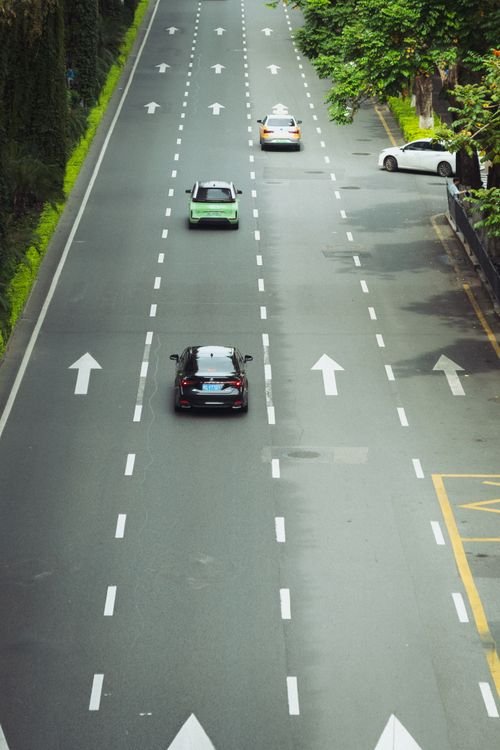
Lane departure warning is a safety system that watches the lane markings ahead of your car and warns you when you drift out of your lane without signalling. The short answer: it warns, it does not steer, so when the warning sounds you should check the road, signal if you meant to change lanes, and steer smoothly back to the centre of your lane. If your car also has lane keeping assist, that system may add a gentle steering nudge, but you stay in control at all times. Your first decision when you hear the warning is simple: look up, grip the wheel, and correct your position, rather than ignoring the sound or fighting the steering.
Most lane departure warning systems use a camera mounted near the rear view mirror, high on the windscreen. That camera reads the painted lines on the road and tracks where your car sits between them. When a wheel approaches or crosses a line and the turn signal is off, the system treats the move as unintentional and gives a warning. The warning is usually a sound, a flashing light on the dashboard, a vibration in the steering wheel, or a vibration in the seat. Some cars let you choose the warning type or its volume in the vehicle settings menu.
Lane departure warning, lane keeping assist and lane centring: what is different
These three names sound similar, and car makers often bundle them under one brand name, so it helps to separate them clearly. Lane departure warning is passive. It only warns. It never turns the wheel and never applies the brakes for you. Lane keeping assist is active. It builds on the warning and adds a gentle steering correction, and on some cars a light brake input on one side, to guide the car back toward the centre of the lane. Lane centring is the most active of the three. It steers continuously to hold the car in the middle of the lane, and it usually works together with adaptive cruise control on a motorway.
Your action: check your manual or your vehicle settings to find out which version your car actually has. Do not assume that a warning sound means the car will steer for you. If you only have lane departure warning, the correction is entirely your job. If you have lane keeping assist, expect a light nudge that you can override at any time by steering firmly. Knowing the difference stops two mistakes: expecting help that will not come, and being startled by a steering nudge you did not expect.
When the system works, and when it switches off
Most systems only work above a set speed, often around 30 to 40 miles per hour, because they are designed mainly for motorways and faster main roads. They also need clear lane markings to read. Faded paint, roadworks, snow, heavy rain, mud on the camera lens, or a road with no painted lines can all stop the system working, or make it switch off without a fault. The system also stays quiet when you signal, because a signalled lane change is a deliberate move, not a drift.
Your action: if the warning stops appearing on a road where it used to work, check the simple causes first. Clean the windscreen around the camera, check for snow or dirt on the lens area, and look at whether the lane markings are faded or covered. If the road is clear, the camera is clean, and the system still will not activate, book a diagnostic check rather than assuming the system is broken or ignoring it. A camera that is out of alignment after a windscreen replacement is a common cause, and that needs a professional recalibration.
What to do when the warning sounds
Treat every warning as a prompt to check three things in order: your attention, your position, and your intention. First, look at the road ahead and check for traffic beside you. Second, steer smoothly back to the centre of your lane. Third, if you did mean to change lanes, signal and check your mirrors and blind spot before moving. Your action: never make a sudden sharp swerve in response to a warning, especially at motorway speed. A smooth correction keeps the car stable and gives drivers around you time to react.
If warnings happen often on one journey, that pattern is information, not just noise. Frequent drift can mean tiredness, distraction, a badly adjusted seat or mirrors, or a car that pulls to one side. Your action: if you notice repeated warnings, pull over safely at the next suitable place, rest, and check tyre pressures and steering feel before continuing. If the car pulls to one side even when you hold the wheel straight, book a wheel alignment and suspension check, because a mechanical pull will keep triggering warnings and will wear your tyres unevenly.
Can you turn lane departure warning off, and should you
Most cars let you switch the system off with a button near the dashboard or steering wheel, or through a settings menu. On some models the system switches back on the next time you start the car. That reset is deliberate, because the system is a safety feature, and makers do not want it left off by accident after one journey.
Your action: leave the system on for normal driving, including motorway and main road journeys, because it is most useful exactly when attention dips for a second. Switch it off only for a clear reason, such as driving through roadworks with temporary lines that confuse the camera, or driving on a narrow rural road where the system warns constantly and distracts you. Switch it back on as soon as you return to a normal marked road. If you find yourself switching it off every day, change the warning type or sensitivity in the settings first, because a quieter vibration warning may suit you better than a loud beep.
For other dashboard warnings and what each one means, read our guide on car dashboard symbols and meanings so you can tell a lane warning apart from a more urgent fault light.
Common faults and warning messages
A lane departure warning fault message does not always mean the system is broken. It can mean the camera cannot see the road, the camera is blocked, or the system has switched itself off in poor conditions. Your action: clean the camera area, wait for better road markings, and restart the car once to see if the message clears. If the message stays on in clear conditions, or if the system warns when you are clearly centred in your lane, book a check. A misaligned camera, a damaged windscreen in the camera area, or a software fault can all cause false warnings.
After a windscreen replacement, a camera recalibration is often required, even if the new glass looks identical. Your action: when you book a windscreen replacement, ask the fitter directly whether camera recalibration is included, and ask for written confirmation that it was done. Skipping recalibration can leave lane departure warning, automatic emergency braking, and other camera based systems working with the wrong view of the road. The cost of recalibration varies by car and by workshop, so ask for a quote before the work starts, and do not accept a vague promise that the system will sort itself out.
Does lane departure warning make driving safer
Research from the Insurance Institute for Highway Safety has linked lane departure warning systems with fewer single vehicle, sideswipe, and head on crashes, and fewer injuries in those crashes. That benefit depends on the driver responding to the warning. The system cannot help if the driver is asleep, looking at a phone, or ignoring repeated warnings. Think of it as an extra pair of eyes, not as a replacement for attention.
Your action: use the system as a backup, not as a crutch. Keep your hands on the wheel, keep your eyes on the road, and treat a warning as a sign to refocus. If you drive long distances, plan breaks, because no warning system fixes tiredness. For related driver assist warnings, read our guide on traction control light meaning and fixes to understand how another common assist system warns you and when it needs attention.
Buying a used car: what to check
If you are buying a used car that advertises lane assist, test it properly before you pay. Your action: on a test drive on a well marked road, at a safe speed and with no traffic close beside you, let the car drift gently toward a line without signalling and note whether it warns, nudges, or centres. Then signal and change lanes normally, and check that the system stays quiet. Also check the windscreen for chips or replacement marks near the camera, and ask whether the camera has ever been recalibrated. A system that never warns on a clear marked road, or that warns constantly when centred, needs a diagnostic check before purchase, and that cost should be part of your negotiation.
Frequently asked questions
Does lane departure warning steer the car for me
No, not by itself. Lane departure warning only warns you. Lane keeping assist adds a gentle steering correction, and lane centring steers continuously. Your action: check which system your car has in the manual, and never rely on a warning only system to keep you in lane.
Why does my lane departure warning not work in rain or snow
Heavy rain, snow, faded markings, and dirt on the camera can all block the camera view or hide the lane lines. Your action: clean the camera area, slow down, and drive without relying on the system in those conditions. If it still fails in clear weather, book a diagnostic check.
Can I turn lane departure warning off permanently
On most cars, no. You can switch it off for a journey, but it often switches back on at the next start. Your action: adjust the warning type or sensitivity in the settings if the alerts annoy you, and only switch it off for a short specific reason such as confusing roadworks markings.
Lane departure warning is a simple idea done well: a camera watches the lines, and a warning tells you when you drift. Learn whether your car only warns or also steers, keep the camera clean, respond smoothly to every warning, and get the camera recalibrated after any windscreen work. Used that way, the system is a useful safety net on every motorway journey, and it never replaces the attention that keeps you safe in the first place.
Pingback: Blinking Red Light in Your Car: What It Means and What to Do First