
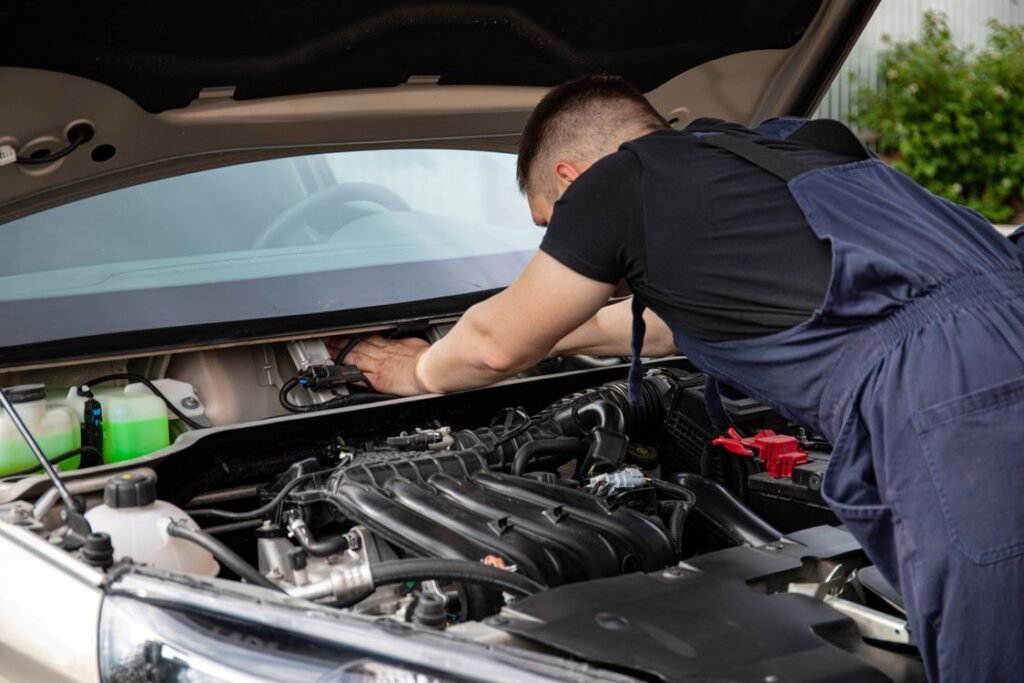
A car that jerks when you accelerate is telling you that power delivery is not smooth. The short answer: first note exactly when it jerks, because jerks under load usually point to ignition or fuel problems, while jerks only during gear changes usually point to the transmission. If the check engine light flashes, stop driving and get the car checked at once, because a flashing light means an active misfire that can damage the catalytic converter. For other jerks, use the checks below to narrow the cause before you pay for parts.
Jerking, hesitation, surging, and shuddering are all words drivers use for the same feeling: the car pulls unevenly instead of accelerating smoothly. Modern engines need a precise balance of fuel, air, and spark, delivered at the right time. When any of those three is weak, late, or inconsistent, one or more cylinders miss a beat, and you feel that miss as a jerk. The transmission can cause a similar feeling in a different way, by shifting harshly, slipping, or engaging late.
Step 1: read the pattern before you guess the part
The pattern is the fastest diagnostic tool you have, and it costs nothing. Your action: on your next drive, note when the jerk happens, and whether it happens at the same speed, the same engine speed, or only in a certain gear. Jerks under hard acceleration or uphill often mean an ignition misfire under load, or weak fuel delivery, because the engine needs more fuel and a stronger spark when it works harder. Jerks only when the gearbox changes gear point to transmission fluid, a solenoid, or worn internal parts. Jerks when pulling away from a standstill in a manual car can mean a worn clutch that slips and grabs unevenly.
Also note what else happens with the jerk. A jerk with a flashing check engine light is urgent. A jerk with the engine speed rising but road speed not rising points to transmission slip. A jerk with a rough idle and poor fuel economy points to ignition or fuel problems that affect the engine at all speeds, not just under acceleration. Your action: write down the pattern and any warning lights before you call a workshop, because that description helps the technician test the right system first, and it stops you paying for a guess.
Ignition causes: spark plugs and coils
Worn spark plugs and failing ignition coils are among the most common causes of jerking under acceleration. A spark plug fires the air and fuel mixture in its cylinder. When the plug wears, fouls with carbon, or has the wrong gap, the spark weakens, and the cylinder misfires, especially under load. A failing coil gives the same result, because the coil supplies the electrical charge that fires the plug. Oil in the plug wells, from a leaking valve cover gasket, can also cause misfires by tracking the spark away from the plug.
Your action: if the jerk feels like a hiccup or stumble, if the idle is rough, or if a diagnostic scan shows misfire codes, ask the workshop to inspect the plugs and coils first. Spark plug replacement intervals vary by plug type, often from 30,000 to 100,000 miles, so check your manual for your car interval. Replacing plugs is usually a straightforward job, while a single faulty coil can often be replaced on its own. Do not replace all coils at once without a diagnosis, because that turns a single part fault into a much larger bill.
For plug costs, symptoms, and replacement intervals in detail, read our guide on spark plug replacement cost before you approve ignition work.
Fuel causes: injectors, pump, filter, and pressure
If the engine cannot get enough fuel quickly, it will surge or jerk when you press the accelerator. Dirty fuel injectors spray an uneven mist instead of a fine even spray, so combustion becomes inconsistent. A weak fuel pump or a blocked fuel filter has a similar effect, because fuel pressure falls when demand rises, such as during hard acceleration or climbing a hill. A failing fuel pressure regulator can also cause pressure to swing, which shows up as hesitation followed by a sudden surge.
Your action: if jerking gets worse at higher speeds or uphill, and the idle is mostly smooth, ask for a fuel pressure test under load, not just at idle. A pressure test at idle can look normal while the pump still fails under demand. Injector cleaning can help with deposits, but a genuinely faulty injector needs replacement, and a weak pump needs replacement too. Avoid pouring in additive after additive without a test, because additives will not fix a pump that cannot hold pressure.
Air causes: airflow sensor, throttle body, and vacuum leaks
The engine also needs the right amount of air, measured accurately. A dirty mass airflow sensor can misread the air entering the engine, so the engine computer supplies the wrong amount of fuel, and the car hesitates. A dirty throttle body can stick or respond slowly, which feels like a delay followed by a lurch. A vacuum leak lets extra unmeasured air into the engine, which leans the mixture and causes rough running and hesitation, often with a hissing sound or a high idle.
Your action: if the jerk comes with a rough idle, a check engine light, or black exhaust smoke, ask for a scan and a visual check of the airflow sensor, throttle body, and vacuum hoses. Cleaning a sensor or throttle body is often a small job, while a split vacuum hose is usually cheap to replace. Do not spray cleaner into a sensor without checking the correct method for your car, because some sensors are easily damaged by the wrong cleaner.
Transmission causes: fluid, solenoids, and mounts
Transmission jerks feel different from engine misfires, because they line up with gear changes. Low or degraded transmission fluid reduces hydraulic pressure, so shifts become delayed, harsh, or slipping. A failing shift solenoid can cause a specific gear change to slam or hesitate. Worn engine or gearbox mounts can also cause a clunk or lurch when pulling away, because the engine moves more than it should under load.
Your action: if jerks happen only during shifts, check the transmission fluid level and condition first, where your car allows a dipstick check. Healthy fluid is usually red or pink and clear. Dark, brown, or burnt smelling fluid means a service is due. For slipping, harsh shifts, and what to check next, read our guide on transmission slipping and note whether your jerk matches a slip pattern before you book transmission work. Transmission repairs can be expensive, so get a diagnostic scan and a fluid check before approving a rebuild or replacement.
When to stop driving
Most jerks allow a careful drive to a workshop, but some mean stop now. Your action: stop driving and call for a tow if the check engine light flashes, if the car loses power suddenly in traffic, if you smell burning or see smoke, or if the transmission slips badly and the car will not hold speed. A flashing check engine light means raw fuel is reaching the exhaust, which can overheat and damage the catalytic converter, turning a plug or coil job into a far larger repair. A car that cannot hold speed in traffic is also a safety risk, not just a mechanical one.
What to tell the workshop, and what to avoid
A clear description saves diagnostic time and money. Your action: tell the workshop when the jerk happens, whether it is worse under load or during shifts, whether any warning light is on or flashing, and whether the idle is rough. Ask them to scan for fault codes first, then test the system those codes point to, rather than replacing parts in turn. Ask for a quote that separates diagnosis, parts, and labour, and ask them to show you the worn part or the test result before you approve work beyond the diagnosis.
Avoid the most common waste: replacing plugs, coils, injectors, and sensors together in one visit without a test. That approach sometimes fixes the car, but it hides which part was faulty and it costs far more than a targeted repair. Your action: approve one diagnosed fix at a time, test drive the car, and only move to the next system if the jerk remains. That sequence is slower, but it is how you avoid paying for parts your car never needed.
Frequently asked questions
Can bad spark plugs cause jerking only when accelerating
Yes. A weak plug or coil can still fire well enough at light load, then misfire when cylinder pressure rises under hard acceleration. Your action: if jerks worsen uphill or under hard acceleration, ask for a plug and coil inspection and a misfire scan first.
Is it safe to drive a car that jerks when accelerating
Often yes for a short careful drive to a workshop, unless the check engine light flashes, power loss is severe, or the transmission slips badly. Your action: if any of those urgent signs appear, stop driving and call for a tow, because continued driving can damage the catalytic converter or the transmission.
Why does my car jerk only when changing gear
Jerks tied to gear changes usually point to the transmission, not the engine. Low or degraded fluid, a faulty solenoid, or worn internal parts can all cause harsh or delayed shifts. Your action: check the fluid level and condition where possible, then book a transmission diagnostic scan before approving repair work.
A jerk under acceleration is a symptom, not a diagnosis. Read the pattern, separate engine jerks from shift jerks, and let a scan and a pressure or fluid test point to the faulty system. Fixed in that order, most jerks end as a plug, coil, sensor, or fluid job. Guessed at, the same symptom can end as a bill for parts the car never needed.