
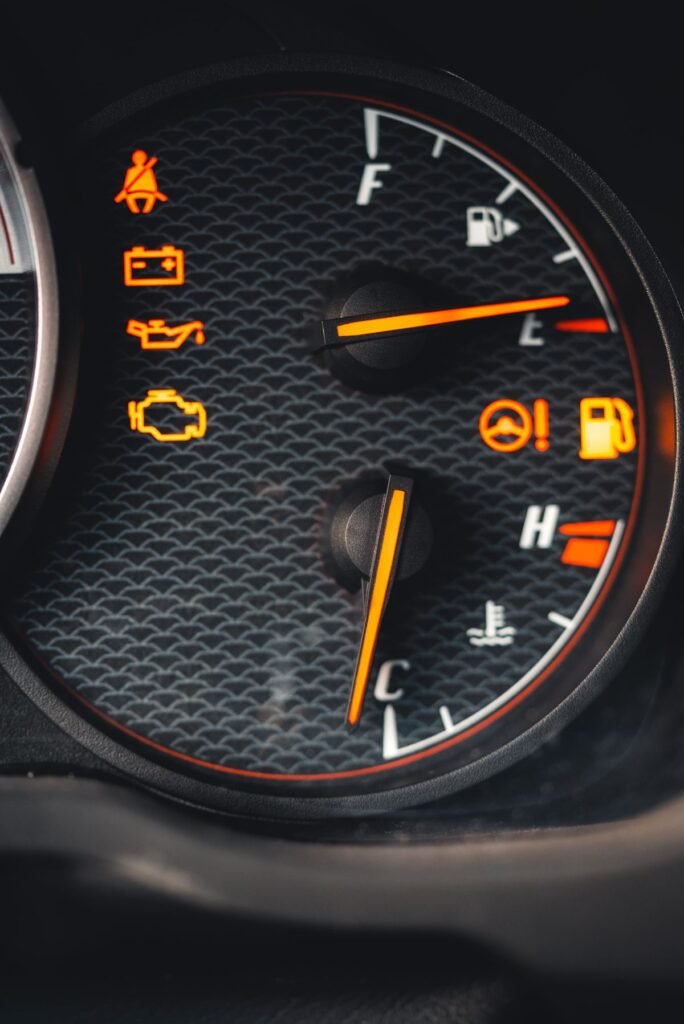
Nissan dashboard symbols use color to tell you how urgent a problem is. The short answer: red means stop driving as soon as it is safe, yellow or orange means book a check soon, and green or blue means a system is on and working. The same symbols appear across the Altima, Rogue, Sentra, Pathfinder, Frontier, and Versa, with small differences by model, trim, and year, so your owner manual is always the final reference for your exact car. This guide covers the symbols you are most likely to see, what each one means, and what to do first, so a new light on the dash does not become a guess.
Learn the color rule first, because it works for every symbol. A red light means a safety, engine, brake, battery, oil, or temperature problem that can cause damage or a breakdown. A yellow or orange light means a system needs attention or service soon, and it is usually safe to drive gently to a shop unless the light flashes or comes with shaking, smoke, or loss of power. Green and blue lights are not warnings at all, they only show that a feature such as high beams, cruise control, or fog lights is active.
Red symbols that mean stop soon
The oil pressure warning, a red oil can, means oil pressure has dropped below a safe level. Your action: pull over safely, switch the engine off, and check the oil level once the engine cools. Driving with low oil pressure can cause severe engine damage within minutes, so do not drive on to a shop with this light on. Check for leaks under the car and top up only if the level is low, then book a check before driving again.
The battery charge warning, a red battery symbol, means the charging system is not working. Your action: switch off extra electrical loads such as heated seats and the stereo, and drive only to the nearest repair shop. The car is running on battery power alone, so it can stall once the battery runs down, and the cause is often a failed alternator or a broken drive belt.
The brake system warning, a red circle with an exclamation mark or the word BRAKE, can mean the parking brake is on, brake fluid is low, or the hydraulic system has a fault. Your action: release the parking brake fully first, and if the light stays on, stop driving and book a brake inspection at once. Weak braking with this light on is a safety problem, not a routine service item.
The engine temperature warning, a red thermometer, means the engine is overheating. Your action: pull over safely, switch off the AC, run the heater to draw heat away, and wait for the engine to cool before you check coolant. Never open a hot radiator cap, and do not keep driving an overheating engine, because the repair bill grows fast once a head gasket fails.
Yellow and orange symbols that mean book a check
The check engine light, an outline of an engine, covers anything from a loose fuel cap to a misfire. Your action: tighten the fuel cap and watch whether the light clears after a few drives. If it stays on, book a scan, because only the fault codes can say which system is at fault. If the light flashes, stop driving and get help, because a flashing check engine light usually means a misfire that can damage the catalytic converter.
The tire pressure warning, an exclamation mark inside a horseshoe shape, means one or more tires are underinflated. Your action: check all four tires with a gauge and inflate them to the pressure on the driver door jamb sticker, not the number on the tire sidewall. Cold weather can drop pressure enough to trigger the light, so check pressures monthly and after a cold snap.
The ABS warning, the letters ABS inside a circle, means the anti lock braking system is not working, while normal brakes still work. Your action: drive gently, allow extra stopping distance on wet roads, and book a check soon. The cause can be a wheel speed sensor, wiring, or the ABS module, and a scan will show which wheel is reporting the fault.
The slip indicator, a car with skid lines, means traction control is working or switched off. Your action: slow down on slippery roads when it flashes, because it means the wheels are slipping. If it stays on, check whether you switched traction control off by mistake, and book a check if the light will not clear.
The airbag warning, a seated figure with a circle, means the airbag system has a fault and the airbags may not deploy in a crash. Your action: book a check promptly, because this is a safety system even though the car still drives normally. Do not try to reset it yourself, because the fault needs a scan to identify.
The power steering warning, a steering wheel with an exclamation mark, means electric power steering assistance is reduced or lost. Your action: expect heavier steering, drive slowly to a shop, and book a check at once. Steering that suddenly goes heavy in traffic is a safety risk, so do not put the visit off.
For related guides, read our guide on the fog light symbol and when to use it for one of the green symbols, check lane departure warning for a driver assistance light, and read what a blinking red light in your car means when a warning light flashes.
Green and blue symbols that mean a system is on
The high beam indicator, a blue headlight symbol, means high beams are on. Your action: dip the lights for oncoming traffic and in built up areas, because high beams can dazzle other drivers. No service is needed unless the lights will not switch.
The cruise control indicator, a green speedometer or the word CRUISE, means cruise control is switched on. Your action: press SET to hold a speed, and remember that the light only shows the system is ready, not that a speed is set. Switch it off in heavy traffic or on wet roads.
The fog light indicator, a green lamp with lines, means the front or rear fog lights are on. Your action: use them only in fog, heavy rain, or snow, and switch them off when visibility clears, because rear fog lights can dazzle drivers behind you in clear weather.
Driver assistance indicators include the lane intervention light, the forward emergency braking warning, and the ProPILOT steering wheel symbol on newer Rogue models. Your action: learn which of these your car has from the owner manual, because a warning from one of them means the system has detected a risk or is not available, often because a camera or sensor is dirty, covered in snow, or blocked.
Model notes for Altima, Rogue, Sentra, and more
Altima drivers often see forward emergency braking alerts, shown as a red car symbol, when the system detects a closing gap ahead. Your action: check that the front camera and radar area are clean, and treat a repeated alert with no car ahead as a sensor problem to book in, not a fault to ignore.
Rogue drivers on 2021 and newer models may see ProPILOT Assist indicators, including a blue steering wheel when semi autonomous driving is active. Your action: keep your hands on the wheel even when the system is active, because it assists steering rather than driving the car, and it switches off if you ignore its prompts.
Sentra and Versa drivers may see the intelligent key warning, a key symbol, when the key battery is low or the key is not detected. Your action: replace the key battery first, a cheap fix, and hold the key close to the start button if the car will not start. A persistent warning after a new battery points to the key or the receiver.
Frontier and Pathfinder drivers who tow may see a transmission temperature warning under heavy load. Your action: pull over, let the transmission cool, and check the load and the cooling system before continuing. Repeated warnings while towing mean the load or the cooling needs attention, not a heavier foot.
Frequently asked questions
What does the check engine light mean on a Nissan
It means the engine management system has found a fault, from a loose fuel cap to a misfire or a sensor failure. Your action: tighten the fuel cap first, then book a scan if the light stays on. A steady light means book a check soon, while a flashing light means stop driving and get help.
Can I drive with a red warning light on
Usually no. Your action: pull over safely when a red light appears, especially oil pressure, battery charge, brake, or temperature, and get advice before driving on. Red means the problem can cause damage or a breakdown, so a short drive to a shop is only safe when the light is the parking brake reminder and it clears on release.
Why is my tire pressure light on when my tires look fine
Tires can be several pounds low without looking flat, and cold weather drops pressure further. Your action: check all four tires with a gauge and inflate to the door jamb pressure, then drive a short distance to let the system reset. If the light stays on after correct pressures, a sensor battery or a sensor fault is likely.
What does the slip light mean on a Nissan
A flashing slip light means traction control is working because the wheels are slipping, so slow down. Your action: if the light stays on, check whether traction control was switched off, and book a check if it will not clear, because a steady light can mean a wheel speed sensor or system fault.
Nissan dashboard symbols are a color coded language. Red means stop, yellow means book a check soon, and green or blue means a system is on. Learn the five lights you see most often, keep the owner manual in the car for the rest, and never ignore a red light or a flashing yellow one, because early action is almost always cheaper than the damage that follows.