
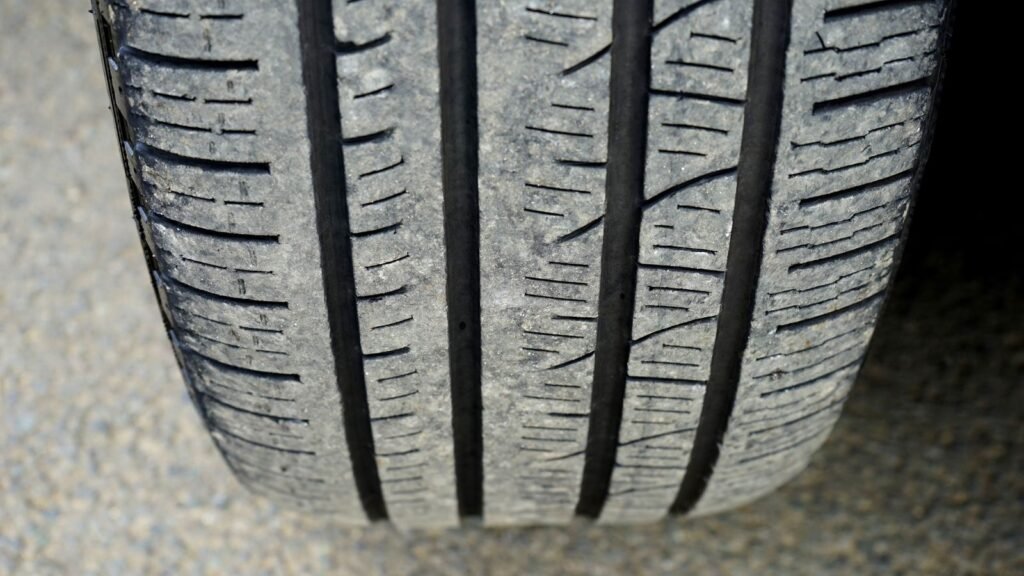
A tire is bald when its tread wears down to 2/32 of an inch or less, which is the legal minimum in most US states. At that point the tread sits level with the built in wear bars, and the tire can no longer clear water from the road properly. The safer rule is to replace tires at 4/32 of an inch, because wet braking already suffers badly by then. If you can see the top of Lincoln head on a penny pushed into the tread, your tires are at the legal limit and need replacing now.
This guide shows how to tell if you need new tires, why bald tires are dangerous, what to check before you buy, and what a new set costs. If you want the full routine for keeping tires in good shape, read our guide on how to check tire pressure first, because low pressure wears tires out faster and hides the real tread depth.
What Does a Bald Tire Look Like
A bald tire has a smooth center with almost no grooves left. The tread blocks look polished, and the small raised wear bars across the grooves sit flush with the tread surface. On a healthy tire those bars sit well below the tread, so you can feel a clear step between them and the tread blocks. When the bars are level with the tread, the tire has reached 2/32 of an inch and is legally worn out.
Look for uneven wear too, because it tells you about other problems. Wear in the center only points to overinflation. Wear on both edges points to underinflation. Wear on one edge points to an alignment problem, and patchy wear points to a balance or suspension problem. If you see cords or fabric showing through the rubber, stop driving on that tire at once, because a blowout can follow at any time. Our guide on tire tread wear patterns explains each pattern and what to fix first.
How to Check Tread Depth With a Penny
The penny test takes one minute and needs no tools. Hold a penny with Lincoln head facing down and push it into a tread groove. If the tread covers part of Lincoln head, you still have more than 2/32 of an inch. If you can see all of Lincoln head, the tread is at or below the legal minimum, so replace the tire.
Check several spots on every tire, because tires rarely wear evenly. Test the center groove and both edge grooves, and test all four tires. A tire can pass the penny test in the center and still be bald on one edge. For a stricter check, use a quarter instead. If the tread does not reach the top of Washington head, you are at or below 4/32 of an inch, which is the point where safety experts say to start shopping. A tread depth gauge costs only a few dollars and gives an exact number, so buy one if you want to track wear over time.
Also check the tire age. Rubber hardens with age even when tread remains, so look for the four digit date code on the sidewall, which shows the week and year the tire was made. Bridgestone recommends taking tires out of service after 10 years no matter how much tread is left, and NHTSA recommends replacing tires after six years regardless of mileage.
Why Bald Tires Are Dangerous
Tread grooves push water out from under the tire so the rubber can grip the road. When the grooves are gone, the tire rides on top of the water instead, which is hydroplaning. At highway speed a bald tire can lose all contact with the road in a single puddle, and steering and braking stop working until the tire finds grip again.
The numbers show how steep the drop is. In an AAA wet braking test, tires worn to 4/32 of an inch, which is twice the legal minimum, needed an average of 87 feet more to stop from 60 mph than new tires, about 43 percent more distance. When the cars on new tires had stopped, the cars on worn tires were still travelling at 40 mph. Handling fell by about a third on passenger cars in the same test.
Bald tires also fail in other ways. Thin rubber punctures more easily, so a nail that a fresh tire might seal around can cause a sudden flat or a blowout in a worn tire. Snow and ice grip falls away even earlier, because winter tires need deeper tread to bite, and many experts recommend replacing winter tires at 6/32 of an inch. In short, a bald tire costs you stopping distance, steering control and blowout protection all at once.
Tread Depth at a Glance
| Tread depth | What it means | What to do |
|---|---|---|
| 10/32 to 11/32 inch | New tire, full grip | Drive normally, check pressure monthly |
| 6/32 inch | Good tread, watch winter grip | Plan winter tire replacement soon |
| 4/32 inch | Wet grip fading fast | Start shopping for new tires now |
| 2/32 inch | Legal minimum, tire is bald | Replace at once, do not wait |
| Below 2/32 inch | Illegal in most states | Stop driving on it, replace immediately |
How Many Tires Should You Replace
Replace all four tires when you can, because matched tires give even grip and predictable handling. If your budget only stretches to two, put the new tires on the rear axle, even on a front wheel drive car, because new rear tires keep the back of the car stable in wet corners and under braking. Never mix a new tire with a bald tire on the same axle, because the grip difference pulls the car to one side under braking.
On all wheel drive cars, check the manual before you replace one tire only, because a big tread difference between tires can strain the drivetrain, and some makers require all four tires to match within a small tread depth range. Ask the tire shop to measure all four tires and show you the numbers before you decide.
What New Tires Cost
Most passenger car tires cost about 80 to 350 dollars each in 2026, and a full set of four typically runs 500 to 1,500 dollars installed for everyday cars. Budget all season tires sit near 80 to 150 dollars each, mainstream all season tires run about 100 to 250 dollars each, and premium or performance tires can reach 400 dollars or more each. Installation adds roughly 20 to 50 dollars per tire for mounting, balancing and disposal, and an alignment check is worth adding after new tires go on.
Get the exact tire size from the sidewall of your current tire, in a format such as 225/65R17, and ask for an installed quote that lists mounting, balancing, disposal, valve stems and tax separately. A cheap tire price with high fees can cost more than a fair tire price with honest fees. If your tire pressure warning light is also acting up, read our guide on TPMS sensor replacement cost before you pay for sensors you may not need.
When to Stop Driving and Replace Tires Now
Book new tires this week if the penny test shows Lincoln head fully, if wear bars sit flush with the tread, if you see cords, cracks or bulges in the sidewall, or if the car slides in light rain. Stop driving on the tire at once if it loses air overnight, if the sidewall bulges, or if the car vibrates badly at speed, because those signs point to structural damage, not just wear.
After new tires are fitted, check the pressure after the first 50 miles, because new tires settle and pressure can shift. Keep a monthly pressure check in your routine, rotate the tires at the interval in your manual, and measure tread depth every few months so the next set never sneaks up on you.
Frequently asked questions
How do I tell if my tires are bald?
Push a penny into a tread groove with Lincoln head down. If you can see all of Lincoln head, the tread is at or below 2/32 of an inch and the tire is bald. Also check whether the built in wear bars sit flush with the tread surface, which means the same thing.
Are bald tires illegal?
Yes, in most US states the legal minimum tread depth is 2/32 of an inch, and you can be fined for driving below it. States with safety inspections check tread depth directly, and other states can still cite you for unsafe tires if you are pulled over.
Can I drive on bald tires in dry weather?
Dry grip holds up longer than wet grip, but the tire is still unsafe. A bald tire punctures more easily, can blow out without warning, and gives you almost no grip if rain starts. Replace it before your next long trip, not after.
Should I replace all four tires or just two?
Replace all four when you can, for even grip and handling. If you can only afford two, put the new tires on the rear axle. On all wheel drive cars, check the manual first, because some makers require all four tires to match closely.