
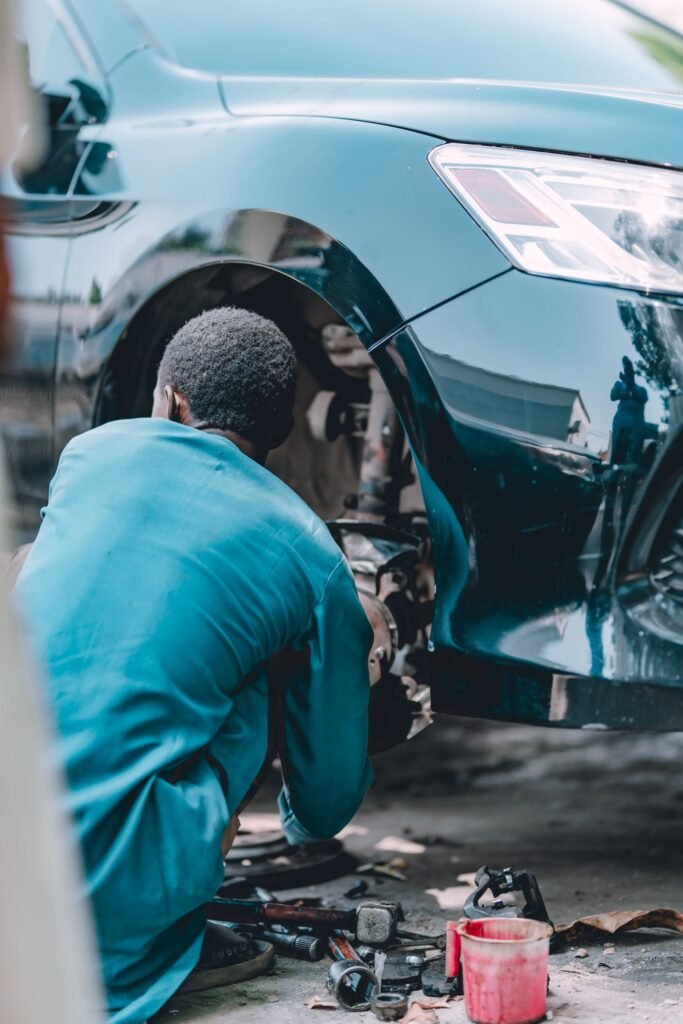
That low hum started quietly, and now it grows louder every time you pick up speed. You turn the radio up, you hope it is only the tyres, and you keep driving, but the sound follows you on every trip. This guide gives you the real front wheel bearing replacement cost, the parts and labour behind it, and the one test that tells you whether the noise is a bearing at all. But before you book anything, you need to know which kind of bearing job your car needs, because that single detail can change the bill by hundreds of dollars.
Front wheel bearing replacement cost averages 346 to 504 dollars per wheel in the United States, according to the RepairPal national estimate updated in September 2026. That figure covers parts and labour for one wheel on a typical car, and it is the number to hold in your mind when a quote lands in your inbox. A complete hub assembly job costs more, with RepairPal putting that average at 512 to 652 dollars per wheel. Kelley Blue Book gives a lower national benchmark of about 350 dollars for one wheel, which reflects the cheaper bearing only jobs that are still common on many cars. Your own bill will sit somewhere inside a wider range, from about 150 dollars on a simple older car to more than 700 dollars on a truck, a luxury car or a car with an integrated hub, and the rest of this guide shows you exactly where your car is likely to fall.
It is a worrying sound, and the worry is fair, because this is not a cosmetic repair. A wheel bearing carries the full weight of your car while the wheel spins at speed, and a worn one only gets worse. The good news is that a clear quote, a correct diagnosis and one honest decision about parts can keep this repair under control. Keep reading, and you will know what to ask, what to pay and when to stop driving.
Here is one real example that shows how much the car itself matters. RepairPal lists a 2015 Toyota Prius C wheel bearing replacement at 377 to 547 dollars in San Antonio, Texas, while the same source lists a 2008 Nissan Quest at 667 to 753 dollars. Same job name, same country, very different bill, and the difference comes from the part design and the labour time, not from the name on the invoice. Ask for a quote for your exact car, not for a generic wheel bearing job, and the numbers in this guide will start to make sense.
What a Front Wheel Bearing Does and Why the Cost Varies
A front wheel bearing is a set of steel balls or rollers inside a metal ring that lets your front wheel spin freely around the hub while carrying the weight of the car. It sits at the centre of the wheel, behind the brake disc, and it works every second the car moves. It also carries the load when you turn, brake and hit a bump, so it lives a hard life, and it is sealed for life on most modern cars, which means there is no grease nipple and no service interval to keep it alive. When the seal fails, water and grit get in, the smooth rolling surfaces wear, and the hum begins.
Cost varies for four clear reasons, and you can check all four before you agree to a price. First is the design of your car. Some cars use a bearing that is pressed into the steering knuckle, which is a cheap part with a long labour time, while others use a complete hub assembly that bolts on, which is a dearer part with a shorter labour time. Second is the make and model, because a part for a common sedan is made in huge numbers and costs little, while a part for a luxury car, a large truck or a rare model costs far more. Third is labour time, because a pressed bearing can take two to four hours, while a bolt on hub can take one to two hours. Fourth is where you live and where you take the car, because a dealer charges more than an independent shop, and labour rates in a big city run higher than in a small town.
There is one more cost driver that catches people out. A front wheel bearing on a front wheel drive car sits on the driven axle, so the mechanic must deal with the axle nut and the drive shaft, which adds time and care. A four wheel drive front hub costs the most of all, because it carries the drive shaft, the steering and the weight of a heavier vehicle. Ask the shop which design your car has, and ask how many hours they have allowed, because those two answers explain most of the gap between a cheap quote and a dear one. But the design question is only half the story, so next you need the full breakdown of parts and labour.
How Much Front Wheel Bearing Replacement Costs in 2026
Use the national averages as your anchor, then adjust for your car. RepairPal puts the average wheel bearing replacement at 346 to 504 dollars per wheel, with labour at 226 to 331 dollars and parts at 121 to 172 dollars. That split tells you something useful. On a pressed bearing job, labour is the bigger half of the bill, so a cheaper part does not save you much. Kelley Blue Book gives about 350 dollars for one wheel as its national benchmark, and notes that luxury brands cost more, which lines up with the RepairPal range once you allow for the dearer cars at the top end.
The wider market tells the same story with wider edges. The Pricer, in a guide updated in October 2026 and checked against 11 cited sources, puts a pressed wheel bearing at 300 to 550 dollars per wheel, and a complete sealed hub assembly at 500 to 700 dollars per wheel, with some trucks, luxury vehicles and electronically integrated hubs reaching 700 to 1000 dollars or more. Tread and Brake puts a front wheel bearing at 150 to 600 dollars, with most owners spending around 300 to 450 dollars, and notes that the part alone can run from 50 to 250 dollars or more, with labour at 100 to 350 dollars for one to three hours of work. Put those sources together and the honest range for one front wheel is 150 to 700 dollars on most cars, with 346 to 504 dollars as the centre of the range.
Remember that every figure here is for one wheel, before tax, and that a quote for both front wheels will be roughly double, less any small saving on labour if the shop does both sides in one visit. Get the quote in writing, with parts and labour shown as separate lines, and compare it with the table below before you say yes. But a table only helps if you know which row applies to your car, so the next section settles the bearing only question against the hub assembly question.
| Job type | Parts | Labour | Typical total per wheel |
|---|---|---|---|
| Bearing only, pressed into the knuckle | 121 to 172 dollars | 226 to 331 dollars | 346 to 504 dollars |
| Complete hub assembly, bolt on | 344 to 405 dollars | 169 to 247 dollars | 512 to 652 dollars |
| Pressed bearing, wider market range | 40 to 80 dollars | 190 to 350 dollars | 300 to 550 dollars |
| Hub assembly, wider market range | 200 to 500 dollars | 100 to 300 dollars | 500 to 700 dollars |
| Both front wheels, bearing only | 242 to 344 dollars | 452 to 662 dollars | 692 to 1008 dollars |
| Both front wheels, hub assembly | 688 to 810 dollars | 338 to 494 dollars | 1024 to 1304 dollars |
Bearing Only Versus Hub Assembly: Which Job Your Car Needs
This is the decision that shapes your bill, and it is not yours to make by preference. Your car decides it. A pressed bearing is just the bearing itself. The mechanic removes the steering knuckle from the car, puts it on a hydraulic press, pushes the old bearing out and presses the new one in. The part is cheap, often 40 to 80 dollars for a quality aftermarket bearing, but the labour is long, often two to two and a half hours, and the job may need a wheel alignment afterwards, because parts that set the wheel angle were taken apart. That alignment can add 100 to 200 dollars, so ask whether it is included in the quote or charged on top.
A hub assembly is a complete sealed unit. It holds the bearing, the hub flange, the wheel studs and usually the ABS ring, and it bolts to the steering knuckle with three or four bolts. The mechanic unbolts the old unit and bolts the new one on, which takes about one to one and a half hours, with no press and no knuckle removal. The part costs more, often 120 to 300 dollars, and 200 dollars or more on many cars, but the labour is shorter, and no alignment is needed, because nothing that sets the wheel angle was disturbed. If a quote for a hub job includes an alignment charge, ask why, because on a true bolt on hub job that charge is hard to justify.
Ask the shop these three questions before you approve the work. First, is my car a pressed bearing or a bolt on hub. Second, does the price include a new axle nut, torqued to the maker specification, because a new nut is part of a proper job on most front wheel drive cars. Third, is the part an original equipment part, a known aftermarket brand or a budget part, and what warranty comes with it. A cheap bearing with a short warranty is a false saving if it hums again in a year. Choose the known brand with a clear warranty, even if it costs a little more, and keep the invoice, because the warranty is only useful if you can prove the date and the mileage. But even the right part is wasted if the noise was never a bearing, so next you need to prove the diagnosis.
The Humming and Grinding Noise: How to Tell It Is the Bearing
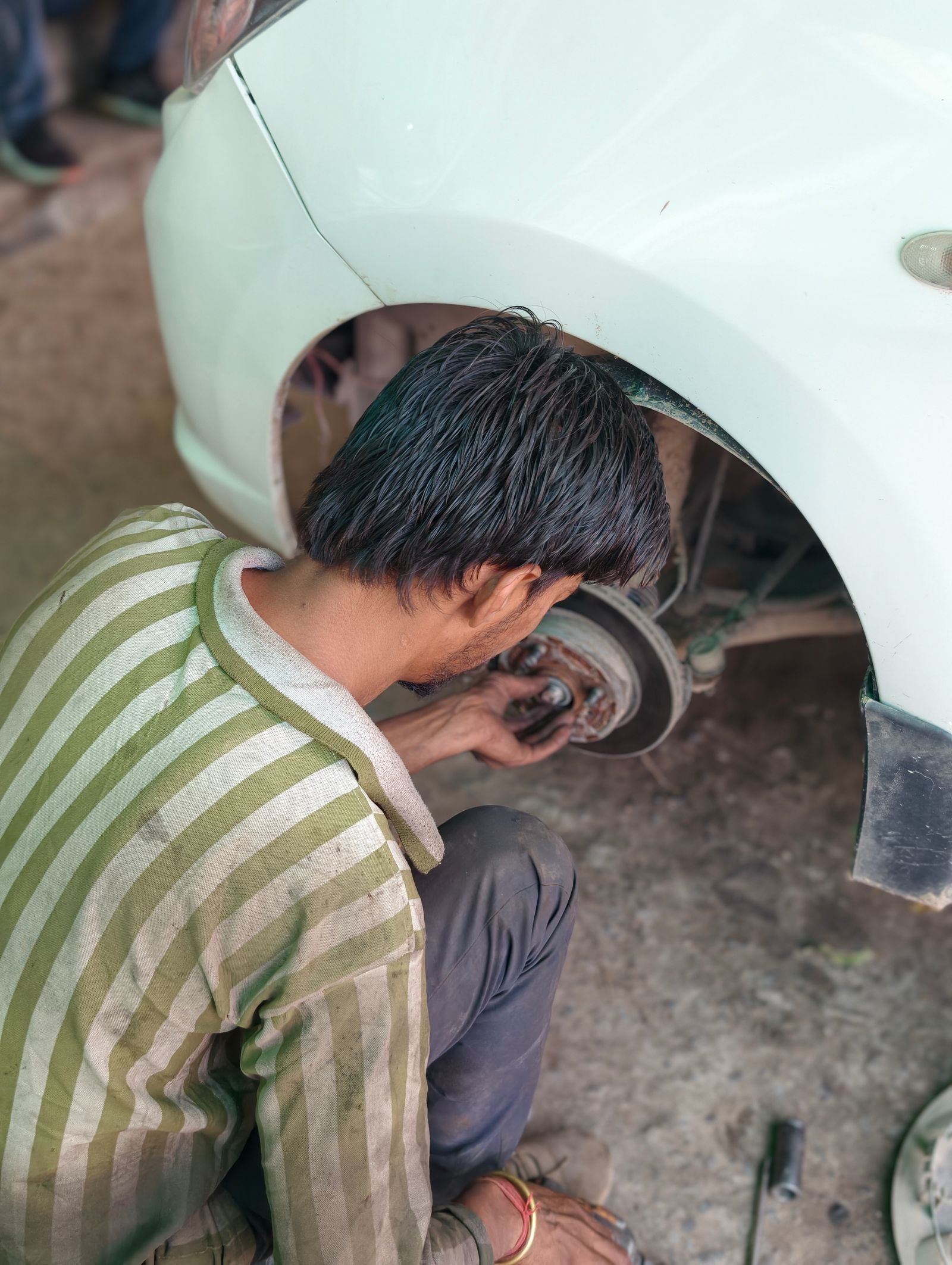
A bad front wheel bearing usually announces itself as a humming, growling or rumbling sound that grows louder as road speed rises. Many drivers first notice it around 30 to 50 miles per hour, then hear it more clearly on smooth roads and at highway speed. The key clue is that the noise follows road speed, not engine speed. It does not change when you shift to neutral or rev the engine, which separates it from engine and transmission noises. If the hum changes when you steer, that is another strong clue. The noise often grows louder when you turn in one direction, because that turn loads the worn bearing, and it often fades when you turn the other way.
Do not trust the noise alone, because tyres can sound almost the same. Worn or uneven tyre tread can hum, a dragging brake can hum, and differential wear can hum too. Before you spend money, do these simple checks. First, note which side the noise seems to come from, and whether it changes on left turns and right turns, then write it down. Second, look at your tyres for uneven wear, cupping or a damaged tread block, and check the tyre pressures, because a bad tyre is a cheaper fix than a bearing. Third, feel each front wheel after a short drive without heavy braking. If one wheel is much hotter than the other, or you smell hot brakes, think brake trouble before bearing trouble, and get that checked first. Our guide on car making humming noise walks through the same checks in more detail, and it will help you rule out the common lookalikes.
A mechanic confirms a bearing with a hands on test. The car goes on a lift, each front wheel is spun by hand and rocked top to bottom to feel for play, and the mechanic listens with a stethoscope on the hub while the wheel turns. A worn bearing feels rough when spun, shows play when rocked, or growls clearly through the stethoscope. Ask the shop to show you the play or to let you hear the noise on the lift, because a good shop will be glad to prove it. If a shop quotes a bearing without lifting the car or spinning the wheel, get a second opinion before you pay. But what if the noise is already past humming and into grinding, and how do you know when to stop driving altogether?
When Your Car Is Unsafe to Drive
A mild hum with no other symptom is a repair to book this week, not a reason to panic, but it is not a repair to ignore for months. A worn bearing only gets worse, and it can go from noisy to loose faster than most drivers expect. Book a mechanic within days, keep your speed down, avoid long highway trips, and listen for any change on every drive. If the noise is stable and the car drives normally, with no vibration, no pull and no warning light, a careful drive to the shop is reasonable. If anything changes, the plan changes with it.
Stop driving and arrange towing if you hear a loud grinding roar, if the wheel feels loose or wobbles, if the car pulls hard to one side, if the steering vibrates heavily, if the ABS warning light comes on together with wheel play, or if one wheel is much hotter than the others. Those are signs of advanced failure, and a bearing in that state can seize, overheat, damage the hub and the brake parts, and in the worst case let the wheel come loose. Do not test it with a highway run to see if it gets worse. Pull over safely, switch the engine off, and call for recovery. The cost of a tow is small next to the cost of a wheel failure at speed.
There is one more warning sign that many drivers miss. A bad bearing can affect the ABS sensor, because the sensor reads a ring on the hub, and a loose hub can disturb that reading. If the ABS light comes on at the same time as the hum, treat the car as unsafe until a mechanic has checked it, and do not rely on the ABS in an emergency stop. Book the check at once, tell the shop about the light and the noise together, and let them inspect the hub, the sensor and the brake parts as one job. But once you have decided to book it, what actually happens on the day, and what should you expect the mechanic to do?
What the Mechanic Does During the Job
Knowing the steps helps you judge the quote and spot a shortcut. The mechanic lifts the car, removes the front wheel, then removes the brake caliper and the brake disc so the hub is clear. On a front wheel drive car the axle nut comes off next, and the drive shaft is freed from the hub. On a bolt on hub job, the mechanic unbolts the old hub assembly from the steering knuckle, fits the new unit, refits the drive shaft and the brake parts, and torques every bolt to the maker specification. On a pressed bearing job, the steering knuckle comes off the car, the old bearing is pressed out on a hydraulic press, the new bearing is pressed in, and the knuckle goes back on with the suspension parts refitted.
The finishing steps matter as much as the bearing itself. The axle nut must be new on most cars, and it must be torqued to the exact maker figure, because that nut sets the load on the bearing, and a wrong torque can shorten the life of the new bearing. The ABS sensor must be refitted cleanly and checked, the brake parts must be refitted with the caliper bolts torqued, and the wheel must be torqued in the correct pattern. On a pressed bearing job, a wheel alignment follows, because the suspension was disturbed. On a hub job, the mechanic should still check the tyre wear and the brake pads while the wheel is off, and tell you if anything else needs attention soon.
Ask for the old part back, or at least ask to see it before it goes in the bin. A worn bearing will feel rough when you spin it by hand, and seeing it proves the job was needed. Ask the shop to note the brand and part number on the invoice, and to confirm the warranty in writing. Then take a short test drive with the mechanic if you can, and listen for the hum on a smooth road at 40 to 60 miles per hour. If the hum is gone and the steering feels calm, the job is done. If a new noise appears, say so before you leave, because a fresh noise is easier to fix while the car is still on the ramp. But the job is only good value if the quote was fair in the first place, so next you need to know how to read a quote like a buyer.
How to Get a Fair Quote and Avoid Extra Charges
Get three quotes, and make them comparable. Give each shop the same details: your exact car, year and engine, the side that is noisy, and whether you want a bearing only price or a hub assembly price, then ask each one to break the quote into parts, labour, alignment if needed, and tax. A quote that shows only a single total tells you nothing, and a shop that will not break it down is a shop to avoid. Compare the parts line first. If one shop quotes a part at half the price of the others, ask for the brand, because a budget bearing is the usual reason, and it is the part most likely to fail early.
Watch for three extras that often appear on the invoice. First, an alignment on a bolt on hub job, which is usually not needed, as explained above. Second, a charge for both sides when only one bearing has failed. Bearings are not like tyres, and they do not need to be replaced as a matched pair. Replace the failed side, and replace the other side only if it is also noisy or shows play on the lift. Kelley Blue Book makes the same point, and it is worth remembering when a shop suggests doing both sides as a matter of routine. Third, a brake job bundled into the bearing job without a clear reason. New pads may be sensible if they are worn, but they are a separate decision, so ask to see the pad thickness before you agree.
Choose the shop on trust and warranty, not on the lowest total alone. An independent specialist with a clear warranty on parts and labour is often the best value, a dealer is usually the dearest but may be the right choice for a rare or new car, and a mobile mechanic can be good value for a simple bolt on hub if they have the right tools and a proper torque wrench. Before you book, ask how long the job will take, whether you can wait, and whether the shop will call you if they find anything else. A shop that calls before adding work is a shop you can trust. But once the price is settled, two questions remain, how long will the job take, and how long will the new bearing last?
How Long the Job Takes and How Long the New Bearing Lasts
Time depends on the design, not on the mechanic. A bolt on hub assembly usually takes one to two hours per wheel, because the old unit unbolts and the new one bolts on, with no press work. A pressed bearing usually takes two to four hours per wheel, because the knuckle must come off, go to the press, and go back on, and an alignment adds time on top. Rust makes everything slower, because seized bolts and a corroded hub can add an hour or more, and a seized ABS sensor can add a new sensor to the bill. Ask the shop to allow for rust if your car is older or has lived in a wet climate, and ask them to call you if the time grows, rather than discovering it on the invoice.
A new wheel bearing should last a long time, and many last the life of the car, but there is no fixed mileage to promise. Life depends on the part quality, the fitting, the roads you drive and whether the seal stays intact. A budget bearing fitted with a reused axle nut will not last as long as a known brand fitted to the maker torque, so the warranty is your best guide to expected life. Keep the invoice, note the mileage on the day of the repair, and listen for the hum on every long drive for the first few weeks. If the hum returns quickly, take the car back under warranty at once, because an early failure is usually a part or fitting fault, not wear.
There are two simple habits that help a new bearing last. First, avoid kerb strikes and deep potholes where you can, because a hard impact can damage a bearing in one hit. Second, do not ignore a new hum, because a bearing that is caught early is a cheaper job than a bearing that has damaged the hub, the brake parts or the drive shaft around it. The hum is your early warning, and it costs nothing to listen to it. But some readers will ask the obvious question next, could they do this job at home and save the labour cost altogether?
Can You Replace a Front Wheel Bearing Yourself
A bolt on hub on a common car is one of the more approachable suspension jobs for a skilled home mechanic, but it is not a beginner job, and a pressed bearing is not a home job at all without a hydraulic press. You need a solid jack and axle stands, never a jack alone, a torque wrench that covers the axle nut figure, the correct socket for the axle nut, penetrating oil for seized bolts, and a way to deal with a stuck hub, which often needs a puller or a slide hammer. You also need the maker torque figures for the axle nut, the hub bolts and the caliper bolts, because a guess here can ruin a new bearing or leave a brake part loose.
The real saving is the labour, which is 169 to 331 dollars on the averages above, but the risks are real too. A hub that will not move can eat a whole weekend, a rounded bolt can turn a simple job into a garage job anyway, and a wrong axle nut torque can shorten the life of the new bearing from years to months. A pressed bearing adds the press itself, the risk of pressing the new bearing in crooked, and the alignment that follows, which you cannot do at home. For most drivers, the sensible choice is to pay a professional for a pressed bearing, and to attempt a bolt on hub only if you have the tools, the torque figures and a second car to use if the job overruns.
If you do decide to do it yourself, buy the known brand part, buy a new axle nut, read the workshop procedure for your exact car before you start, and torque every bolt to the maker figure. Test drive slowly first, listen for the hum on a smooth road, and check the wheel nuts again after a short drive. If anything feels loose, pulls, vibrates or grinds, stop and get a professional check, because a wheel fault is not a fault to learn on. And if the job is beyond your tools or your time, there is no shame in paying for it, because a good bearing fitted well is money well spent. But before you decide either way, check the answers below, because they cover the questions every driver asks first.
Frequently asked questions
How much does front wheel bearing replacement cost?
Front wheel bearing replacement cost averages 346 to 504 dollars per wheel in the United States, according to RepairPal, with parts at 121 to 172 dollars and labour at 226 to 331 dollars. A complete hub assembly averages 512 to 652 dollars per wheel. The wider range for most cars is 150 to 700 dollars per wheel, before tax, and trucks and luxury cars can cost more.
How do I know if my front wheel bearing is bad?
The usual sign is a humming or growling noise that grows louder with road speed and changes when you turn. It does not change with engine speed, which helps separate it from engine noise. A mechanic confirms it by lifting the car, spinning the wheel by hand and rocking it to feel for play. If you also feel vibration through the steering wheel, or the car pulls to one side, book a check this week. Read our guide on why is my car making a rattling noise if the sound is more of a rattle than a hum, because a rattle points to a different fault.
Can I drive with a bad front wheel bearing?
You can drive carefully for a short distance to a repair shop if the noise is a mild hum and the car drives normally, with no vibration, pull or warning light. Stop driving and arrange towing if you hear a loud grinding roar, if the wheel feels loose or wobbles, if the car pulls hard, or if the ABS light comes on with wheel play. A failed bearing can seize or let the wheel come loose, so do not test it with a highway trip. Check our guide on wheel balancing charges as well, because a wheel balance problem can cause vibration that feels similar, and it is a much cheaper fix to rule out first.
Should I replace both front wheel bearings at the same time?
No, not as a rule. Replace the failed side, and replace the other side only if it is also noisy or shows play when the mechanic checks it on the lift. Bearings are not like tyres, and they do not need to be replaced as a matched pair. Doing both sides doubles the bill, roughly 692 to 1008 dollars for bearing only work, or 1024 to 1304 dollars for hub assemblies, so spend that money only when the second bearing has actually failed.