
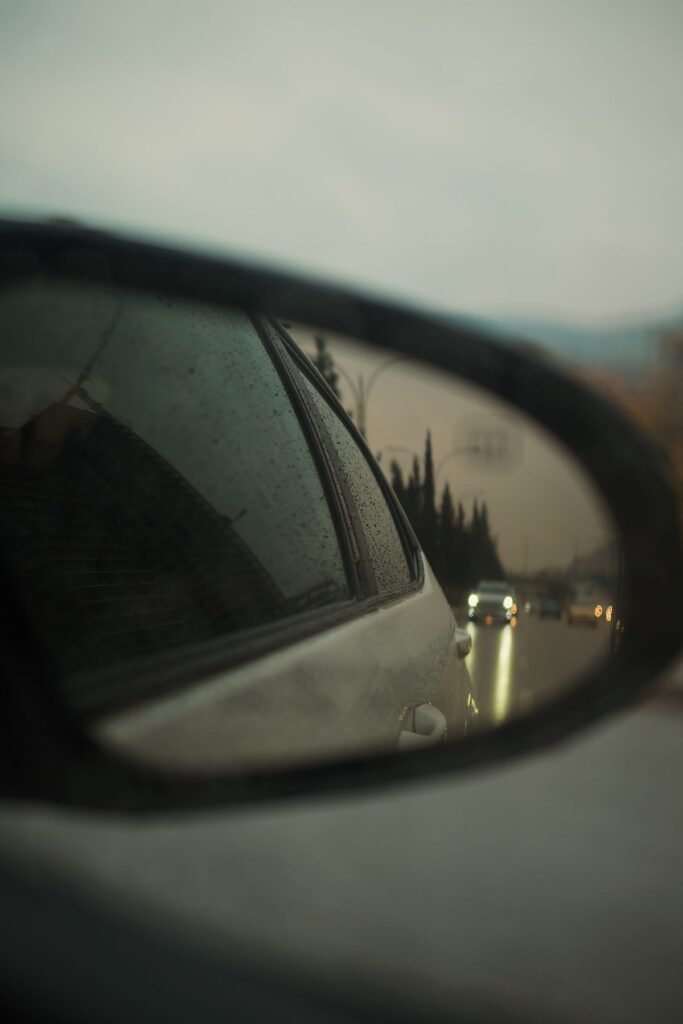
You signal, you glance at the mirror, the lane looks empty, and still your stomach tightens before you move over. That hesitation is the whole reason this system exists, and by the end of this guide you will know exactly what that small light in your mirror is trying to tell you, and the one moment when you must never trust it alone. The bsm meaning is simple at its core. BSM stands for blind spot monitoring, a driver assistance system that watches the lanes beside and just behind your car and warns you when another vehicle is sitting where your mirrors cannot show it.
That worry you feel before a lane change is sensible, not silly. Every driver has had a car appear from nowhere, and the fear is not about the mirror, it is about what the mirror cannot show. Keep reading, because the light is only the first part of the story, and knowing how the system decides when to warn you changes how you use it every day.
What BSM Does on the Road
Blind spot monitoring is a second pair of eyes for the exact moment when your own eyes have a gap. Your interior mirror shows the road directly behind you. Your side mirrors show the lanes beside you, but only up to a point. Between those two views there is a zone beside your rear door and rear fender where a whole car can hide, especially a car that is travelling at almost the same speed as you. Blind spot monitoring watches that zone for you, all the time, while you drive forward.
When another vehicle enters that zone, the system lights a small warning symbol, usually in the outer edge of the side mirror on that side. When you signal toward that occupied lane, most systems make the warning stronger, with a flashing light, a beep, or both. Some newer systems go further and add a gentle steering nudge or a vibration in the steering wheel if you start to move over anyway. The job is not to drive the car for you. The job is to catch the one vehicle you missed, in the one second when it matters most.
The real value shows up in the situations drivers know well. Think of a busy motorway at dusk, with traffic bunched together and headlights in every mirror. Think of a wide truck in the next lane that blocks your view of the smaller car behind it. Think of rain, when spray and glare make every mirror harder to read. In each of those moments, a steady light in the mirror gives you a clear fact, wait, there is a car there, and you can hold your lane until it passes. Use that fact every time, and check the mirror and the road over your shoulder as well, because the light is a warning, not a promise that the lane is clear when it is dark.
So what should you do with this knowledge on your next drive. Treat the mirror light as a stop sign for that lane change, not as a suggestion. If the light is on, stay where you are, keep your speed steady, and wait for the vehicle to pass or fall back. That one habit turns a clever sensor into a real safety gain, and it leads straight to the next question, how does the car know that vehicle is there at all.
How Blind Spot Monitoring Finds a Car You Cannot See
Most blind spot monitoring systems use radar sensors hidden inside the rear bumper, one on the left and one on the right. Radar sends out radio waves and listens for the echo that bounces back from nearby objects. From that echo the system works out how far away the other vehicle is, how fast it is moving relative to your car, and whether it is closing in on your blind spot zone. A few systems add cameras, and some use cameras alone, but radar is the common choice because it keeps working in rain, fog and darkness, when a camera lens can be blinded by spray or glare.
The system only starts watching once you are moving forward at a low speed. On many cars that speed is about 6 miles per hour, and on Toyota models such as the Corolla it is about 10 miles per hour. Below that speed the system stays quiet, because at parking speeds you are turning, reversing and inching past parked cars, and a constant warning would be noise, not help. Once you are above that speed, the sensors scan the zones beside you continuously, and they keep scanning until you slow down again or stop.
The detection zone is about one lane wide on each side of your car. In the owner manual for the Ram 1500, the maker describes a zone about 12 feet wide that starts near the outside mirror and extends about 10 feet beyond the rear bumper. Other makers describe a similar zone, roughly from your mirror back to a short distance behind your rear bumper, and up to one lane to each side. A vehicle that is much further back, or two lanes away, is usually outside the zone, and a vehicle that is already well ahead of you has already left it. That is why the light comes on as a car draws level with your rear door, and goes out once it has passed your front door.
Here is the decision this gives you. If you understand that the zone is limited, you will not expect the system to warn you about a car that is still a long way behind you and closing fast. Check your mirrors for that fast closing car yourself, signal early, and give yourself time to judge its speed. And if you want to know what each different warning actually means, the next section breaks down every signal you will see.
Where the BSM Warning Shows and What Each Signal Means
The most common warning is a small blind spot warning light in the side mirror. On many cars it is a small car symbol, or two cars side by side, built into the glass near the outer edge. On some cars the light sits on the inside of the door, near the mirror, or on the A pillar, the upright post at the front of the door frame. Wherever it sits, the meaning is the same. A steady light means a vehicle is in your blind spot on that side right now, or is approaching fast enough that it will be there in a moment. Do not move into that lane while the light is steady.
A flashing light is the urgent version. It usually appears when you switch on your turn signal toward the side where a vehicle has been detected. The system is telling you, in the clearest way it can, that the move you are about to make is unsafe. Cancel the signal, stay in your lane, and wait for the light to go out. A beep or chime often comes with the flashing light on many models, and on some cars the steering wheel vibrates instead. Treat any of those stronger warnings as a command to stop the lane change at once.
Some cars also show a message on the dashboard or on the small display between the gauges. That message may say BSM OFF, Blind Spot Monitor Not Available, or Blind Spot Monitor Sensor Blocked. Those messages do not mean a car is beside you. They mean the system itself is off, blocked, or faulty, and you are driving without that extra pair of eyes. The right action is different here. Slow down a little, take extra care with mirror checks and shoulder checks, and read the troubleshooting section later in this guide before your next long drive.
Learn the three signals by heart before you need them, steady light means wait, flashing light plus a beep means stop the move now, and a dashboard message means the system needs attention. If you can read those three signals without thinking, you will react in time, and the next section explains the one light that confuses more drivers than any other, the BSM light on the dashboard itself.
What the BSM Light Means on the Dashboard and in the Mirror
Drivers often ask about two different lights that share the same letters, and mixing them up is easy. The blind spot warning light in the mirror is the working warning. It comes on when a vehicle is detected, and it goes out when the zone is clear. The light or message on the dashboard is different. It usually appears when the system has been switched off, when a sensor is blocked, or when the system has found a fault. Knowing which light you are looking at tells you whether to wait, or whether to fix something.
When you start the car, both mirror lights often glow briefly as a self check, then go out. That short glow is normal. It is the system proving that the bulbs and the sensors are alive. If the mirror lights never glow at startup, or if one side glows and the other stays dark, note it. That is an early clue that a bulb, a sensor, or a wire on the dark side may need attention, and you should test the system on a road with traffic in the next lane before you rely on it.
A steady BSM OFF light on the dashboard, or a BSM OFF message, means the system has been switched off on purpose, or it has switched itself off because of a fault. Check first whether you or another driver pressed the BSM off button, or switched the system off in the settings menu. If you did, switch it back on before your next motorway drive. If you did not switch it off, and the light stays on after you restart the car, treat it as a fault and book a diagnostic check, because the system will not warn you while that light is on.
A flashing BSM light, or a message that says the sensor is blocked, usually points to dirt, snow, ice, or mud on the rear bumper where the radar sensors sit. Clean the rear bumper corners gently, clear any snow or ice, and remove any stickers or accessories stuck over the sensor area. Drive for a few minutes above the activation speed and see if the message clears. If it clears, the blockage was the cause. If it stays, the sensor may be misaligned or damaged, and a mechanic needs to look at it. That simple check saves many drivers a needless garage visit, and it brings us to the different ways cars warn you, which are not all the same.
BSM Warning Types Compared
Not every car warns you in the same way, and the differences matter when you move from one car to another, or when you buy a used car and need to learn its habits fast. Some cars use a mirror light only. Some add a beep when you signal. Some add a steering nudge that pushes you gently back toward your own lane if you start to drift over. Each type has a strength and a limit, and knowing yours stops you from waiting for a beep that your car will never give.
A mirror light is quiet and private. It does not startle you, and it does not annoy passengers, but it is easy to miss if you are not looking at that mirror at the exact moment. A beep is impossible to miss, which is good when you are about to make a mistake, but it can feel loud and sudden, and some drivers switch the beep off in the settings because of it. A steering nudge is the strongest warning of all, because it acts on the car itself, but it can feel strange the first time it happens, and it does not replace your own steering, it only resists the unsafe move for a moment.
The table below sets out the three warning types side by side, so you can see at a glance what your car is likely to do, and what you should do in response. Use it to learn your own car, not to judge one system as better than another, because the best system is the one you understand and trust enough to obey.
| Warning type | What you see or feel | When it appears | What you should do |
|---|---|---|---|
| Mirror light | A steady symbol in the side mirror | When a vehicle is in the blind spot zone | Stay in your lane until the light goes out |
| Beep or chime | A sound, often with a flashing mirror light | When you signal toward an occupied lane | Cancel the signal and stop the lane change at once |
| Steering nudge | A gentle push back toward your lane | When you start to move into an occupied lane | Steer back, check the mirror, and wait for a clear gap |
Whichever warning your car uses, the rule is the same. A warning is not advice you can weigh and ignore. It is a fact about the lane beside you, and the safe action is to stay put. That rule becomes even more important when you know how to switch the system on and off, because a system you switched off by accident cannot warn you at all, and that is the subject of the next section.
How to Turn BSM Off and On, and When to Use the BSM Off Button
Most cars leave blind spot monitoring switched on every time you start the engine. That is the right default, and you should leave it on for normal driving, including motorway driving, town driving, and driving in rain. The system is a safety aid, and switching it off removes a layer of protection that costs you nothing to keep. If your car has a BSM off button, it is usually on the dashboard to the left of the steering wheel, or in the driver assistance menu on the centre display, and pressing it once switches the system off until you press it again or restart the car.
On many Toyota models, the setting lives in the menu on the multi information display or on the infotainment screen, under driver assistance or safety settings. Look for BSM, or for BSM and rear cross traffic alert together, and choose on or off. On some models the two systems share one setting, so switching off BSM also switches off the rear cross traffic alert that warns you of cars approaching from the side when you reverse out of a parking space. Check your owner manual for the exact steps for your model, because the menu path varies, and guessing can switch off more than you meant to.
There are a few honest reasons to switch BSM off for a short time. If you are towing a trailer, the trailer can sit inside the detection zone and trigger false alerts all the time. If you have a bike rack on the rear, the same thing can happen. If you are driving slowly through a car park, or inching through a queue where cars are constantly in the zone, the warnings can become a distraction. In each of those cases, switch it off for that trip only, drive with extra mirror checks, and switch it back on as soon as the trailer or rack is gone, or as soon as you are back on the open road.
Never switch BSM off because the light annoys you, or because you think you are a good enough driver not to need it. Good drivers miss cars in blind spots, that is why the zone is called blind. If the warnings feel too frequent, the cause is usually traffic, not the system, and the right fix is patience, not switching the system off. But what if the system stops working when you need it, and the light never comes on at all. That is the next section, and it starts with the simplest checks you can do yourself.
What to Do When BSM Stops Working
Start with the simplest cause first, because it is also the most common. Walk to the rear of the car and look at the rear bumper corners, where the radar sensors sit behind the bumper cover. If mud, snow, ice, or road grime has built up there, clean it off gently with water and a soft cloth. Do not use a pressure washer at close range on the bumper corners, and do not stick anything over them, because stickers, bumper protectors, and repair filler can block or scatter the radar signal. Drive for a few minutes above the activation speed and see if the mirror lights start working again.
Next, check whether the system is switched on. Look for a BSM OFF message on the dashboard, and check the BSM off button and the settings menu. If another driver used the car before you, they may have switched it off without telling you. Switch it back on, restart the car, and test it again on a road where another car can draw level with you in the next lane. If the light comes on as that car enters the zone, the system is working, and the fault was a setting, not a sensor.
If cleaning and switching it back on do not fix it, look for signs of damage. A rear bumper knock, even a small one in a car park, can move a radar sensor out of alignment without leaving much visible damage. Aftermarket parts fitted near the rear bumper, such as a tow bar, a bike rack, or a new bumper cover, can also change what the sensor sees. If the car has had rear end repair work, tell the repair shop that the car has blind spot monitoring, because the sensors often need recalibration after a bumper is removed and refitted, and a shop that skips that step can leave the system blind.
If the BSM OFF light stays on, if a fault message stays on the display, or if one mirror light works and the other never lights up, book a diagnostic check with a mechanic or a dealer. A scan tool can read the fault codes from the system and show whether a sensor, a wire, or a control module is at fault. Do not keep driving for weeks without the system and hope it fixes itself, because a fault that starts as a dirty sensor can hide a damaged sensor, and the longer you drive without the warning, the more you rely on mirrors alone without realising it. And even when the system works perfectly, there are vehicles it can miss, which is why the next section matters so much.
Why BSM Misses Some Vehicles and When It Gives a False Alert
No blind spot system sees everything, and the gaps are worth knowing, because they are the exact moments when a driver who trusts the light too much gets caught out. Motorcycles are the classic example. A motorcycle is smaller than a car, it can sit in the zone for a shorter time, and it can move through the zone quickly. Ford owner manuals warn that a vehicle passing through the blind zone in less than about two seconds may not trigger the system at all. That means a fast motorcycle can be beside you and gone before the light has time to react, so check for motorcycles with your own eyes every time.
Pedestrians, cyclists, parked cars, and stationary objects are usually not what the system is looking for. Most systems are tuned to detect moving vehicles of car size and above, and they are designed to ignore guardrails, posts, walls, and parked cars, so that the light does not stay on all the time in town. That is good design, but it means you must not expect a warning for a cyclist filtering past you in slow traffic, or for a pedestrian stepping out beside the car. Look for those road users yourself, and never use a dark mirror light as proof that nobody is there.
False alerts happen too, and they have clear causes. A guardrail close to the road, a large truck in the next lane but one, or a vehicle towing a trailer can reflect radar in a way that lights the mirror when the lane beside you is actually empty. Heavy rain, snow, and mud on the sensor can do the same, or can block the sensor so it warns late or not at all. If false alerts start suddenly, clean the rear bumper first, then think about what changed, a new trailer, a new rack, a recent repair, or bad weather, and fix that cause before you blame the system.
The decision here is simple and strict. Treat a lit mirror as a fact, there is a vehicle there, and treat a dark mirror as no information at all, not as a promise that the lane is empty. That habit protects you from every gap in the system, and it is the same habit that the next section turns into a driving rule you can use for life.
BSM Does Not Replace Mirror Checks
Every maker says the same thing in plain words, and it is worth repeating here. Ford owner manuals say never use the blind spot system as a replacement for using the interior and exterior mirrors and looking over your shoulder before changing lanes. The system is not a replacement for careful driving. Toyota, Ram, and other makers say the same in their own manuals. That is not legal caution. It is an honest description of what the system can and cannot do, and drivers who ignore it are the ones who get surprised.
The reason is simple. The system watches one zone, for one kind of road user, at speeds above a set threshold, and only when its sensors are clean and aligned. Your eyes watch the whole road. Your mirrors show you the car that is two lanes away and closing fast. Your shoulder check shows you the motorcycle that slipped through the zone too fast for the sensor. Your judgment tells you whether the gap is big enough, whether the road is wet, whether the other driver is drifting, and whether the move is worth making at all. No sensor can do that work for you.
Build a lane change routine and use it every time, so that it becomes automatic. First, check the interior mirror, then the side mirror on the side you want to move toward. Second, look at the BSM light in that mirror. If it is on, wait. Third, signal, then look over your shoulder into the blind spot itself. Fourth, check the road ahead again, because traffic ahead can brake while you are looking sideways. Only then, when the light is out and your own eyes agree that the lane is clear, move over smoothly and steadily. If anything disagrees, the light, the mirror, or your gut feeling, stay where you are.
That routine is the real safety system, and blind spot monitoring is a helpful part of it, not a substitute for it. Once you have that routine, you can judge the system fairly against the other driver aids in your car, and the most useful comparison is with lane departure warning, which many drivers confuse with blind spot monitoring.
BSM vs Lane Departure Warning
Blind spot monitoring and lane departure warning sound similar, and both use lights and sounds to help you, but they watch different things, and they warn you about different dangers. Blind spot monitoring watches the lanes beside you for other vehicles. Lane departure warning watches the lane markings ahead of you, through a camera near the windscreen, and warns you if you drift out of your lane without signalling. One is about who is beside you. The other is about where your car is heading.
Learn our guide to lane departure warning if you want the full picture of that system, because the two systems work best together. Blind spot monitoring stops you moving into a car you cannot see. Lane departure warning stops you drifting into a lane you did not mean to enter, often when you are tired or distracted. Together they cover two different kinds of lane change mistake, the deliberate move into an occupied lane, and the accidental drift into any lane.
The practical difference shows up in what you do when each one warns you. When blind spot monitoring warns you, the action is to stay in your lane and wait for the other vehicle to pass. When lane departure warning warns you, the action is to steer gently back to the centre of your own lane, check that you are alert, and if you feel tired, take a break at the next safe place. Do not switch off lane departure warning just because it beeps on narrow roads, and do not switch off blind spot monitoring just because it lights up in heavy traffic. Both warnings are telling you something true about the road, even when the truth is inconvenient.
If you are choosing a car, or judging a used car, check that both systems are present and working, but do not treat either one as a reason to pay more than the car is worth, or as a substitute for a proper test drive. Drive the car on a road with traffic, change lanes with care, and see whether the warnings feel clear and timely. A system that warns too late, or that you cannot understand, will not help you, and that test is more useful than any brochure claim, which leads to the question every buyer asks, is this system worth having at all.
Is BSM Worth It, and What to Check Before You Buy
The evidence for blind spot monitoring is unusually clear for a driver aid. A study by Jessica Cicchino at the Insurance Institute for Highway Safety, published in 2018 and based on police reported crashes in 26 states from 2009 to 2015, found that crash rates in lane change crashes were 14 percent lower among vehicles with blind spot monitoring than among the same models without it, and 23 percent lower for lane change crashes with injuries. The study estimated that about 50,000 police reported crashes a year could have been prevented if every vehicle on the road at that time had a system that performed like the ones studied. That is a real, verifiable example, not a sales claim, and it is the reason this system has moved from a luxury option to standard equipment on many new cars.
That result does not mean the system makes you safe on its own. It means that, across thousands of real crashes, cars with the system had fewer lane change crashes than the same cars without it. The gain comes from drivers who see the light, wait, and change lanes later. If you buy a car with the system and then ignore the light, you will not get that gain. If you buy a car with the system and use it as part of a proper mirror and shoulder check routine, you are buying a real reduction in risk, and that is worth having.
Before you buy a used car that claims to have blind spot monitoring, test it, do not take the seller’s word for it. Start the car and watch both mirror lights glow briefly. Drive on a road with traffic in the next lane, signal toward that lane when a car is beside you, and see whether the light flashes and the beep sounds. Check the dashboard for a BSM OFF light or a fault message. Ask whether the rear bumper has been repaired or replaced, and whether the sensors were recalibrated after that work. If the seller cannot answer, or if the system does not work on the test drive, use that as a reason to lower your offer, or to walk away and find a car whose safety systems work as they should.
For a car you already own, the same test is a useful monthly check. Once a month, on a normal drive, notice whether the mirror lights behave as they should, steady when a car is beside you, flashing when you signal toward it, dark when the lane is clear. If the behaviour changes, clean the bumper, check the setting, and book a diagnostic check if it does not return to normal. A system you test is a system you can trust, and a system you never test is a system you may be relying on without knowing it has already failed, which brings us to the other dashboard lights that drivers often confuse with BSM.
Other Lights Drivers Confuse With BSM
The mirror light is not the only light that can appear near your mirror or on your dashboard, and confusing one light for another can lead you to ignore a real problem, or to worry about a warning that is harmless. The most common confusion is with the turn signal repeater, the small flashing light on the side of the mirror that shows other drivers you are turning. That light flashes with your indicator, on the side you signalled toward, and it is a signal to others, not a warning to you. The BSM light is steady when a vehicle is detected, and it flashes only when you signal toward an occupied lane.
Another confusion is with the fog light symbol, which is a dashboard light, not a mirror light, and which tells you that your fog lights are on. Learn the fog light symbol so you do not mistake it for a safety warning, and switch fog lights off in clear weather, because they dazzle other drivers and do not help you see further. A third confusion is with a general warning light, such as a triangle with an exclamation mark, which can mean many different faults, from a sensor problem to a stability control fault, and which needs a proper diagnostic check, not a guess.
If you see a red light flashing on the dashboard, treat it as urgent, pull over safely when you can, and find out what it means before you drive on. Our guide on a blinking red light in a car explains the most common causes, and why a red flashing light is different from an amber BSM warning. The rule is simple. Amber usually means caution and a check soon. Red usually means stop and find out now. BSM warnings are amber, not red, and they mean wait, not stop the car.
Once you can tell these lights apart, you will stop worrying about the wrong light and start acting on the right one. That confidence is the point of this whole guide, and the questions below cover the points drivers ask about most, in short form, so you can check them quickly before your next drive.
Frequently asked questions
What does BSM mean on a car?
BSM means blind spot monitoring. It is a system that uses radar sensors in the rear bumper to detect vehicles in the blind spot beside your car, and warns you with a light in the side mirror, and often a beep if you signal toward that lane. The bsm meaning is a warning system, not a self driving feature, and you must still check your mirrors and look over your shoulder before you change lanes.
Why is my BSM light on?
A steady light in the mirror means a vehicle is in your blind spot on that side right now, so stay in your lane until the light goes out. A BSM OFF light on the dashboard means the system is switched off, blocked, or faulty, so check the setting, clean the rear bumper corners, and book a diagnostic check if the light stays on after a restart.
Can I drive with BSM off?
Yes, you can drive with BSM off, because it is a driver aid, not a system the car needs in order to run. Drive with extra care, use your mirrors and shoulder checks for every lane change, and switch the system back on as soon as you can, especially before motorway driving, where blind spots matter most.
Does blind spot monitoring work at low speed?
Most systems only work above a low speed, often about 6 miles per hour on some cars and about 10 miles per hour on Toyota models such as the Corolla, because they are designed for lane changes on the open road, not for parking. At parking speeds, use your mirrors, your camera if fitted, and a slow careful look around the car instead.