
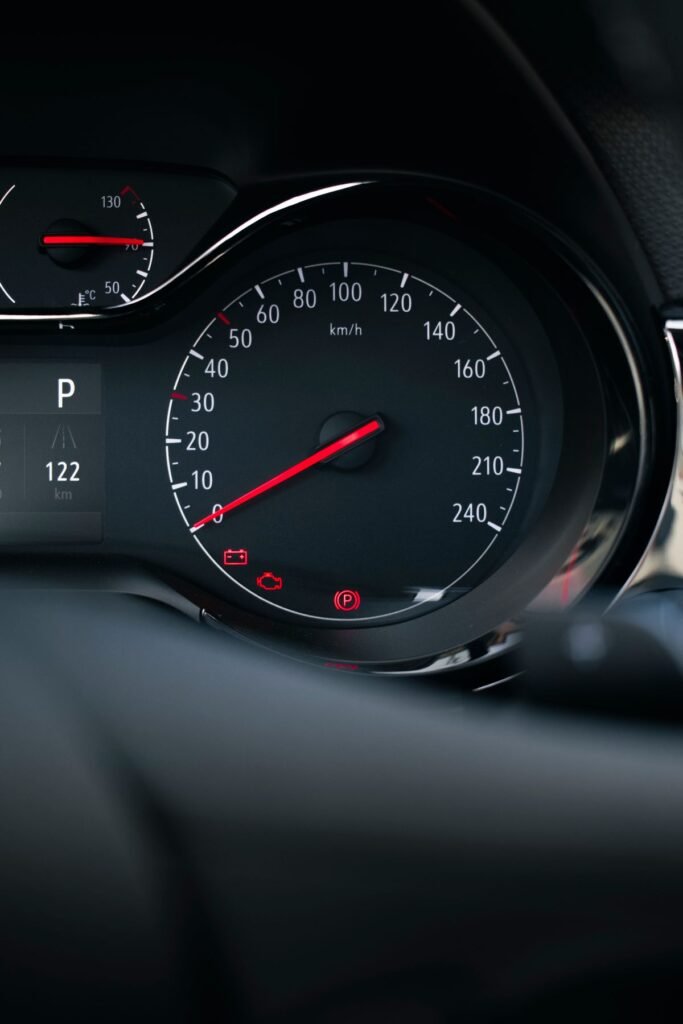
When the ABS light comes on and stays on, it means your car has found a fault in the anti lock braking system and has switched that system off. Your normal brakes still work, so you can drive carefully, but in a hard emergency stop the wheels can lock and skid the way cars did before ABS existed. Most causes are simple, such as a failed wheel speed sensor, and typical repair costs range from about $100 to $600 depending on what has failed.
What does ABS mean on a car
ABS stands for anti lock braking system. When you brake hard, sensors at each wheel watch how fast the wheels are turning. If one wheel is about to stop turning and lock up, the system rapidly releases and reapplies the brake on that wheel, many times per second. This lets you keep steering while braking at full force, which is the whole point of the system. A locked wheel cannot steer, and a sliding tire also takes longer to stop on most surfaces.
The ABS light is part of a self check. It should glow briefly when you start the car and then go out. If it stays on while driving, or comes back on later, the system has logged a fault code and disabled itself until the problem is fixed.
Common reasons the anti lock light on car dashboards appears
- Faulty wheel speed sensor. The most common cause. Each wheel has a sensor that reads a toothed ring. Dirt, rust, road salt, and damaged wiring kill these sensors regularly.
- Damaged sensor ring. The toothed ring the sensor reads can crack or corrode, giving a weak or missing signal.
- Low brake fluid. Low fluid can trigger several brake warnings at once and points to worn pads or a leak.
- Faulty ABS module. The electronic control unit or its pump can fail, especially on older cars. This is the expensive end of ABS repairs.
- Blown fuse or relay. Cheap to fix, and worth checking before anything else.
- Worn wheel bearing. On many cars the sensor reads a magnetic ring built into the wheel bearing, so a worn bearing causes ABS faults.
- Low battery voltage. A weak battery can confuse modern car electronics and light up several warnings.
The ABS warning is one of several symbols explained in our complete guide to car dashboard symbols and meanings, which is worth reading if other lights are showing too.
Is it safe to drive with the ABS light on
Here is the honest answer: your ordinary brakes still work, so a calm drive to a workshop is normally fine. What you have lost is the safety net. On a wet or icy road, a panic stop can lock the wheels, the car will slide straight ahead, and steering will not respond. Keep extra distance, brake earlier and more gently, and avoid high speeds until it is fixed.
There is one important exception. If the ABS light is on together with the red brake warning light, or the brake pedal feels soft or sinks, treat it as urgent. That combination can mean a serious brake problem such as low fluid or a leak. In that case, do not drive the car; get it towed.
How a mechanic finds the fault
Guessing at ABS faults gets expensive fast. A mechanic connects a scan tool that can read ABS fault codes, not just engine codes, and the code points to a corner of the car or a specific component. The next step is usually a visual check of the sensor and its wiring at that wheel, then a test of the sensor signal while the wheel turns. This process is called diagnosis, and most shops charge $50 to $150 for it, sometimes waived if they do the repair.
Typical repair costs
Prices vary by car model and region, but these ranges cover most common cars in the United States.
| Repair | Typical cost |
|---|---|
| Fuse or relay replacement | $10 to $60 |
| Wheel speed sensor, one wheel, fitted | $150 to $400 |
| Sensor wiring repair | $100 to $300 |
| Wheel bearing with built in sensor ring | $250 to $600 |
| ABS module repair or replacement | $400 to $1,200 |
| Diagnostic scan | $50 to $150 |
ABS light and traction control together
On many cars the ABS light appears with the traction control light, because both systems share the same wheel speed sensors. One failed sensor can disable both systems at once. Our guide to the traction control light, its meaning and fixes explains how the two systems work together and what to check first.
Can you fix it yourself
Confident home mechanics can check the simple items: the fuse, the brake fluid level, and the visible wiring near each wheel. Replacing a wheel speed sensor is often a one bolt job once the wheel is off, but rusty bolts and hidden connectors make it harder than it looks on some models. Never open brake lines or disturb brake fluid parts unless you know how to bleed the system afterward. And a safety reminder: always use axle stands, never just a jack, when a wheel is off.
Frequently asked questions
Will the ABS light fail an inspection
In many states and countries, yes. An illuminated ABS light often means an automatic inspection failure, because it shows a safety system is disabled. Rules vary, so check your local requirements.
Can low brake fluid cause the ABS light
Yes. Low fluid is one of the simpler causes, and topping up is only a temporary step. Fluid drops because pads wear or because something leaks, so the cause still needs checking.
How do I reset the ABS light
The light clears itself once the fault is repaired and the car completes a short drive. Disconnecting the battery rarely helps for long, because the fault code returns as soon as the system runs its self check again.
An ABS light is your car asking for attention, not a reason to panic. Get the fault code read, fix the actual cause, and you restore one of the most valuable safety systems your car has.