
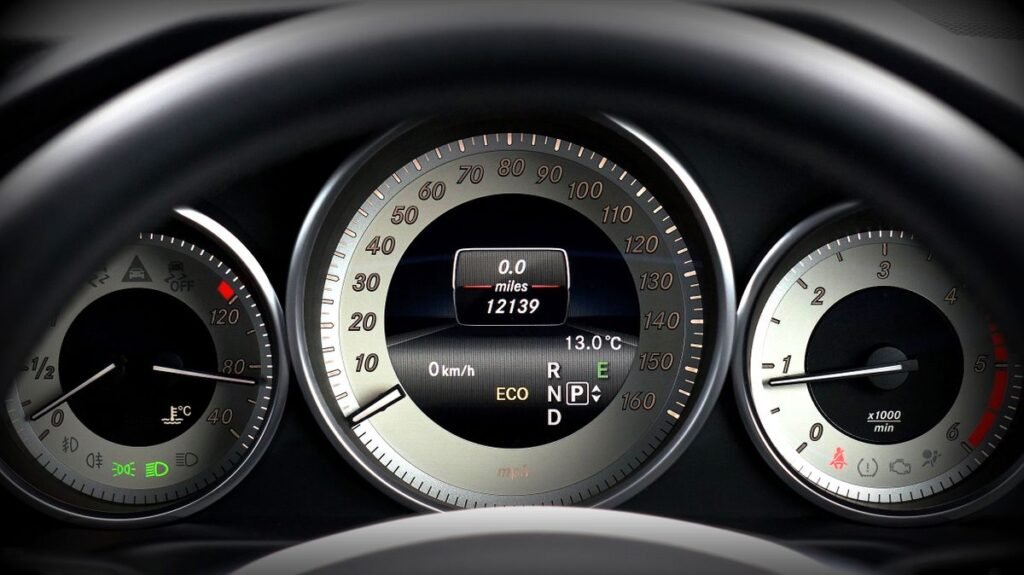
The signs on dash panels follow a simple color code that every driver should know: red means stop and deal with it now, amber or yellow means get it checked soon, and green or blue means a system is switched on and working. This complete guide to car dashboard symbols and meanings walks through the main dashboard lights you will see, grouped by color, so you can tell a serious warning from a simple status light at a glance.
How the dashboard color system works
Car makers around the world use the same basic logic for dashboard lights, even though the exact symbols differ a little between brands. Think of it like traffic lights. Red warnings point to problems that can damage the engine or affect safety, such as low oil pressure or overheating. Amber warnings cover faults in systems like the engine management, brakes assistance, or emissions, where the car can usually be driven gently to a workshop. Green and blue lights are information only, showing that headlights, indicators, or cruise control are active. Your owner’s manual always has the final word for your exact model, but the symbols below cover the vast majority of what appears on modern dashboards.
Red symbols: stop as soon as it is safe
| Symbol (described) | Meaning | What to do |
|---|---|---|
| Oil can with a drip | Low oil pressure | Stop the engine immediately and check the oil level |
| Thermometer in liquid | Engine overheating | Pull over, switch off, let it cool, check coolant |
| Exclamation mark in a circle, or the word BRAKE | Brake system fault or handbrake on | Release the handbrake; if it stays on, stop and get help |
| Battery shape | Charging system fault | Drive to the nearest workshop before the battery dies |
| Seat belt figure | Seat belt not fastened | Buckle up before moving off |
| Person with a circle (airbag) | Airbag system fault | Book a repair soon; airbags may not deploy in a crash |
| Open door outline | A door or trunk is not fully closed | Stop and close it properly |
| Steering wheel with exclamation mark | Power steering fault | Steering will feel heavy; get it checked promptly |
Safety warning: two red lights should never be ignored even for a short drive. The oil pressure light means the engine is losing lubrication and can seize within minutes; our dedicated guide to the oil pressure light and what to do when it comes on explains the steps in detail. The temperature warning is similar, because driving an overheated engine can warp the cylinder head and turn a small coolant leak into a repair costing 1,500 dollars or more.
Amber and yellow symbols: book a check soon
| Symbol (described) | Meaning | What to do |
|---|---|---|
| Engine outline | Check engine or emissions fault | Have the fault codes read within a few days |
| Letters ABS in a circle | Anti lock brake fault | Normal braking remains; get the system scanned |
| Car with wavy skid lines | Traction or stability control active or faulty | Flickering on slippery roads is normal; steady light needs a check |
| Exclamation mark in a horseshoe shape | Low tire pressure | Check all tires and inflate to the door sticker values |
| Fuel pump | Low fuel | Refuel soon; running dry can damage the fuel pump |
| Coil spring shape (diesel) | Glow plug system | Wait for it to go out before starting; flashing means a fault |
| Oil can with wavy line or service spanner | Service or oil change due | Book maintenance; it is a reminder, not an emergency |
| Triangle with exclamation mark | General warning | Look for a message on the display explaining the issue |
| Key symbol | Key not detected or immobilizer issue | Hold the key near the start button; check the key battery |
The ABS symbol deserves a special mention because it appears on almost every car eventually, usually because of one wheel speed sensor. Braking still works, but the anti lock function is off, so wheels can lock under hard braking. Read our full guide to the ABS light, its meaning, causes and fixes for costs and repair steps.
Green and blue symbols: information only
| Symbol (described) | Meaning | What to do |
|---|---|---|
| Two green arrows | Indicators or hazard lights on | Nothing; they flash while turning or parked with hazards |
| Blue headlight with straight lines | Main beam headlights on | Dip them for oncoming traffic |
| Green headlight with slanted lines | Dipped headlights or side lights on | Nothing; lights are on as selected |
| Speedometer with an arrow | Cruise control active | Nothing; brake or cancel to switch off |
| Green fog light symbol | Front fog lights on | Switch off when visibility clears, rules vary by region |
Green and blue car dashboard symbols never need a workshop visit. They simply confirm what you switched on. The one habit worth building is checking for the blue main beam light at night so you do not dazzle other drivers.
What to do when a new light appears
- Check the color first. Red means stop safely and investigate; amber means plan a repair; green or blue means carry on.
- Notice how the car feels. New noises, smells, vibrations, or warning messages on the display matter as much as the symbol.
- Do the simple checks you can do yourself: oil level, coolant level, tire pressures, and fuel level.
- Do not clear codes or disconnect the battery to hide a warning. The fault will return and the evidence a mechanic needs will be gone.
- Book a diagnostic scan for any red or persistent amber light. A scan typically costs 100 to 180 dollars at a shop, and many parts stores read basic codes for free.
Repair costs for the faults behind these symbols vary widely, from a free fix like tightening a fuel cap to several hundred dollars for sensors. Prices vary by car model and region, so treat any figure as a guide until a workshop confirms the cause.
Frequently asked questions
Why do all the dashboard lights come on when I start the car
That is a self test. Every warning light should glow for a few seconds at startup and then go out. A light that never appears during this test may have a failed bulb, and one that stays on has found a real fault.
Can I drive with an amber warning light on
Usually yes, gently and for a short time, as long as the car drives normally and no red light is showing. Amber means the car needs attention soon, not that it can be forgotten for months.
Where can I find the symbols for my exact car
The owner’s manual has a dashboard section with every symbol for your model, and most manufacturers publish the same guide online or in their app. Keep the color rules in mind and you will understand most of them before you even look them up.
Dashboard symbols stop being mysterious once you know the color code and the dozen shapes that cover most warnings. Learn the red ones by heart, respect the amber ones, and ignore the green and blue ones, and you will always know how urgent a new light really is.