
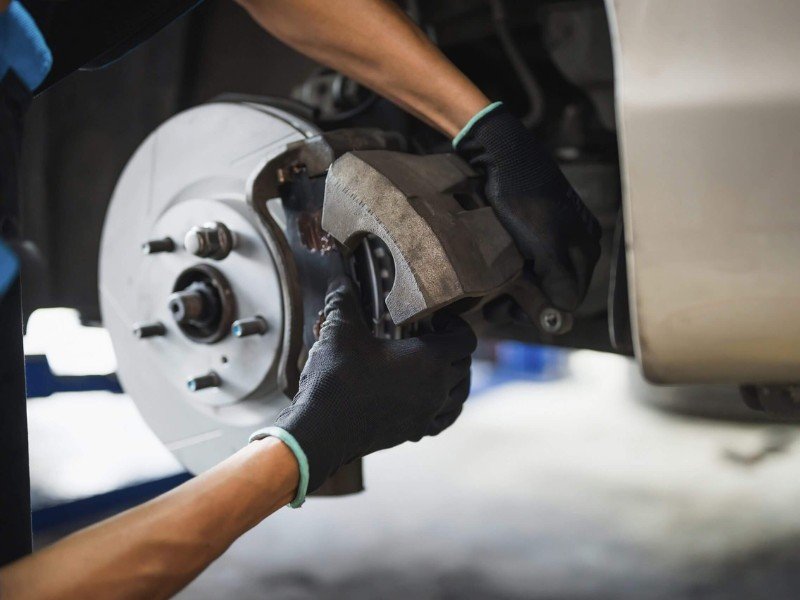
A brake caliper holds the brake pads against the disc when you press the pedal, then releases them when you lift your foot. When a caliper sticks, one wheel keeps braking after you have stopped pressing the pedal. That creates drag, heat, uneven wear, and in some cases a pull to one side. The fix starts with recognising the signs early, because a sticking caliper left alone can damage the pads, the disc, and the tyre on that wheel.
Notice a pull or drag after braking
A car that pulls to one side right after you brake, or feels as if the handbrake is partly on, can point to a sticking caliper. The drag may fade as the caliper cools, then return on the next drive. Action: on a quiet road, brake gently from a steady speed and notice whether the car tracks straight or tugs to one side. If it tugs, note which side and whether the feeling changes as the brakes warm up.
Check for heat and smell at one wheel
A sticking caliper generates far more heat than normal braking, and that heat often announces itself. After a normal drive, one wheel may feel much hotter than the others, or you may smell hot brakes near that corner. Action: after a short drive without hard braking, carefully hold your hand near each wheel, without touching hot parts, and compare the warmth. If one wheel is clearly hotter, treat that corner as the suspect and avoid long drives until it is checked.
Look for uneven pad and disc wear
When a caliper sticks, the pads on that wheel wear faster than the pads on the other wheels, and the disc can develop scoring or a blue tint from overheating. Action: look through the wheel spokes at the pads and disc on each side and compare them. If one side shows much thinner pads, heavy scoring, or a blue or straw discolouration on the disc, book a brake inspection before driving far.
Listen for dragging or grinding noises
A caliper that does not release fully keeps the pad in light contact with the disc, and that contact often makes noise. You may hear a scraping or light grinding that changes with speed, or a squeal that was not there before. Action: drive slowly with the windows down in a quiet area and listen for a scraping sound that follows wheel speed. If the noise stops when you press the brake and returns when you release it, mention that pattern to the garage, because it helps confirm the diagnosis.
Watch fuel use and rolling resistance
Brake drag makes the engine work harder, so fuel economy can drop without any change in your driving. The car may also feel sluggish when coasting, as if it slows down faster than it should. Action: if fuel use has risen and the car feels reluctant to roll freely, include a sticking caliper in your checks alongside tyre pressure and alignment. A simple comparison of wheel heat after a drive can confirm or rule it out.
Inspect the caliper slide pins and piston
Calipers stick for mechanical reasons, most often corroded or dry slide pins, a seized piston, or a damaged piston boot that lets in dirt and water. These are not faults you fix by spraying lubricant through the wheel. Action: have a garage remove the caliper and check that the slide pins move freely and the piston retracts smoothly. If the pins are corroded, cleaning and re-greasing with the correct brake grease may be enough, but a seized piston usually means a rebuilt or replacement caliper.
Check the brake hose on the suspect corner
A less obvious cause is a brake hose that has collapsed internally. It lets fluid pressure reach the caliper when you brake but restricts the return flow, so the caliper stays applied. Action: if the caliper, pins, and piston all check out yet the wheel still drags, ask the garage to check the flexible brake hose on that corner. Replacing a hose is far cheaper than replacing a caliper that was never faulty.
Do not ignore a sticking handbrake cable
On the rear wheels, a sticking handbrake cable can mimic a sticking caliper, because it holds the rear brake partly applied. This is common on cars where the handbrake is rarely used or where cables have corroded. Action: apply and release the handbrake several times and notice whether the drag changes. If the rear wheel frees up after working the handbrake, have the cables checked and replaced if they are corroded or frayed.
Know when to stop driving and get it fixed
A sticking caliper is not a fault to monitor for weeks. Overheated brakes fade when you need them most, a damaged disc can crack, and a dragging brake can overheat a tyre. Action: if one wheel runs hot, the car pulls strongly, or you smell burning brakes, keep the drive short and slow, avoid motorways, and book a brake specialist promptly. Mention which wheel runs hot and what you observed, because that shortens the diagnosis.
Lesson from everyday garage work
A common pattern in everyday garage work is that a sticking caliper gets misread as a wheel bearing or alignment fault, because the symptoms overlap. The giveaway is heat: a dragging brake makes one wheel much hotter than the rest after a normal drive. The lesson is to check wheel heat before paying for other work. Action: after your next normal drive, compare the warmth at each wheel. If one corner stands out, start with the brake on that wheel, and tell the garage exactly what you found.
For related braking checks, read why your brakes squeak and what to fix first, learn what a brake light on the dash means, and check how to check tyre pressure correctly if the pull might have more than one cause.