
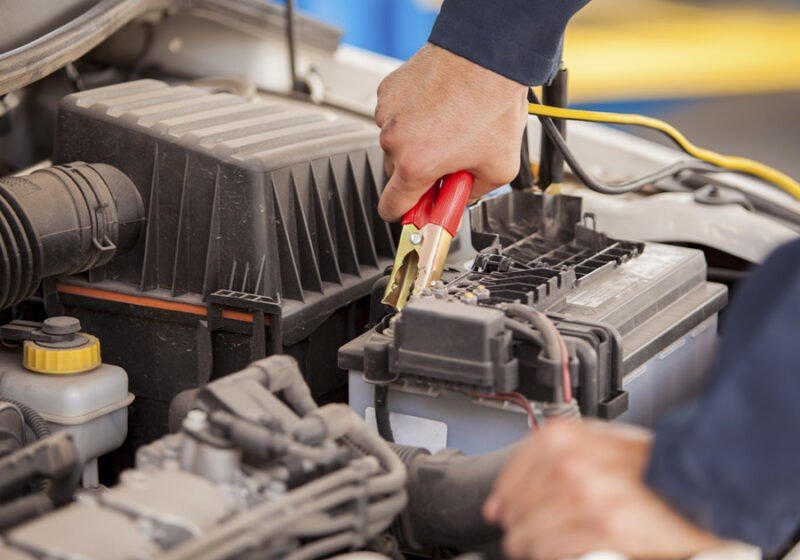
A car that starts fine in the evening and will not start in the morning often has a drain that keeps drawing power after you switch the engine off. Some small draw is normal, because clocks, alarms, and memory settings need power. A drain becomes a problem when it is large enough to flatten the battery overnight. Finding it is a process of elimination, and the order you follow matters, because the simplest causes are also the most common.
Rule out lights and accessories first
Interior lights, boot lights, glovebox lights, and phone chargers left plugged in are the most common overnight drains, and they are also the easiest to check. A boot light that stays on because the switch is faulty can flatten a battery on its own. Action: walk around the car in the dark and look for any glow from the cabin, boot, or number plate lights. Unplug chargers and dashcams, then see whether the battery holds charge overnight before going further.
Test the battery before chasing a drain
A battery that can no longer hold charge behaves exactly like a drain, and older batteries fail this way often. Testing the battery first saves hours of electrical diagnosis. Action: have the battery load-tested at a garage or parts shop, since a simple voltage reading is not enough. If it fails the load test, replace it and recheck. Only chase a parasitic drain once you know the battery itself is healthy.
Check the charging system as well
A battery that never gets fully recharged will also go flat overnight, even with no abnormal drain. A weak alternator or a slipping drive belt can leave the battery half-charged after every trip. Action: with the engine running, the voltage across the battery terminals should read around 13.8 to 14.4 volts on a multimeter. If it reads much lower, have the alternator and belt checked before testing for a drain.
Measure the parasitic draw correctly
A parasitic draw test measures how much current the car pulls with everything off, and doing it wrong can blow a meter fuse or give a false reading. Modern cars need time for modules to go to sleep, so a quick measurement can mislead. Action: with the engine off and doors closed, connect a multimeter in series on the negative terminal, wait at least 20 minutes for modules to sleep, then read the draw. As a rough guide, anything much above 50 milliamps deserves investigation, but check your car’s normal range first.
Pull fuses to isolate the circuit
Once you confirm an excessive draw, the fastest way to find it is to remove fuses one at a time while watching the meter. When the draw drops, you have found the circuit that hosts the drain. Action: pull and refit fuses one by one, waiting a moment after each for the reading to settle. Note which fuse causes the drop, then look up what that fuse protects and inspect those components, wiring, and connectors.
Look at aftermarket fittings and alarms
Poorly fitted alarms, stereos, trackers, and dashcams are frequent sources of drains, because they may be wired to a permanent live feed instead of a switched one. If the drain started after an accessory was fitted, that fitting is the prime suspect. Action: think back to anything fitted or changed before the problem began, and disconnect it temporarily as a test. If the drain disappears, have the fitting rewired correctly or replaced.
Inspect door switches and interior light timers
A door switch that does not register a closed door can keep interior lights and control modules awake, creating a steady drain. The delay timers that keep lights on after you lock the car can also stick. Action: open and close each door while watching the interior lights and the dashboard door-open warning. If one door behaves differently, or a light stays on longer than the rest, have that switch and its wiring checked.
Check for modules that never sleep
Control modules for seats, heaters, infotainment, and comfort features are supposed to sleep after you lock the car. A faulty module can stay awake and draw current all night. Action: after the car has sat locked for 30 minutes, listen and feel for anything still active, such as a humming seat motor relay or a warm infotainment unit. If you find a live module, a garage can confirm it with a scan tool and advise on repair or replacement.
Do not ignore corroded connections
Corrosion on battery terminals and earth straps does not cause a drain, but it stops the battery from charging fully and from delivering its full power, which looks identical from the driver’s seat. Action: inspect the terminals for white or green crust and check that the earth strap to the body is tight and clean. Clean corrosion with a wire brush and refit the terminals firmly, then recheck whether the overnight problem persists.
Know when the garage should take over
Electrical diagnosis gets risky once you move past fuses and visible fittings, because airbag circuits, control modules, and high-current wiring do not forgive mistakes. Action: if the drain persists after the simple checks, or the draw is on a circuit you cannot identify, book an auto electrician. Tell them the size of the draw, which fuses affect it, and when the problem started, because that information shortens the job.
Lesson from everyday garage work
A common pattern in everyday garage work is that an overnight drain turns out to be a weak battery or a boot light rather than a complex electrical fault. The lesson is to test the battery and check the simple causes before paying for a full parasitic draw diagnosis. Action: load-test the battery and do the dark walk-around for stray lights first. If both check out, then move to the multimeter and fuse method with a clear head.
For related electrical checks, read what to do when the car will not start and you hear a clicking noise, learn why a flashing check engine light needs quick action, and see what a car battery replacement costs if your battery fails its test.
Pingback: Windshield Washer Not Spraying Causes and Fixes in Order
Pingback: Backup Camera Not Working Causes and Fixes in Order
Pingback: Car Stalls While Driving Causes and What to Do Safely
Pingback: Used Car Pre Purchase Inspection Checklist Before You Pay