
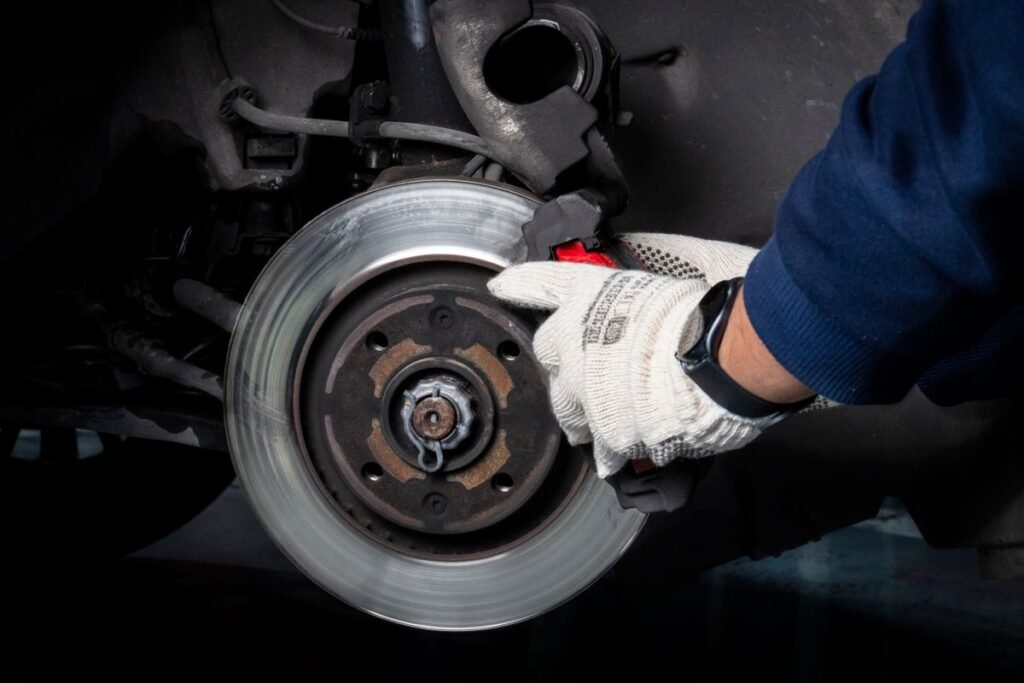
Brake rotors are the metal discs your brake pads squeeze to slow the car down, and when they wear out or warp, stopping becomes noisy, shaky and less safe. If you have been searching for brake rotors brakes basics, the short answer is this: most rotors last 50,000 to 70,000 miles, and the common warning signs are vibration when braking, squealing or grinding sounds, and visible grooves on the disc surface. This guide explains how rotors work, how to spot trouble early, and what replacement really costs.
What brake rotors do and how brakes use them
Every time you press the brake pedal, hydraulic pressure pushes the brake pads against both sides of the rotor. The friction between the pads and the rotor turns the energy of the moving car into heat, and that is what slows you down. Because a rotor handles enormous heat and pressure on every stop, it is built as a thick disc of cast iron, often with internal vents on the front wheels to help it cool.
A healthy rotor has a smooth, flat surface. Pads need that flat surface to grip evenly. Once the surface becomes uneven, grooved or too thin, the pads cannot do their job properly and braking quality drops. This is also why rotors and pads are usually inspected together, since worn pads can damage a good rotor and a bad rotor can quickly ruin new pads.
Signs your brake rotors are worn or damaged
Rotors rarely fail without warning. Watch and listen for these signs:
- Vibration or pulsing in the brake pedal when you slow down
- A steering wheel that shakes during braking, especially at highway speed
- Squealing, scraping or grinding noises from the wheels
- Deep grooves, scoring lines or rust patches on the rotor surface
- Blue or dark heat spots on the disc, a sign of overheating
- Longer stopping distances than you are used to
Vibration is the most common complaint. If your car shakes when braking, warped rotors are one of the first things a mechanic will check. Do not ignore grinding sounds either. Grinding usually means the pads are completely worn and metal is cutting into the rotor, which turns a simple pad change into a rotor replacement as well.
How long brake rotors last
Most rotors last between 50,000 and 70,000 miles, and many drivers replace them at every second pad change. City driving with constant stop and go traffic wears them faster, while gentle highway driving is kinder. Heavy vehicles, towing and mountain driving also shorten rotor life because the brakes run hotter.
Mechanics measure rotor thickness with a micrometer at every brake service. Every rotor has a minimum safe thickness stamped on it, and once the disc wears close to that limit it must be replaced, even if it still looks fine. A rotor that is too thin cannot absorb heat well and can crack under hard braking.
Resurfacing versus replacing
In the past, slightly warped or grooved rotors were often machined smooth on a lathe, a process called resurfacing. That still works if the rotor stays above its minimum thickness after machining. Today, though, new rotors are affordable enough that most shops recommend replacement instead, because a machined rotor is thinner, runs hotter and usually warps again sooner.
What brake rotor replacement costs
Costs depend on the car, the axle and whether pads are changed at the same time. Prices vary by car model and region, but the ranges below are typical for the United States.
| Job | Typical cost range |
|---|---|
| Front rotors only, parts and labor per axle | $250 to $450 |
| Rear rotors only, parts and labor per axle | $200 to $400 |
| Rotors and pads together, per axle | $350 to $650 |
| All four rotors and pads, full car | $700 to $1,200 |
| Large trucks and performance cars, per axle | $450 to $900 |
Since pads and rotors wear together, most drivers replace both at the same visit, which saves a second labor charge later. You can see the pad side of the bill in our guide to brake pad replacement cost. Doing the job yourself can cut the cost roughly in half, but only if you have the tools and experience to work safely.
How to make rotors last longer
- Brake gently and early instead of braking hard at the last moment
- Use a lower gear on long downhill roads so the engine helps slow the car
- Replace pads before they wear down to the metal
- Ask for the rotors to be measured and inspected at every tire rotation
- Avoid riding the brake pedal in traffic, which keeps the rotors hot
- After very hard braking, keep moving for a short distance so the rotors cool evenly
One more habit helps a lot: when you stop right after hard braking, do not hold the pedal down hard for a long time at a traffic light. A hot pad clamped on a hot rotor can leave a deposit that feels exactly like a warped rotor later.
When to see a mechanic right away
Brakes are the most important safety system on your car, so treat these as urgent: a grinding noise, a pedal that sinks toward the floor, a car that pulls to one side when braking, or a brake warning light on the dashboard. Any of these means the car should be checked the same day, and if braking feels weak or unpredictable, do not drive it at all. A tow is always cheaper than an accident.
Frequently asked questions
Can I replace just one brake rotor?
Rotors should always be replaced in pairs on the same axle, left and right together. Replacing only one can make braking uneven, because the two sides will grip differently and the car may pull to one side.
Do I need new pads when I get new rotors?
It is strongly recommended. Old pads have worn into the shape of the old rotor surface and can groove a new rotor quickly. New pads on new rotors bed in together and last longer.
How do I know if my rotors are warped?
The classic sign is a pulsing brake pedal or a shaking steering wheel when you brake from moderate or high speed. A mechanic confirms it by measuring the rotor for thickness variation and runout with precision tools.
Healthy rotors are easy to forget about, and that is exactly the point. Check them at every brake service, act on the early signs, and your brakes will stay quiet, smooth and dependable for years.