
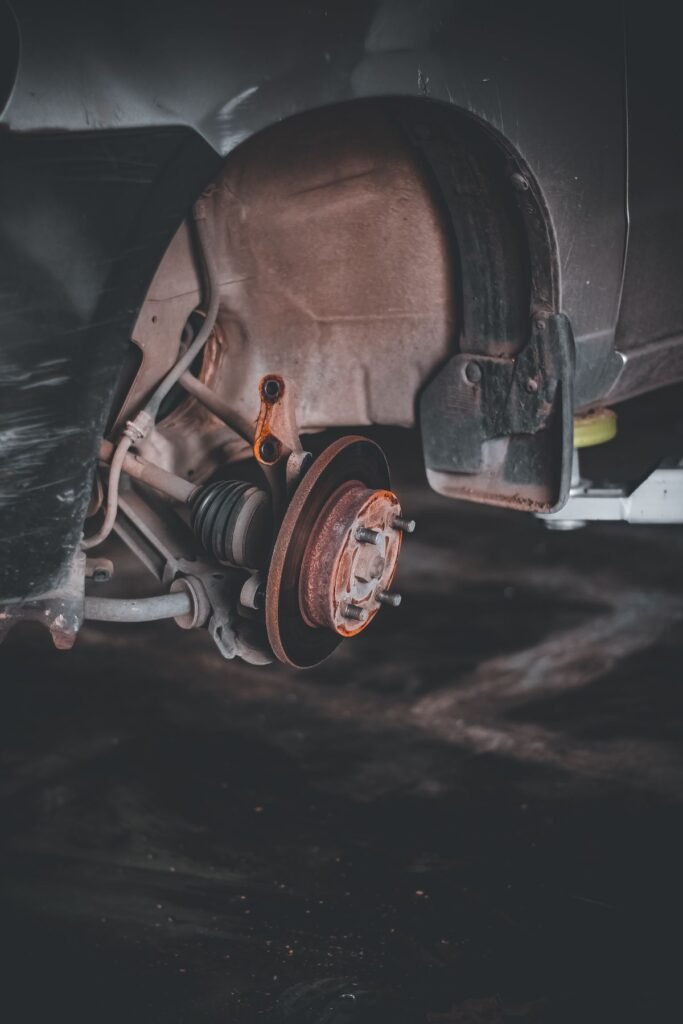
If your car shakes when braking, the most common cause is a warped front brake rotor, and the shaking usually travels through the steering wheel as you slow down from highway speed. Worn pads, a sticking caliper, and tire or suspension problems can produce a similar shudder, so where you feel the vibration and when it happens are the clues that separate them. This guide explains each cause, the matching fix, and what the repairs typically cost.
Why does my car shake when I brake
Drivers often ask why does my car shake when i brake only sometimes. The answer is that brake shudder depends on speed, brake pressure, and how hot the brakes are, so it may appear on a fast downhill stop and vanish around town. These are the usual culprits.
Warped or uneven brake rotors
Rotors rarely warp like a vinyl record. What actually happens is uneven thickness: high spots and patches of pad material build up, so the pads grip and release as the rotor turns, pulsing the pedal and shaking the wheel. Heat from hard braking, riding the brake downhill, and unevenly tightened wheel nuts all cause it. Our brake rotors guide covers rotor wear, minimum thickness, and when resurfacing still works.
Worn or uneven brake pads
Pads that are nearly finished, glazed, or worn at an angle can grab unevenly and shake the car under braking. A pad worn far more than its partner on the same axle also signals a caliper problem.
A sticking brake caliper
When a caliper piston or slide pin seizes, that brake drags and overheats, which warps the rotor and wears the pads quickly. Clues include the car pulling to one side, a hot burning smell after a drive, and one wheel covered in far more brake dust than the others.
Tire and wheel problems
An out of balance wheel or a tire with a shifted belt may only show itself under braking, when weight transfers forward and loads the front tires. If the shake also appears at a steady speed without braking, start with the tires.
Worn suspension and steering parts
Tired tie rod ends, ball joints, and control arm bushings let the wheel wobble under braking force. These faults usually come with clunks over bumps and uneven tire wear.
What the shaking tells you
| Where and when you feel it | Most likely cause |
|---|---|
| Steering wheel shakes when slowing from highway speed | Front rotors uneven or warped |
| Brake pedal pulses, seat and floor vibrate | Rear rotors uneven or warped |
| Car pulls to one side while braking | Sticking caliper or contaminated pads |
| Shake happens even without braking at one speed | Wheel balance or tire defect |
| Shake with clunks over bumps | Worn suspension or steering joints |
How each cause is fixed
Uneven rotors are either machined back to a smooth, parallel surface if enough thickness remains, or replaced. On most modern cars rotors are inexpensive enough that replacement is the better value, and pads should be renewed at the same time so old pads do not copy their wear pattern onto the new rotors. A sticking caliper is freed by cleaning and lubricating the slide pins, or replaced if the piston seal has failed. Tire related shakes are cured by balancing or replacing the damaged tire, and worn suspension joints are replaced and followed by a wheel alignment.
One habit prevents repeat problems: after a hard stop, avoid holding the car still with the brake pedal pressed hard, because the hot pads can leave a deposit on the rotor. Using a lower gear on long descents also keeps the brakes cooler.
New pads and rotors also need a short bedding in period. For the first 200 miles or so, brake gently and avoid hard stops from high speed unless safety demands it. This lets an even layer of pad material transfer onto the rotor faces, which is exactly what keeps the pedal smooth for the life of the parts. Skipping the gentle period and overheating fresh brakes is one of the fastest ways to bring the shaking back within a few thousand miles.
How much do the repairs cost
| Repair | Typical total cost |
|---|---|
| Front brake pads and rotors, per axle | $300 to $600 |
| Rotor resurfacing, per axle | $150 to $300 |
| Brake caliper replacement, per corner | $250 to $500 |
| Wheel balancing, all four wheels | $50 to $100 |
| Tie rod end plus alignment | $200 to $400 |
Prices vary by car model and region. If pads alone are on your list, our breakdown of brake pad replacement cost explains exactly where the money goes and when rotors genuinely need to join the bill.
A quick safety warning
Brakes are the one system you should never gamble with. A shake that is getting worse, a pedal that sinks or feels spongy, grinding noises, or a car that pulls hard under braking all mean the car needs a workshop now, not next month. Drive gently, leave extra stopping distance, and avoid highway speeds until it is checked.
Frequently asked questions
Can warped rotors fix themselves?
No. The uneven spots do not wear away evenly in normal driving, so the shaking stays the same or grows. Light deposits from a single hard stop sometimes fade with a few gentle stops, but true thickness variation needs machining or new rotors.
Is it safe to drive when the car shakes while braking?
A mild shudder from uneven rotors still stops the car, but it should be repaired soon because braking distances grow as the pads lose even contact. Any shake combined with noise, pulling, or a strange pedal feel means stop and get help.
Why does the shake only happen at high speed?
At highway speed the rotors spin faster and carry more heat, so small thickness differences pulse the pads many times per second and you feel it clearly. Around town the same fault may be too gentle to notice, which is why diagnosis always includes a fast road test.
A brake shudder is one of the most informative faults a car can give you. Note where you feel it and when it starts, share those details with your mechanic, and the cause is usually found on the first inspection.