
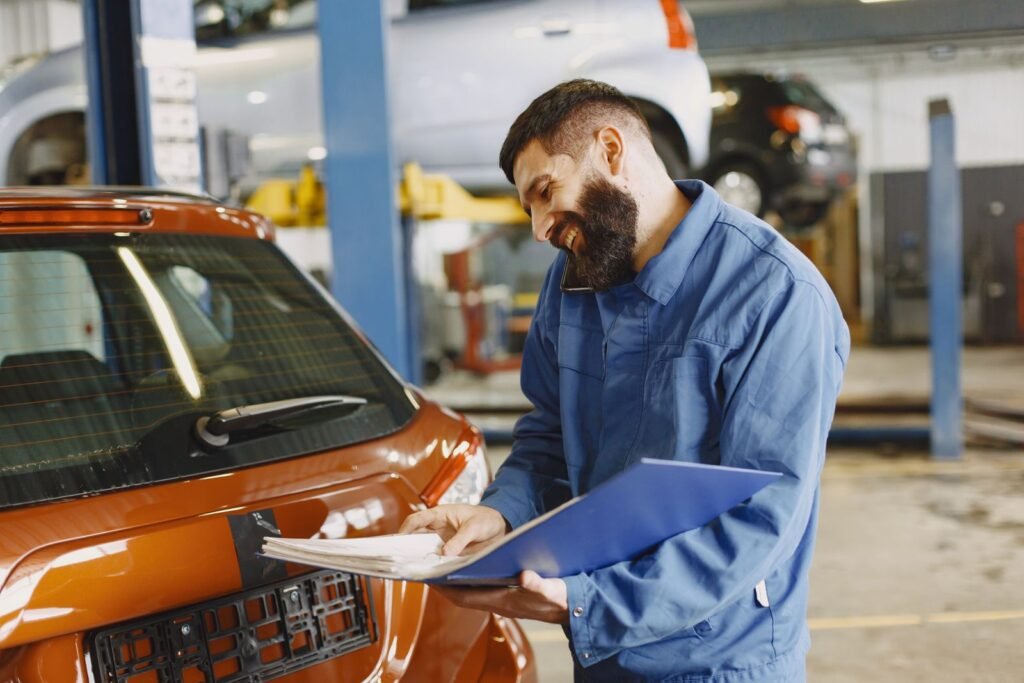
A free car body repair estimate calculator gives you a planning range for bodywork, not a final quote. You enter your year, make and model, the damaged panel, and how bad the damage looks, and the tool adds parts, labour and paint to produce a low to high figure. Treat that figure as a starting point, then get a written shop estimate before you agree to any work.
Use it to answer three questions. Will the repair cost a few hundred dollars or a few thousand. Is it worth claiming after your deductible. And does the first shop quote look fair. If the figures are close, move ahead. If they are far apart, ask the shop to explain the difference line by line.
What a Free Car Body Repair Estimate Calculator Actually Does
A car repair estimate calculator works from the same building blocks a body shop uses. It starts with the damaged panel, adjusts for severity, vehicle type and paint work, then adds labour hours, parts and materials. One widely used formula is simple. Total cost equals estimated labour hours multiplied by the hourly labour rate, plus parts cost, plus material and paint cost.
Most tools show a range, not a single number. One calculator builds a base figure from the panel, applies severity and vehicle class multipliers, adds paint where needed, then shows a low figure near 85 percent of the base and a high figure near 125 percent. That spread reflects real differences in labour rates, parts choices and regional pricing.
What Information You Need Before You Start
Start with the year, make and model, because a bumper cover, a door skin or a headlight assembly can cost very different amounts on different versions of the same model. Some shop tools also use the vehicle identification number, the 17 character code on the driver side dashboard or door jamb sticker, because it tells the estimator the exact parts and trim level.
Next, name the exact panel. A front bumper, a rear bumper, a fender, a door, a hood and a trunk lid live in different price ranges, so getting the panel right is the single most important input. If more than one panel is damaged, run a separate estimate for each panel, then add the figures together. Do not lump two panels into one estimate, because the tool will price only the panel you selected.
Then judge severity honestly. Minor damage means light scratches or small dents with the paint intact. Moderate damage means larger dents, deep scratches or cracked plastic. Severe damage means a crushed, torn or badly deformed panel that may need replacement. One calculator applies a severity multiplier of 1.0 for minor damage, 1.4 for moderate and 2.1 for major damage. Take clear photos in daylight, straight on and from an angle.
Finally, note the paint and the extras. Ask whether the panel needs paint, whether the colour is metallic or pearl, and whether the paint must be blended into the next panel. Also note any sensor, camera, light or trim in the damaged area, because a bumper with parking sensors may need calibration after the repair. If you are unsure, ask the shop to check it in person.
How to Run a Calculator in Five Minutes
Enter the vehicle first, then the panel, then the severity. Choose repair if the original panel can be saved, and replacement if it is cracked through, torn or badly deformed. Repairing spends labour on bodywork and paint. Replacing buys a new panel with fewer labour hours but a pricier part. Answer the paint question carefully, because paint and blending can add hundreds of dollars. Run the same damage through a second calculator, write down both ranges, and save a screenshot to bring to the shop.
Why Estimates Vary Between Tools and Between Shops
Estimates vary first because labour rates vary. Published guides put United States body shop rates at about 75 dollars per hour at independent shops to 150 dollars or more per hour at dealership collision centres, and that spread alone can double the labour line. Rates also vary by city, because rent, wages and overhead differ. Ask local shops for their hourly rate, then use it in the calculator if the tool allows it.
Estimates vary second because parts choices vary. Original equipment manufacturer parts come from the car maker and usually fit exactly, but they cost more. Aftermarket parts are made by independent suppliers and usually cost less, but fit and quality can vary. One buying guide reports that original parts cost about 40 percent to 100 percent more than aftermarket equivalents. Check the part type on each line when you compare quotes.
Estimates vary third because shops plan different work. One shop may list only the visible repair, while another lists removal of lamps, mirrors and door handles before painting, a check for hidden damage, blending, and sensor calibration. The shop with more steps is not always overcharging. Ask a much lower quote what it left out, and a much higher quote what it included. Compare the scope, not only the total.
Estimates also vary because an online tool cannot see hidden damage. A bumper cover can look sound while the foam, brackets and sensors behind it are cracked. A hands on inspection, ideally with a partial teardown, reveals frame damage, a bent reinforcement bar or a cracked bracket. Once the shop finds that damage, it files a supplement, an updated estimate for the extra work. Do not treat the first online figure as the final bill.
What Typical Repair Ranges Look Like
Use the ranges below as a sense check, not as a quote. Relux Collision, a Sacramento body shop, reports that most auto body repairs fall between 500 dollars and 6,000 dollars or more in 2025. Light scratches usually cost 60 dollars to 250 dollars, while deeper marks often fall between 200 dollars and 1,000 dollars. Paintless dent repair usually costs 150 dollars to 500 dollars, while conventional dent repair ranges from 250 dollars to 1,500 dollars or more.
Bumper work shows the same pattern. Relux Collision reports a minor bumper scratch at roughly 150 dollars to 600 dollars, a moderate bumper repair at roughly 400 dollars to 1,200 dollars, a full replacement bumper on a standard vehicle at roughly 700 dollars to 1,500 dollars, and a bumper job on a luxury vehicle or a vehicle with extensive driver assistance sensors at roughly 1,200 dollars to 3,500 dollars or more. If your calculator figure falls far below those ranges, check whether it left out paint, a sensor or a replacement part. Read our guide on car bumper repair cost for a breakdown by damage type, and read our guide on car dent repair cost before you choose between paintless repair and conventional repair. For paint damage, read our guide on car scratch repair cost to judge whether your scratch is a buffing job, a touch up job or a full repaint.
| Estimate type | What it needs | Best for | Main limit |
|---|---|---|---|
| Simple online calculator | Vehicle, panel, severity | Quick planning range | Uses average rates and parts prices |
| Photo based estimator | Clear photos plus vehicle details | Fast first figure after a minor incident | Cannot see hidden or structural damage |
| Shop software estimate | In person inspection and vehicle identification number | Insurance claim and final repair plan | Needs a visit and may still need a supplement |
How to Use an Online Estimate Before You Visit a Shop
Use the calculator before you call a shop, not after you have agreed a price. Run the estimate, save the range, and write down your deductible if you plan to claim. If the range is close to or below your deductible, paying out of pocket may be better. If it is well above your deductible, a claim is worth considering, but get a shop estimate first so the insurer works from a real inspection.
Take the online range to two or three shops and ask each one for a written, itemised estimate that lists parts, labour hours, the labour rate, paint and materials, and any sublet work. Ask four questions before you book. What part type is priced, original, aftermarket or used. Does the price include paint blending. Does it include sensor calibration. And what happens if hidden damage appears, and how will the shop document a supplement.
Red Flags to Watch For
Walk away from a tool that asks for payment before it shows a result, asks for bank details, or promises an exact final price from one photo. Walk away from a shop quote that will not itemise parts and labour, pressures you to sign for a today only price, or demands cash with no written warranty. If your car has automatic braking, lane keeping assist or blind spot monitoring, a bumper repair can affect a sensor or a camera and may need calibration. Ask the shop to confirm in writing whether calibration is included or not needed.
Frequently asked questions
Are free car body repair estimate calculators accurate
They are useful as a planning range, usually within a few hundred dollars of a real quote for straightforward single panel damage, according to published calculator guides. They are less accurate when damage is hidden, when paint needs blending, or when local rates differ from the national average. Use the figure to plan and compare quotes, not as a final price.
What information do I need for a car body repair estimate calculator
You need the year, make and model, the exact damaged panel, the type of damage, and an honest severity rating of minor, moderate or major. Add photos in daylight, note whether paint is needed and whether the colour is metallic or pearl, and note any sensor in the damaged area.
Why is my shop quote higher than the online calculator estimate
The most common reasons are a higher local labour rate, original parts instead of aftermarket parts, paint blending, extra steps such as removing trim before painting, sensor calibration, or hidden damage found during inspection. Ask the shop to show the itemised lines and explain which items the calculator left out. If it cannot explain the difference, get a second written estimate.
Should I use an online estimate for an insurance claim
Use it to decide whether to claim and to check the first figures you receive, but do not file a claim on the online figure alone. Get a written shop estimate from an in person inspection, keep your photos and the calculator screenshot, and let the shop document any hidden damage through a supplement if it appears during repair.