
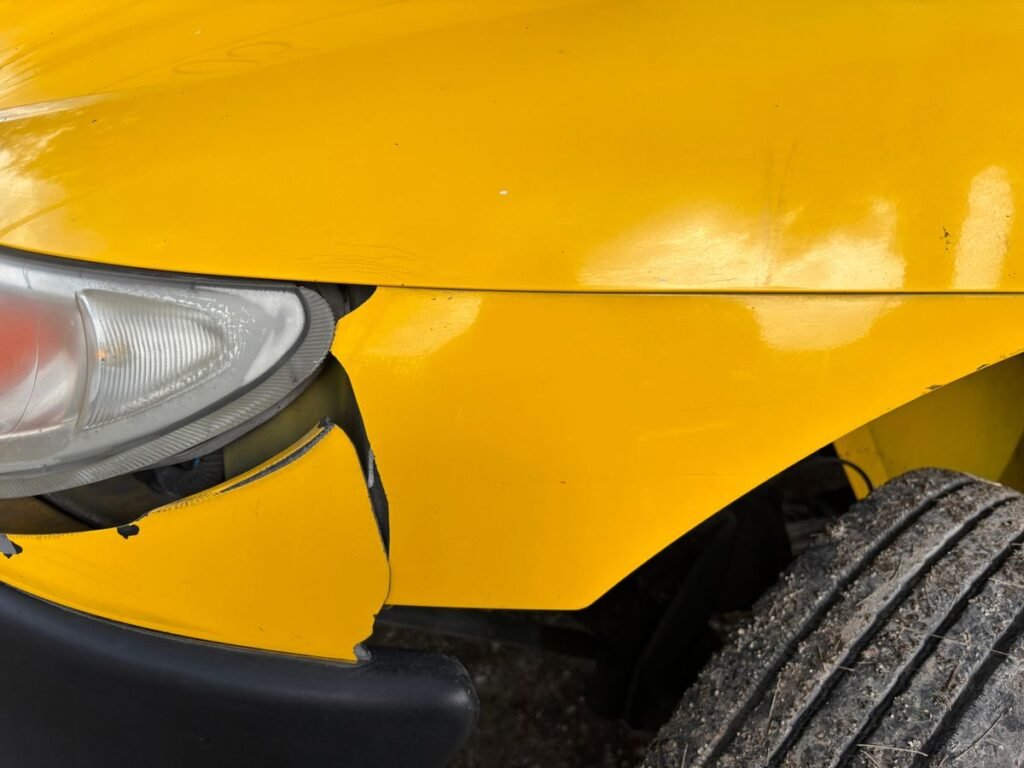
Car bumper repair in the United States typically costs 150 to 600 dollars for a minor scratch or scuff repair, 400 to 1200 dollars for a moderate dent or crack repair with paint blending, and 500 to 1500 dollars for a full bumper cover replacement on a standard car. The short answer: repair the bumper when the damage is cosmetic and the mounts, sensors and crash structure are sound, and replace it when it is torn, badly cracked, badly bent or when a sensor or mount has failed. A shop inspection comes first, because a bumper that looks fine on the outside can hide a broken mount or a damaged sensor behind it.
A modern bumper is mostly a plastic cover over foam, brackets and sensors. It is built to absorb a low speed impact and to protect the parts behind it, but it is not a structural steel beam. That is why a small parking scrape and a 30 mph hit can look similar in a photo and need very different work. This guide breaks down the cost by job, the checks that decide repair or replacement, and the questions that stop a cheap repair turning into a second bill.
Cost by job
| Job | Typical cost in dollars | What it covers |
|---|---|---|
| Minor scratch or scuff repair | 150 to 600 | Buffing, filler where needed, spot paint and blend |
| Moderate dent or crack repair | 400 to 1200 | Plastic welding or filler, reshaping, full panel repaint and blend |
| Full bumper cover replacement, standard car | 500 to 1500 | New cover, paint, fitting and basic sensor refit |
| Full replacement, luxury or sensor heavy car | 1500 to 2500 or more | New cover, paint, fitting and sensor calibration |
| Sensor calibration on its own | 400 to 1000 or more | Calibration of radar or camera systems after bumper work |
Use that table as a planning range, not a quote. Your action: ask the shop to state whether the quote includes paint, fitting, sensor refit and calibration as separate lines. A replacement quote that leaves out calibration can look cheaper and still leave a driver assistance system out of alignment.
Repair or replacement: the decision checks
Start with the mounts and the parts behind the cover. Your action: ask the shop to remove the cover or to inspect behind it before you approve a cosmetic repair. A cracked mount, a bent bracket or a broken parking sensor changes the job from a paint repair to a replacement, and finding that out after paint is paid for wastes the paint work.
Next, check the size and place of the damage. Your action: repair a shallow dent, a short crack in a flat area and light scratches, and lean toward replacement for a long tear, a crack at a mounting point, a badly distorted corner or damage that crosses a sensor or camera opening. A welded crack in a high stress area can split again, so a replacement is often a safer long term choice there.
Then check the sensors. Your action: test parking sensors, blind spot warnings and any camera view before and after the work, and note any warning on the dashboard. If a sensor was working before the repair and stops after it, take the car back at once, because that is a fitting or calibration problem, not a new fault.
What moves the price up or down
Paint is a major cost driver. Your action: ask whether the shop will blend paint into the next panel, because a bumper painted alone can show a colour mismatch in sunlight, especially on pearl, metallic and three stage paints. Blending costs more, but it is often the difference between a repair you notice every day and one you forget about.
Part choice also moves the price. Your action: ask for a quote with an original part and a quote with a quality aftermarket part, and check the fit, the sensor openings and the warranty on each. An aftermarket cover can save hundreds of dollars, but a poor fit around lights and sensors can cost more in labour than it saves on the part.
For related bodywork costs, read our guide on how much it costs to paint a car to see how panel paint pricing works, check car door replacement cost if a door was hit in the same incident, and read how to tell if your car suspension needs repair if the impact was hard enough to affect handling.
Insurance or pay yourself: a simple rule
Compare the repair quote with your deductible and with the effect on your premium. Your action: if the repair costs less than your deductible, pay it yourself and keep the claim for a larger loss. If the repair costs well above your deductible, or if sensors and calibration push it into four figures, get an insurance estimate as well, and ask the shop to document hidden damage with photos before the cover is refitted.
Do not delay a bumper with exposed foam, a loose cover or a hanging sensor. Your action: secure any loose trim so it cannot drag or fall off, avoid high speed driving if the cover moves in the wind, and book the inspection within days. A loose bumper can damage a tyre, a sensor wire or a wheel arch liner if it shifts while driving.
Frequently asked questions
How much does a small bumper scratch repair cost
Typically 150 to 600 dollars for a minor scratch or scuff with spot paint, depending on paint type and whether blending is needed. Your action: get a quote that names the paint work included, because a touch up and a proper spot repair with blending are different jobs at different prices.
When should a bumper be replaced instead of repaired
Replace it when it is torn, badly cracked, badly bent, when a mount is broken, or when a sensor opening is damaged. Your action: ask the shop to show you the mount and sensor damage, not just the outside crack, before you approve a replacement.
Does bumper replacement always need sensor calibration
Not always, but it is common on cars with radar, cameras or parking sensors built into the bumper. Your action: ask the shop whether your car needs calibration after the work, and get that cost in writing before the job starts.
Can I drive with a cracked bumper
You can drive a short distance if the cover is secure, no sensor is hanging, and no sharp edge or loose trim can catch a tyre or a pedestrian. Your action: if the cover moves, drags or blocks a light, secure it or have the car towed, and book the repair promptly.
Car bumper repair cost follows the damage behind the cover, not just the mark you can see. A minor repair stays in the low hundreds, a moderate repair with paint moves into the high hundreds, and a sensor heavy replacement can pass 1500 dollars. Inspect behind the cover, compare like for like quotes, and decide on repair or replacement from the mounts and sensors, not from the photo alone.
Pingback: Car Dent Repair Cost: Paintless Repair vs Traditional Bodywork