
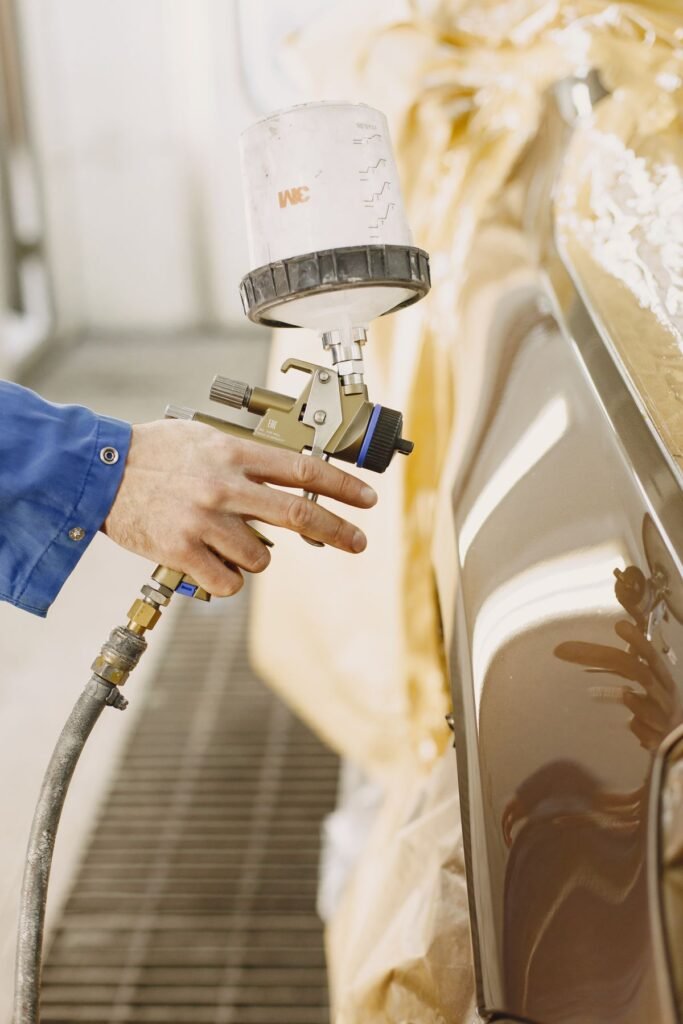
Faded paint, peeling clear coat, and rust spots make an otherwise sound car look tired, but paint prices range so widely that the first quote can be confusing. The short answer: a basic professional repaint for a daily driver usually costs about 700 to 1500 dollars for a same color job at a budget chain, about 1000 to 3500 dollars for a mid level repaint with better prep and materials at an independent shop, and 5000 dollars or more for a high quality or show quality job with full prep, a color change, and premium paint. A low advertised price near 300 to 500 dollars usually covers paint application only, not the prep your car actually needs. The first decision is what level of finish you need, because prep, not paint, decides most of the bill.
Paint work has three parts: preparation, paint, and finishing. Preparation means washing, sanding, masking, filling dents, treating rust, and priming. Paint means the color coats and clear coat. Finishing means curing, polishing, and inspecting. A shop that skips preparation can paint a car quickly and cheaply, but the new paint will peel, bubble, or show every dent underneath within a year or two. Your action: judge every quote by its preparation list first and its paint brand second, because a cheap job with poor prep is the most expensive paint job you can buy.
Average costs at a glance
| Job level | What it usually includes | Typical total |
|---|---|---|
| Basic, budget chain, same color | Light sanding, masking, single stage or basic two stage paint | 700 to 1500 dollars |
| Mid level, independent shop | Full sanding, dent filling, primer, quality two stage paint and clear coat | 1000 to 3500 dollars |
| High quality repaint | Panel removal, rust repair, premium paint, multiple clear coats, polishing | 3500 to 7000 dollars |
| Show quality or restoration | Strip to bare metal, bodywork, color change including jambs and engine bay | 7000 to 15000 dollars or more |
| Single panel, such as a bumper or door | Prep and blend on one panel | 300 to 1000 dollars |
Your action: get at least two written estimates that list preparation, paint system, number of coats, and warranty in writing. A quote that only says full repaint, with no prep detail, cannot be compared with a quote that lists every step.
What makes the price go up or down
Vehicle size
A compact car needs far less paint, masking, and labor than a large SUV, pickup, or van. A sedan usually sits in the middle, while trucks and large SUVs add hundreds of dollars in materials and hours. Your action: when comparing online price ranges, filter for your vehicle size first, because a compact car range will mislead you badly if you drive a full size truck.
Current paint condition
Peeling clear coat, deep scratches, dents, and rust all add preparation time. Rust treatment or panel replacement alone can add 200 to 600 dollars or more, depending on how far the rust has spread. Your action: walk around the car with the estimator and point out every dent, chip, and rust spot before the quote is written, so the final bill does not grow from surprises found after sanding starts.
Color choice and color change
Staying with the same color is cheaper, because door jambs, the engine bay, and the trunk edges do not need painting. A full color change costs much more, because those hidden areas must be painted too, or the old color will show every time you open a door. Metallic, pearl, and tri coat colors also cost more in materials and skill. Your action: if budget matters, stay with the factory color. If you change color, budget for the jambs and edges in the same quote, and do not accept a job that leaves the old color visible inside the doors.
Paint quality and warranty
Basic enamel and budget urethane paints cost less but fade and chip sooner. Premium acrylic urethane systems with a strong clear coat last longer and resist sun and chemicals better. Warranty length usually follows the package, with budget jobs often covered for one to two years and premium jobs for longer. Your action: read the warranty before you sign, and check what it excludes, such as stone chips, rust that returns, and damage from neglect. A warranty that only covers peeling in the first year is very different from one that covers defects for several years.
Budget chain or independent body shop
Budget chains suit a daily driver that needs a fresh same color look at a low price, and they can turn a car around in a few days. Independent body shops suit cars you plan to keep, cars with rust or body damage, and owners who want a longer lasting finish with more preparation. Your action: visit the shop, look at finished cars in person, and ask how they mask trim, lights, and glass. A shop that masks carefully and removes trim where needed will produce cleaner edges than a shop that sprays over everything in place.
Do not judge a shop by its waiting room. Judge it by its prep area, its masking, and its finished cars. Your action: ask to see a car at the polishing stage and a car ready for delivery. If edges are rough, overspray is visible on trim, or orange peel texture is heavy, walk away, no matter how low the price is.
How long a paint job takes
A basic repaint can take three to five days, a mid level job usually takes one to two weeks, and a full restoration can take several weeks or longer. Time grows with bodywork, rust repair, color change, and curing. Your action: agree a completion window in writing, and ask whether the price includes a loan car or whether you need alternative transport. A shop that rushes curing to meet a deadline can deliver a soft finish that marks easily.
Is painting worth it
Painting is usually worth it when the car is mechanically sound, the body is solid, and you plan to keep it for several more years. It is harder to justify on a car with major mechanical problems, widespread rust, or a market value lower than the paint bill. Your action: compare the paint quote with the car’s value and with the cost of replacing the car. If a 2500 dollar repaint keeps a reliable car looking good for five more years, it is usually good value. If the same job costs more than the car is worth and the car needs major mechanical work too, put the money toward a replacement instead.
After a repaint, protect the investment. Wash gently for the first weeks, avoid automated car washes with harsh brushes until the paint has fully cured, and wax only when the shop says it is safe. For keeping the rest of the car looking fresh alongside new paint, read our guide on best car detailing kit to choose safe washing and protection products, and read our guide on how to freshen car interior so the inside matches the new outside.
Frequently asked questions
How much does a budget paint job cost
Budget chain jobs usually run about 700 to 1500 dollars for a basic same color repaint on a daily driver, with low advertised prices near 300 to 500 dollars covering paint application only. Your action: treat the advertised price as a starting point, and budget from the written estimate after inspection, not from the advertisement.
Does a color change cost more
Yes, often by a large amount, because door jambs, the engine bay, trunk edges, and other hidden areas must be painted to avoid showing the old color. Your action: get a color change quote that explicitly includes those areas, and inspect them before you accept the car.
How long will a new paint job last
A well prepared mid level job can last many years with proper washing and protection, while a rushed budget job may peel or fade within a year or two. Your action: follow the shop curing advice, wash regularly, protect the paint from sun and bird droppings, and fix stone chips promptly before they turn into rust.
Painting a car is a preparation job with paint on top. Decide the finish level you actually need, get written estimates that list preparation and paint system, stay with the factory color if budget matters, and inspect edges, jambs, and warranty terms before you pay. That approach turns a confusing price range into a clear choice, and it is the difference between a finish that lasts and a finish you pay for twice.
Pingback: Refinance Auto Loan: A Practical Guide to Lowering Your Car Payment
Pingback: Car Bumper Repair Cost: Repair vs Replacement Explained
Pingback: Car Windshield Repair Cost: Chips, Cracks, and Replacement