
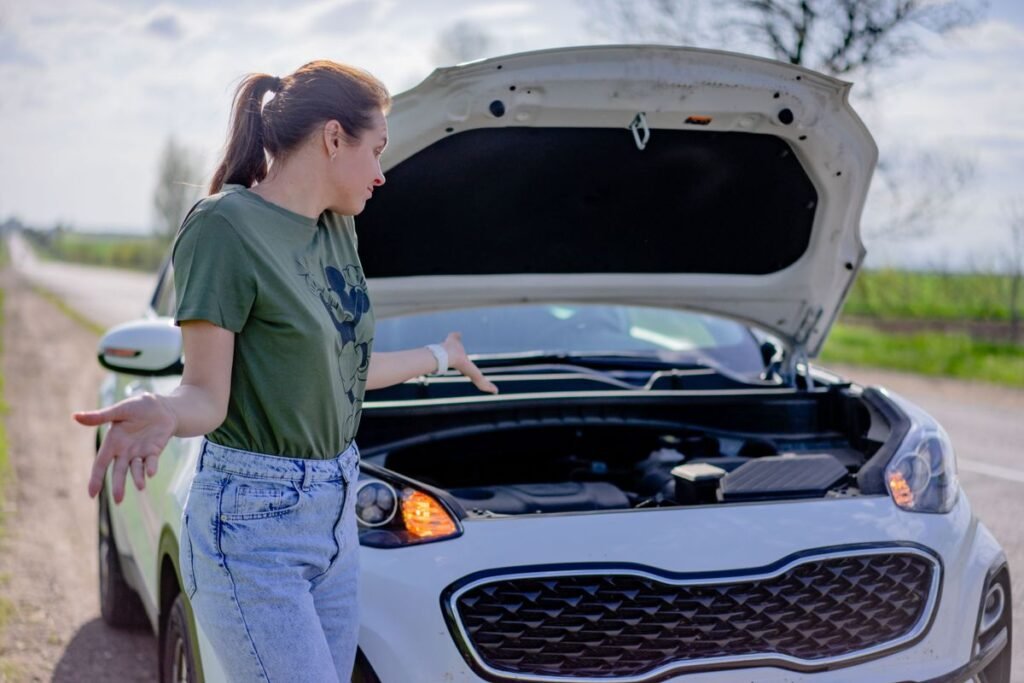
When your car won’t start, the problem is usually one of a handful of common causes: a weak or dead battery, a failing starter motor, a bad alternator, a fuel delivery problem, or a faulty ignition switch. The good news is that you can narrow it down in a few minutes just by watching and listening to what the car does when you turn the key or press the start button. This guide walks you through each symptom, what it usually means, and what the fix is likely to cost.
Start by listening: what happens when you turn the key
The single most useful clue is the sound your car makes, or does not make, when you try to start it. Pay close attention before you call for help, because each pattern points to a different part.
- One loud click, then nothing: often a failed starter motor or a very weak battery
- Rapid clicking, like a machine gun: almost always a battery that is too weak to turn the engine over
- The engine cranks slowly and groans: a dying battery, corroded battery cables, or thick oil in very cold weather
- The engine cranks normally but never catches: a fuel or spark problem, not a battery problem
- Total silence and no dashboard lights: a completely dead battery, a loose cable, or a blown main fuse
- A grinding noise: the starter gear is not engaging the flywheel properly and the starter needs attention soon
Dead or weak battery: the most common cause
Roughly half of all no start problems trace back to the battery. Car batteries typically last three to five years, and they often fail without much warning, especially after a hot summer or during the first cold snap of winter. If your car won’t crank at all, or cranks slower than usual, check these things first.
- Turn on the headlights. If they are dim or do not come on, the battery is discharged or dead.
- Look at the battery terminals under the hood. White or green crusty buildup is corrosion, and it can block power even when the battery itself is fine.
- Try to remember if you left lights or accessories on overnight. A simple drain can flatten a healthy battery.
- Check the battery age. If there is a date sticker on top showing it is four years old or more, replacement is likely.
If the car starts with a jump, the battery or charging system still needs testing, because a jump only proves the starter works. Learning how to jump start a car safely is a skill every driver should have, and most auto parts stores will test your battery and alternator for free. For a deeper look at lifespan and warning signs, read our guide on how long car batteries usually last.
Starter motor and ignition problems
The starter motor is the electric motor that physically spins the engine so it can start. When it fails, you typically hear a single click or nothing at all, even with a good battery. Tapping the starter lightly with a wrench sometimes gets one more start out of it, which is a handy get you home trick, but it is a sign the starter is at the end of its life.
The ignition switch and the starter relay can cause the same symptoms. On push button cars, a weak key fob battery is another sneaky cause. If the dashboard says the key is not detected, try holding the fob directly against the start button, which works on many models.
Fuel and spark problems: it cranks but will not catch
When the engine turns over at normal speed but your car not starting persists, the engine is missing fuel, spark, or both. Common causes include:
- Failed fuel pump: you may notice the car sputtered or lost power before it died
- Clogged fuel filter: starves the engine slowly, often with rough running first
- Empty tank or faulty fuel gauge: more common than most people admit
- Worn spark plugs or failed ignition coils: often paired with a check engine light
- Flooded engine on older cars: too much fuel from repeated short start attempts
A quick test: turn the key to the on position without starting and listen for a soft two second hum from the back of the car. That is the fuel pump priming. If you hear nothing, the pump or its fuse and relay are suspects.
What the fixes usually cost
Here is a realistic idea of what common no start repairs cost at a typical independent shop. Prices vary by car model and region, and dealer prices are usually higher.
| Repair | Typical cost range |
|---|---|
| New car battery, fitted | $120 to $350 |
| Battery terminal cleaning | $20 to $60 |
| Starter motor replacement | $300 to $700 |
| Alternator replacement | $400 to $900 |
| Fuel pump replacement | $400 to $1,000 |
| Ignition switch replacement | $200 to $500 |
| Diagnostic fee at a shop | $80 to $150 |
Simple checks you can do before calling a tow truck
Before paying for a tow, run through this quick list. It takes five minutes and solves a surprising number of cases where a car wont turn over.
- Make sure the gear selector is fully in Park, or Neutral. Try starting in Neutral with your foot on the brake.
- On manual cars, press the clutch fully to the floor. A worn clutch safety switch can block starting.
- Wiggle the battery cables. If one moves by hand, it is loose. Tighten it if you have a wrench.
- Try your spare key. A damaged key or fob can fail to disable the immobilizer.
- Check that you have fuel, even if the gauge looks suspect.
- Look for a security or immobilizer light staying on, which points to a key recognition problem.
Safety note: if you smell strong fuel or see smoke while trying to start the car, stop cranking, move away from the vehicle, and call for professional help. Never keep cranking for more than ten seconds at a time, because you can overheat the starter and drain the battery further.
When it is time for a mechanic
If the battery tests fine, the cables are clean and tight, and the car still refuses to start, further diagnosis needs tools most drivers do not own, such as a multimeter or a scan tool. Avoid guessing and swapping parts at random, because guessing wrong gets expensive quickly.
Frequently asked questions
Why does my car make a clicking sound but not start?
Rapid clicking almost always means the battery is too weak to power the starter, while a single solid click often points to a failed starter motor or a bad connection. Start with a battery test, because it is free at most parts stores and the battery is the most common culprit.
Can a bad alternator stop a car from starting?
Yes, indirectly. The alternator charges the battery while you drive. If it fails, the battery slowly drains until it can no longer crank the engine. The car may jump start and run briefly, then die again once the cables are removed.
How do I know if it is the battery or the starter?
If the headlights are bright and stay bright when you turn the key, but you only hear one click, suspect the starter. If the lights are dim or go out during cranking, suspect the battery or its cables. A free load test at a parts store settles the question.
A car that won’t start is stressful, but the cause is rarely mysterious. Work from the sound it makes, check the battery first, and you will solve most cases the same day. Keep jumper cables in the trunk, and treat slow cranking as an early warning rather than ignoring it.