
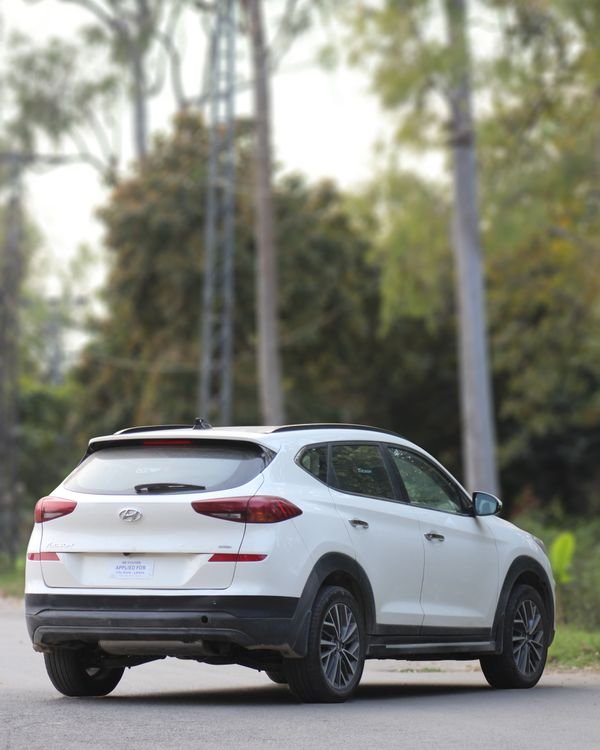
The third generation Tucson is the used SUV bargain of the Hyundai lineup, if you pick the right engine. Sold in the US for model years 2016 to 2021, this Tucson brought sharp styling, a roomy cabin and strong value, and today it undercuts a RAV4 or CR V of the same age by a clear margin. The catch is that one of its two early engines has a gearbox with a documented fault, and the later 2.4 liter engine has an oil consumption story you need to know.
So who does it suit? Budget focused families who want a compact SUV with modern safety kit and do not want to pay the Toyota or Honda premium. Commuters who do big miles and want cheap running costs with the 2.0 liter engine. Used buyers who can check an oil dipstick and are willing to walk away from a bad example. Our Hyundai Tucson model guide puts the generations side by side.
This page covers the 2015 to 2020 generation in detail: the engines, the dual clutch gearbox problem on early cars, the oil issue on later 2.4 liter cars, the fire risk recall that covers every year, which ones to buy, and what the car costs to run.
Hyundai Tucson 2015 to 2020 at a glance
| Item | Details |
|---|---|
| Generation and years sold | TL, the third generation. US model years 2016 to 2021. Facelifted for the 2019 model year with new styling and a reshuffled engine lineup. |
| Body style | 5 door SUV only. |
| Main engines | 2.0 liter four cylinder with 164 hp and 151 pound feet of torque, offered every year. 1.6 liter turbo four with 175 hp and 195 pound feet on 2016 to 2018 Eco, Sport and Limited trims. 2.4 liter four with 181 hp and 175 pound feet on 2019 to 2021 upper trims. |
| Gearboxes | Six speed conventional automatic on the 2.0 and the 2.4. Seven speed dual clutch automatic on the 2016 to 2018 1.6 turbo. |
| Drive | Front wheel drive or all wheel drive on every engine. |
| Seats | 5 |
| Boot space | About 31 cubic feet behind the rear seats, competitive for the class. |
| Fuel economy highlights | 2016 Eco front wheel drive rated 26 mpg city and 33 highway. The 2.0 liter cars are thirstier but still reasonable for the class. |
Engines and specs that matter
The 2.0 liter is the engine to buy. With 164 hp it is not quick, but it is a simple port and direct injection four cylinder paired with a conventional six speed automatic, and that simplicity is exactly what you want in a used SUV. It does the school run and the commute without drama, and the automatic is smooth and predictable. If reliability is your first priority, this is your engine.
The 1.6 liter turbo is the lively one and the risky one. With 175 hp and 195 pound feet of torque from just 1500 rpm it pulls strongly, and the Eco trim returned the best fuel economy of the range. But it only comes with the seven speed dual clutch gearbox, and that gearbox is the documented weak point of the early cars, covered in detail below. The 1.6 turbo and its dual clutch were dropped from the US lineup in the 2019 facelift, which tells you what Hyundai thought of the pairing.
The 2.4 liter arrived with the 2019 facelift for the upper trims, making 181 hp with the six speed automatic. It is stronger than the 2.0 and avoids the dual clutch entirely, which sounds ideal. The problem is that this engine belongs to the Theta II family, and owner reports describe serious oil consumption on some 2019 to 2021 cars. Buy one only after you check the oil level yourself and see a clean service history.
All wheel drive was available on every engine. Fuel economy is honest rather than class leading: the 2016 Eco managed 26 city and 33 highway, the 2.0 liter cars a few mpg less.
Which one suits you? Maximum peace of mind, take a 2019 to 2021 2.0 liter with the six speed automatic. Want more pace, a 2019 to 2021 2.4 liter works, but only with the dipstick check and service records. Tempted by a cheap 2016 or 2017 1.6 turbo, read the gearbox section first and budget for the possibility of trouble. The 2019 facelift also brought updated styling and more standard safety kit.
Common problems of this generation
This Tucson has three distinct issues, each tied to specific years and engines. Work out which engine the car you are viewing has, then read the matching section.
Dual clutch gearbox trouble, 2016 to 2018 1.6 turbo
The seven speed dual clutch on the early 1.6 turbo cars is the standout fault of this generation. Owners report hesitation pulling away from a stop, shuddering at low speed, delayed engagement, and overheating warnings in traffic. Hyundai recalled about 41,000 model year 2016 Tucsons for a transmission control module software fault that caused delayed clutch engagement in heat, with dealers reprogramming the module free of charge. But owner complaints describe symptoms persisting on some cars even after the update. On any 1.6 turbo you consider, drive in stop and go traffic and feel carefully for shudder and delay. If you feel anything odd, our guide to transmission problem signs and symptoms explains how to tell a quirk from a gearbox that is failing.
Oil consumption and engine knock, 2019 to 2021 2.4 liter
The 2.4 liter Theta II engine has owner reports of serious oil consumption, with some owners describing one to four or more quarts burned between oil changes with no visible leak. In the worst cases the engines develop a knocking noise and can seize, with the P1326 knock sensor code appearing. One owner complaint cites a 15 year and 150,000 mile extended engine warranty granted under a class action, but treat this as owner reported rather than a formal recall, and verify the exact coverage with a Hyundai dealer by VIN before you buy. There is a simple defense: check the oil level on the dipstick yourself on every 2.4 liter car, ask the seller directly about top ups between services, and walk away from any engine that knocks, rattles, or sits low on oil. Our guide to car oil leak causes and fixes helps you tell consumption from an actual leak.
ABS module fire risk recall, all years 2016 to 2021
Every car in this generation is covered by the ABS hydraulic control unit recall: a short circuit in the module can cause an engine compartment fire, and owners were told to park outside until the repair was done. The remedy is an ABS fuse kit plus a software update, free at dealers. This is non negotiable. Run the VIN through the NHTSA recall checker and confirm this campaign is closed before you buy any Tucson from these years.
Should you buy this generation
This Tucson suits buyers who want maximum SUV for minimum money. A 2019 to 2021 2.0 liter with the six speed automatic is a lot of car for the price: roomy, well equipped, safe, and mechanically simple. It will not excite you, but it will do the job cheaply.
Who should skip it? Anyone who will not check the oil should avoid the 2.4 liter, because the consumption issue punishes inattentive owners. Anyone looking at a 2016 or 2017 1.6 turbo must go in with eyes open: the dual clutch is a known weak point, and a cheap purchase price can evaporate in gearbox work. If you want zero homework, the 2.0 liter automatic is the only choice.
The good buys are 2020 and 2021 cars with the 2.0 liter and the six speed automatic: the most refined of the run, past the gearbox era, with the ABS recall remedy available. A 2019 2.0 liter is nearly as good for less money. The 2.4 liter only makes sense with verified oil history and a clean dipstick.
Whatever the year, run through this checklist before you hand over money:
- Confirm the ABS fire risk recall is closed by running the VIN through the NHTSA checker.
- On a 2016 or 2017 1.6 turbo, confirm the transmission software recall was done and drive in stop and go traffic feeling for shudder.
- Check the engine oil level yourself, especially on the 2.4 liter, and ask about top ups.
- Listen for engine knocking or rattling at idle and under load.
- Ask for full service history with regular oil changes.
- Check the air conditioning blows properly cold.
- Look at all four tyres for uneven wear.
- Get a pre purchase inspection from an independent Hyundai specialist on any 1.6 turbo or 2.4 liter car.
Running and repair costs
Running a Tucson is one of its selling points: parts are affordable and any independent shop knows these cars. Typical US prices for the common jobs look like this:
| Job | Typical cost in US dollars |
|---|---|
| Front brake pads, fitted | 150 to 350 for pads alone, 250 to 500 with new rotors |
Brake costs sit in the mainstream for the class, with fitted per axle jobs typically landing between 300 and 370 dollars at an independent shop. Beyond brakes, budget the usual consumables and keep up with oil changes, which matter more than usual on the 2.4 liter. The expensive mistakes are buying a 1.6 turbo with gearbox trouble or a 2.4 liter that drinks oil.
Questions and answers
Is the 2016 to 2021 Hyundai Tucson reliable?
It depends entirely on the engine. The 2.0 liter with the six speed automatic is a simple, durable combination with a good record. The 2016 to 2018 1.6 turbo has the documented dual clutch gearbox fault, and the 2019 to 2021 2.4 liter has owner reports of serious oil consumption. Pick the 2.0 liter, verify the ABS recall is done, and it is a dependable family SUV.
What is wrong with the 2016 Tucson transmission?
The 1.6 turbo cars use a seven speed dual clutch gearbox that can hesitate, shudder and overheat in traffic. Hyundai recalled about 41,000 model year 2016 cars for a control module software fault, but some owners report symptoms persisting after the update. Test drive in stop and go traffic, confirm the recall was performed, and treat any shudder as a reason to walk away.
Does the 2.4 liter Tucson burn oil?
Owner reports say some 2019 to 2021 2.4 liter cars burn significant oil, up to several quarts between changes, with no visible leak. In severe cases the engine can knock and seize. Check the dipstick yourself, ask about oil change history and top ups, and do not buy a car that is low on oil or makes knocking noises.
Which Tucson year is the best used buy?
A 2020 or 2021 with the 2.0 liter engine and six speed automatic. You avoid the dual clutch gearbox of the early cars, get the facelifted car with updated safety kit, and pay far less than a RAV4 or CR V of the same age. Just confirm the ABS fire risk recall has been completed before you buy.