
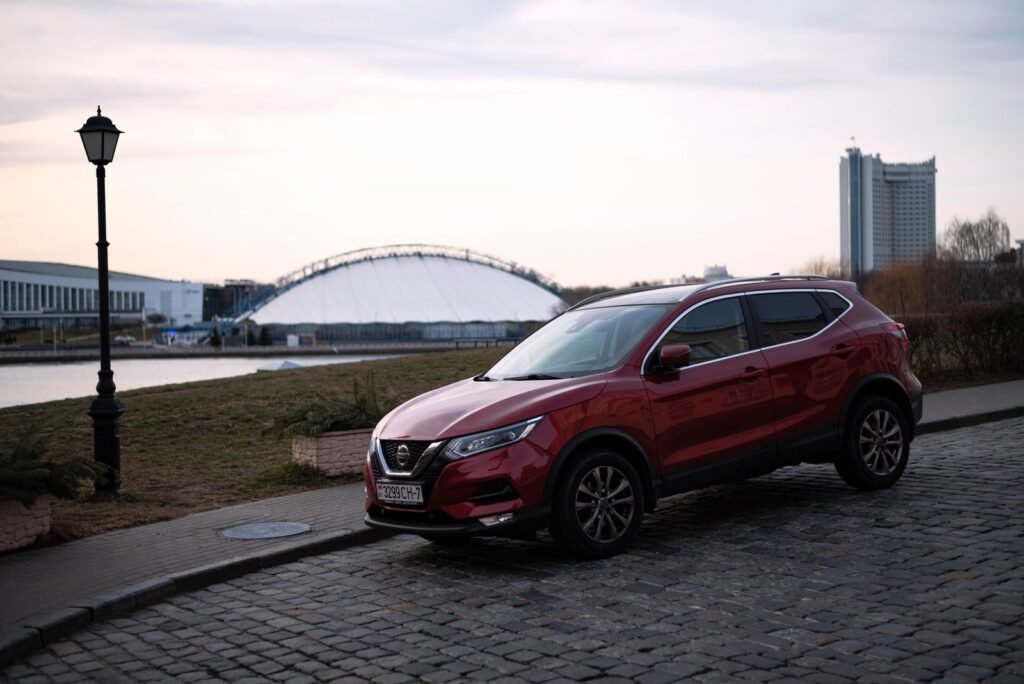
The Nissan Qashqai is the car that invented the family crossover as we know it. Before it arrived in 2006, buyers who wanted a tall driving position and a big boot bought a proper SUV or a people carrier. The Qashqai gave them hatchback running costs with SUV looks, and it worked so well that every rival spent the next decade copying it. Built mainly in Sunderland in the UK, it became one of the best selling cars in Britain and Europe.
So who does it suit? Families who want the raised seating and easy loading of an SUV without the fuel bills and parking stress of a big one. Older drivers like the easy step in height. Town drivers now head for the e-POWER hybrid, while long distance commuters once loved the diesels. Used buyers get a huge pool of second hand stock across three generations, which keeps prices honest and parts cheap.
People search for the Qashqai because it is always on the family shortlist. This page covers all three generations, the engines worth having, the problems owners actually report, the years to buy, and what the car costs to run.
Nissan Qashqai at a glance
The quick facts first. The engine choice matters more than the trim here, so read the engines section before you fall in love with a particular car.
| Item | Details |
|---|---|
| Generation count and years sold | 3 generations, on sale since 2006 and still in production today |
| Body styles | 5 door crossover SUV. The first generation also came as the Qashqai+2, a longer 7 seat version. |
| Main engines | 1.2 and 1.3 litre turbo petrols, 1.5 and 1.6 litre diesels, and the e-POWER hybrid in the current generation. Early cars also used a 1.6 and a 2.0 litre petrol. |
| Gearboxes | 6 speed manual, Xtronic CVT automatic, and a 7 speed dual clutch on some second generation cars. The e-POWER uses a single speed reduction gear. |
| Drive | Front wheel drive standard. Four wheel drive was offered on some first and second generation cars. |
| Seats | 5, or 7 in the first generation Qashqai+2 |
| Boot space range | 410 litres in the first generation, 430 litres in the second, and 504 litres in the current generation, with the seats up |
Generations explained
Three generations cover the Qashqai story. Each one is quite different to buy used, because the problem areas move from one to the next.
| Generation | Years | What changed |
|---|---|---|
| First generation, J10 | 2006 to 2013 | The original crossover. Simple petrols and diesels, a facelift in 2010, and the 7 seat Qashqai+2 from 2008. Now purely a cheap used buy. |
| Second generation, J11 | 2013 to 2021 | Lighter and more efficient on a new platform, with small turbo petrols and the Xtronic CVT. Facelifted in 2017. This is the generation most used buyers meet first. |
| Third generation, J12 | 2021 to present | Hybrid only in spirit, with the 1.3 mild hybrid and the e-POWER system where the petrol engine only charges the battery. Bigger boot, better interior, facelifted in 2024. |
The second generation car, sold from 2013 to 2021, is the one you will see everywhere on used car lots. It won What Car? Car of the Year in 2014 and it shows in the numbers Nissan sold. The 1.2 DIG-T turbo petrol was the volume engine early on, joined by diesels for high mileage drivers, and from 2018 the much stronger 1.3 DIG-T turbo took over as the engine to have. A facelift in 2017 sharpened the looks and the interior. It is the generation with the deepest second hand supply, which means the most choice and the keenest prices, but also the one where you must be pickiest about engine and history.
The third generation car arrived in 2021 and is still the current Qashqai. Nissan dropped diesels entirely and built the range around two petrol choices: a 1.3 litre mild hybrid and the e-POWER, where a 1.5 litre petrol engine acts only as a generator for the electric motor that actually drives the wheels. Around town it feels like an EV with no plug needed, and it gave the Qashqai its best fuel economy ever. The boot grew to a genuinely family friendly 504 litres, and a 2024 facelift brought sharper styling and better infotainment. It is the safest Qashqai to buy, with the least to go wrong mechanically.
Engines and specs that matter
The first generation petrols are simple old school units. The 1.6 litre petrol makes 115 bhp and does the job in town, though it works hard on the highway, and the 2.0 litre of around 140 bhp suits heavier loads better. These are honest, unstressed engines and they are cheap to service, which is why the oldest Qashqais still sell.
The diesels are for people who drive serious miles. The 1.5 dCi with about 108 to 109 bhp is the economy pick across the first two generations, with the 2.0 dCi at 150 bhp and the later 1.6 and 1.7 dCi adding pulling power. The catch that matters: a diesel used for short town trips is asking for trouble, because the exhaust filter never gets hot enough to clean itself. Buy a diesel only if your driving includes regular longer runs.
The engine to know in the second generation is the 1.2 DIG-T turbo petrol at 114 bhp, because it is the one with the documented weakness. Early cars, especially before 2016, are known for excessive oil consumption and timing chain problems, and Nissan ran a service campaign to fit improved piston rings and updated engine software. The 1.3 DIG-T that replaced it in 2018, with 138 or 157 bhp, is the engine the buying guides praise: stronger, smoother and far less troubled.
In the current generation you choose between the 1.3 mild hybrid and the e-POWER. The 1.3 comes with 138 or 157 hp and is a normal petrol with a small electrical boost, pleasant and familiar to drive. The e-POWER is the clever one: the 1.5 petrol never drives the wheels, it only generates electricity for the 187 hp electric motor, so around town it feels like an EV with strong silent pull and no gear changes at all. Fuel economy in town driving is the best any Qashqai has managed.
Which engine suits you? Do mostly town driving and the e-POWER is the natural pick for economy and refinement. Cover long highway miles every week and a diesel from the second generation still makes sense, as long as you keep up the runs it needs. Want the safest used buy, take a post 2018 1.3 DIG-T petrol. And if a car you test drive feels like it is hesitating or pulling unevenly, check the gearbox fluid history first, because neglected CVT fluid produces exactly those symptoms and knowing how often to change transmission fluid can save you a very expensive mistake.
Common problems by generation
The Qashqai has a decent reputation overall, but each generation has its own signature faults. These are the issues that come up again and again in owner reports and buying guides, and the checks that catch them.
First generation, 2006 to 2013
These cars are old now, so buy on condition and history rather than mileage. The diesels are the ones to watch: early cars are documented for exhaust filter blockages, turbo failures and timing belt neglect, and on a cheap car any one of those can cost more than the car is worth. On the petrols the record is kinder, but check for rust on older cars in salty climates. Nissan ran service campaigns on steering parts for these cars, so ask whether the campaign work was done. Pre facelift cars from 2007 to 2010 are the ones the guides tell you to avoid; the 2010 facelift cars are better sorted and still very cheap.
Second generation, 2013 to 2021
The 1.2 DIG-T engine is the headline fault of this generation. On cars from 2013 to about 2018, excessive oil consumption and timing chain trouble are well documented, worst on pre 2016 cars. On a test drive you cannot see inside the engine, so check the oil level on the dipstick before and after a drive if you can, ask the seller directly whether the car uses oil between services, and insist on proof of the Nissan service campaign that fitted improved piston rings. If the paperwork is missing or the seller looks blank, walk away. There are thousands of good Qashqais; you do not need this one.
The Xtronic CVT gearbox is the second thing to check on this generation. Owners describe problems most often around 70,000 to 90,000 miles, and the common thread is gearbox fluid that was never changed. On your test drive, pull away gently and feel for shuddering, hesitation or a whine that rises with speed. A healthy CVT is smooth and quiet. Also on this generation, the diesels punish short trip drivers with blocked exhaust filters, and two recalls are worth checking on a 1.2: the rear wheel arch protector and brake hose recall for 2014 to 2016 cars, and the child lock switch recall for 2015 to 2018 cars.
Third generation, 2021 to present
The current generation has the cleanest mechanical record of the three, and most complaints are about electronics rather than engines. Owners report a startup system warning that sometimes cuts power, fixed by restarting the car, jerky pull away from the automatic gearbox, poor DAB reception, and an unresponsive media system. Early e-POWER cars from 2022 to 2023 had teething troubles with the 12 volt battery draining and battery management software faults, and there was a large recall that must be verified as complete on any car you buy. One useful habit on any hybrid: a flat 12 volt battery causes a surprising number of warning lights, and our guide on how long car batteries last explains when to replace it before it strands you.
Which Nissan Qashqai should you buy
On a tight budget, look at a 2019 to 2021 second generation car with the 1.3 DIG-T petrol. The buying guides call this the strongest used combination of the lot: post facelift build quality, the better engine, modern equipment, and prices that have dropped into reach. If the budget is smaller still, a 2011 to 2013 first generation car with full service history is honest cheap transport, ideally a petrol.
In the middle ground, a 2021 to 2023 third generation car with the 1.3 mild hybrid gives you the modern car feel, the bigger boot and the improved interior for less money than an e-POWER. If you can stretch to a 2024 facelift car, that is the best Qashqai you can buy used, with the teething troubles sorted.
Years to be careful with are 2014 to 2018 for the 1.2 DIG-T oil and timing chain issues, 2007 to 2010 first generation cars for general age and early faults, and 2022 to 2023 e-POWER cars unless the recall work is confirmed complete.
Whatever the generation, run through this checklist before you hand over money:
- Ask for service records and check oil changes were done on time, every time, especially on a 1.2 DIG-T.
- Check the engine oil level yourself and ask the seller directly if the car uses oil between services.
- On a 1.2 DIG-T, demand written proof the piston ring and engine software campaign was carried out.
- Look for proof the CVT fluid has been changed on any automatic car, ideally every 40,000 to 50,000 miles.
- Test drive for at least fifteen minutes and feel for CVT shudder, hesitation or whining.
- On a diesel, ask about the driving pattern and budget for exhaust filter trouble if it has been a town car.
- Check every recall is closed by running the VIN through the Nissan recall checker for your country.
- Try every electronic feature: the media screen, the navigation, the parking sensors and the keyless entry.
- Look at all four tyres for uneven wear, which points at alignment or suspension wear.
Running and repair costs
Running costs are one of the Qashqai’s strengths, because parts are sold everywhere and every garage knows the car. Wear parts are cheap and plentiful, and even the e-POWER uses mostly conventional running gear underneath the hybrid system. Our full breakdown of brake pad replacement cost shows what one of the most common jobs involves. Typical US prices for the common jobs look like this:
| Job | Typical cost in US dollars |
|---|---|
| Front brake pads, fitted | 150 to 300 |
| Four tyres, fitted | 400 to 800 |
| Major service at an independent garage | 300 to 600 |
| CVT fluid change | 200 to 350 |
| Diesel exhaust filter deep clean | 200 to 400 |
One cost to plan for is the CVT fluid change, which many owners skip and which is exactly what keeps the automatic gearbox alive. Another is the exhaust filter on diesels: prevention is a regular long run, cure is a professional clean or replacement, and replacement is the expensive one.
Questions and answers
Is the Nissan Qashqai reliable?
Mostly yes, with one big exception. The current generation has the cleanest record, and the post 2018 second generation cars with the 1.3 petrol are well regarded. The weak point of the range is the 2013 to 2018 1.2 DIG-T petrol with its oil consumption and timing chain issues. Buy the right engine with records and the Qashqai is a dependable family car.
Which Qashqai engine is the best to buy used?
The 1.3 DIG-T petrol from 2018 onward is the consensus pick: strong, smooth and the least troubled engine of the second generation. In the current generation, the e-POWER is the economy and refinement champion for town drivers, while the 1.3 mild hybrid is the safe familiar choice.
What is e-POWER and should I buy it?
e-POWER is Nissan’s series hybrid: the 1.5 litre petrol engine never drives the wheels, it only generates electricity for the electric motor that does. You get electric car smoothness around town with no plug and no charging routine. Buy it if most of your driving is in town or mixed.
Should I avoid the 1.2 DIG-T Qashqai?
Treat it with caution rather than ruling it out completely. Cars from 2014 to 2018, especially pre 2016, have documented oil consumption and timing chain problems. If you are considering one, demand proof the Nissan service campaign was done, check the oil level carefully, and ask for a full service history.