
You turn the key, or press the button, and the engine wakes up, the lights come on, and the radio starts playing, all in the same second. It feels like magic, until the morning it does not happen, and then the same car that started every day for years sits silent in the driveway. This guide will show you, in plain language, how that power gets from the battery to every part of your car, and how to spot the early signs of trouble before a small electrical fault leaves you stranded. But here is the question most guides skip, and it decides whether you need a new battery, a new alternator, or just a clean connection. Which part actually failed?
The short answer to how does a car electrical system work is simple. The battery stores power and starts the engine, the starter uses that stored power to crank the engine, and once the engine is running the alternator takes over, making power for everything in the car and recharging the battery at the same time. Wiring, fuses and relays carry that power where it is needed, and the computer watches the whole system and adjusts it as you drive. If that morning silence has ever left you worried about a big repair bill, you are not alone, and that worry is sensible, because an electrical fault can look like a dead battery, a bad starter and a failed alternator all at once, and guessing wrong wastes money.
Here is a real example you can check on your own car tonight. Park in a dark place, switch the headlights on, and then start the engine while you watch the light on a wall or on the garage door. The headlights will dim for a second or two while the engine cranks, then brighten again once the engine is running. That dip happens because the starter takes a large share of the battery power for those few seconds, and the alternator then takes over and restores full power. Once you have seen that dip and recovery, you have seen the whole system change hands, from battery power to alternator power, in real time.
The Three Jobs of Your Car Electrical System
Every electrical part in your car serves one of three jobs, and keeping those jobs separate is the fastest way to understand a fault. The first job is starting the engine, which needs a short, powerful burst of energy. The second job is running everything while you drive, from the ignition and the fuel pump to the lights, the wipers, the heater fan and the phone charger. The third job is recharging the battery, so the car is ready to start again tomorrow. A healthy system does all three without you noticing any of them, and a fault in any one of them shows up as a different symptom, which is why the same dead car can have three different causes.
Think of the battery as a water tank, the alternator as a pump that refills the tank while the engine runs, and the wiring as the pipes that carry water to each tap. The starter is the biggest tap of all, and it opens for only a few seconds at a time. The lights, the radio and the heated seats are smaller taps that stay open while you drive. If the tank is empty, nothing flows. If the pump stops, the tank slowly empties while you drive. If a pipe is blocked or leaking, one tap runs dry while the others work fine. That picture is simple, but it explains almost every electrical symptom a driver will ever meet. And it leads to the first part worth knowing in detail, the tank itself.
The Battery: Stored Power for Starting
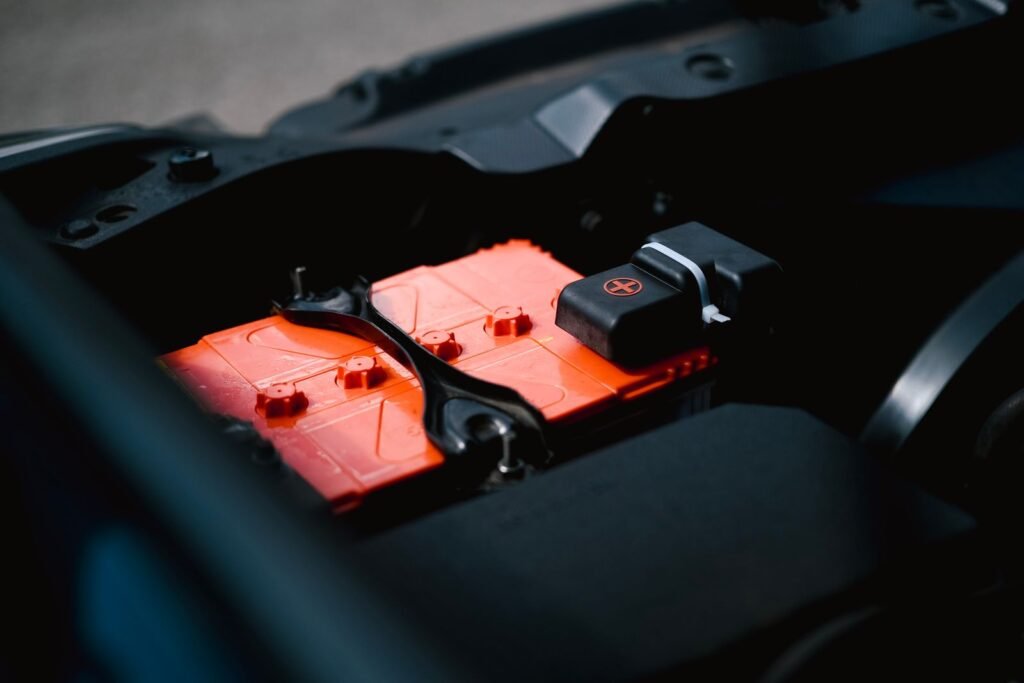
The battery is a chemical store of electrical energy, and its main job is to deliver a large burst of current to the starter when you ask the engine to turn over. A typical car battery holds 12 volts, and a healthy, fully charged one reads about 12.6 volts when the car has been sitting with the engine off. That number matters, because a reading near 12.0 volts means the battery is low, and a reading below that means it may not have enough power left to crank the engine on a cold morning. Cold weather makes this worse, because a cold battery gives up its energy more slowly, while a cold engine needs more effort to turn over, so winter is when weak batteries finally give up.
The battery also steadies the whole system. It smooths out the small surges and dips in voltage that come from the alternator, and it powers the car when the engine is off, for the clock, the alarm, the keyless entry receiver and the computer memory that remembers your radio stations and your seat position. That slow drain when parked is normal, and it is small, but a car that sits for weeks can still end up with a flat battery, because those small drains add up day after day. If your car sits unused for long stretches, a short drive every week or two, long enough for the engine to warm up fully, keeps the battery in better shape than starting it for a minute and switching it off again.
Batteries wear out, and age is the simplest clue. Most car batteries last three to five years, and heat, vibration and many short trips shorten that life. A battery that needs jump starting more than once, a battery case that looks swollen, or white or blue crust around the terminals all point to a battery that is near the end of its life. Check the terminals first, though, because a loose or corroded connection can mimic a dead battery exactly, and cleaning a terminal costs far less than a new battery. Read our guide to car battery problem signs to learn the full list of warnings to check before you spend money on a replacement. But the battery is only the start of the story, because it hands its power to a part that works harder, for a shorter time, than anything else in the car.
The Starter: Turning the Engine Over
The starter is a small but powerful electric motor, and its only job is to spin the engine fast enough for it to start running on its own. When you turn the key or press the button, the battery sends a large current to the starter, the starter pushes a small gear into the engine flywheel, and the motor turns the engine over at a few hundred revolutions per minute. The moment the engine fires and runs on its own, the starter gear pulls back and the starter switches off. It works for only a few seconds at a time, but it draws more current in those seconds than every other part of the car combined.
That short, heavy workload explains the classic starter symptom, a single loud click and nothing else. The click is the solenoid, the small switch that connects the battery to the starter motor, engaging, and the silence after it means the motor itself is not turning. A rapid clicking sound usually means something different, a battery too weak to hold the solenoid engaged, so the switch opens and closes again and again. Learning to hear that difference saves you from replacing a starter when the battery was the real problem, and from replacing a battery when the starter was at fault.
A starter rarely fails without warning. Slow cranking that gets worse over a few weeks, a grinding noise when you start the car, or a car that starts only after several tries are all signs to act on soon. A grinding noise is the one to take seriously, because it can mean the starter gear is not meshing cleanly with the flywheel, and continuing to grind it can damage the flywheel teeth, which turns a starter job into a much bigger repair. If the car cranks slowly but the lights stay bright, the starter or its wiring is the more likely suspect. If the lights dim heavily and the cranking is slow, the battery is the more likely suspect. That simple light test, done from the driver seat, points you in the right direction before any tool comes out. Yet even a perfect starter is useless without the part that keeps the whole system alive after the engine starts.
The Alternator: Power While You Drive
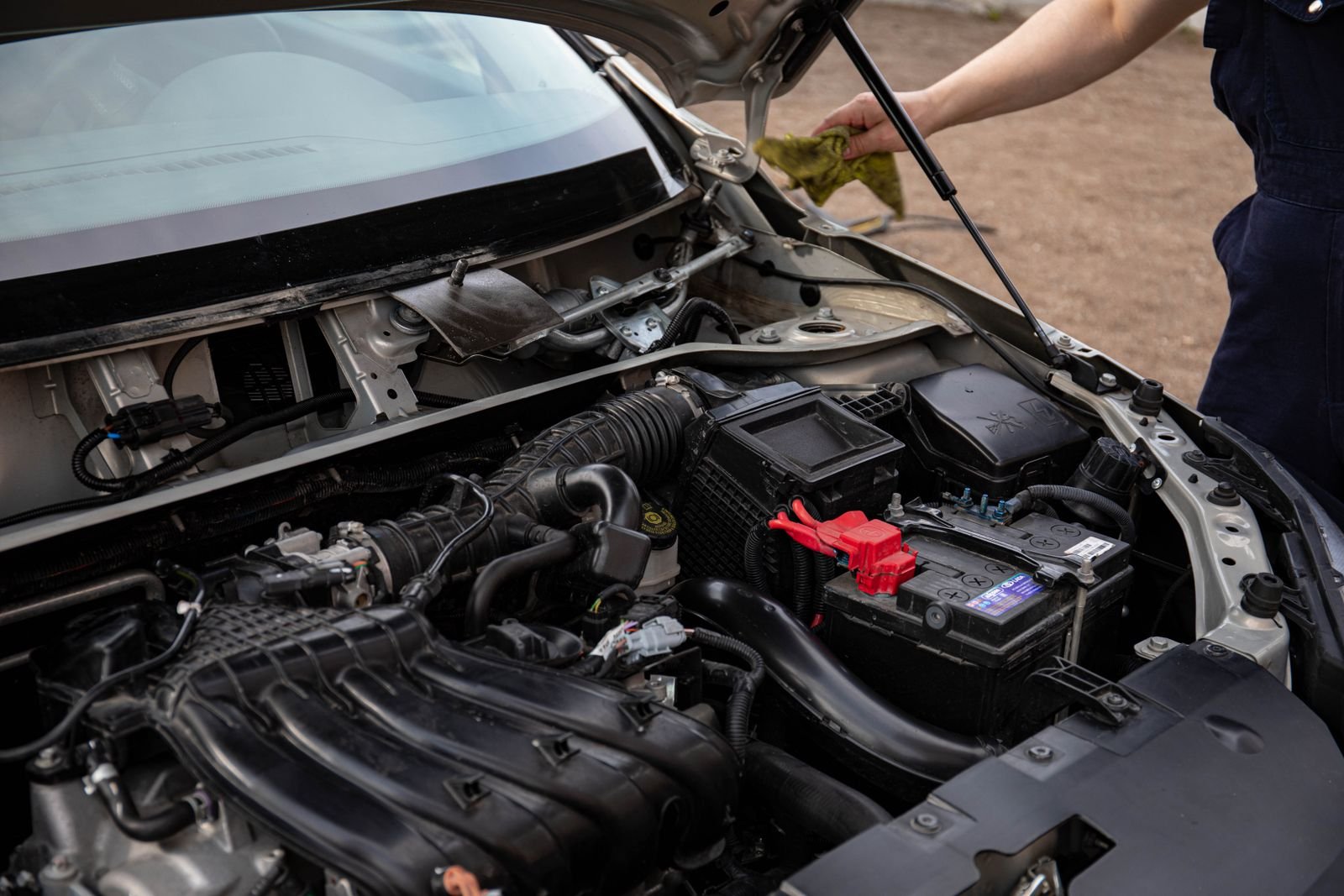
The alternator is a generator driven by the engine, usually by the serpentine belt, and it makes the electricity your car uses while you drive. It also recharges the battery, replacing the energy the starter took and topping up whatever the lights, the heater fan, the air conditioning and the charging ports used along the way. A healthy alternator puts out about 13.7 volts to 14.7 volts while the engine is running, and that higher voltage is what pushes energy back into the battery. If you have ever seen the battery warning light come on while driving, that light is really an alternator warning, because it means the system voltage has fallen below the level the alternator should maintain.
Inside the alternator, a spinning rotor inside a set of copper windings produces alternating current, and a rectifier turns that into the direct current the car needs. A voltage regulator then holds the output steady, so the lights do not flare when you rev the engine and do not dim when you switch the heated seats on. Modern regulators are often controlled by the engine computer, which can raise or lower the output to suit the load and to save a little fuel. That is why the voltage on a modern car can move around more than on an older car, and why a single reading at idle does not always tell the whole story.
An alternator gives its own warnings, and they are different from battery warnings. Headlights that dim and brighten with engine speed, a whining or grinding noise from the front of the engine that changes with revs, a burning rubber smell from a slipping drive belt, or a battery that keeps going flat even though it is fairly new all point toward the alternator or its belt. The belt matters here, because an alternator cannot make power if the belt that spins it is loose, glazed or broken, so a slipping belt can look exactly like a failed alternator. Check the belt for cracks and for tension before you blame the alternator itself. Read our guide to alternator repair cost for the full price picture, and remember the key test. A car that starts fine with a jump start but dies again soon after is usually a charging problem, not a starting problem. But power still has to travel from these parts to every light, motor and sensor in the car, and that journey is where many faults hide.
Wiring, Fuses and Relays: The Delivery Network
Wiring is the delivery network of the electrical system, and it carries power from the battery and the alternator to each part that needs it, then back again through the body of the car. A modern car can carry more than a mile of wiring, bundled into harnesses that run through the engine bay, under the carpets and inside the doors. Each wire is sized for the current it must carry, so a headlight wire is thicker than a dashboard warning light wire, and a wire that is too thin for its job will run hot and can melt its insulation.
Fuses are the safety valves in that network. Each circuit has a fuse rated for the current it should carry, and if something draws too much, through a short circuit or a failing motor, the fuse melts and breaks the circuit before the wiring can overheat. That is why a blown fuse is a symptom, not just a fault. Replacing a blown fuse without finding why it blew usually ends with a second blown fuse, because the short or the failing part is still there. Always replace a fuse with the same rating, never with a higher one, because a higher rated fuse lets the wiring carry more current than it was built for, and that is a fire risk.
Relays are small electrically operated switches, and they let a small current from a dashboard switch control a larger current to a part like the headlights, the horn or the fuel pump. That keeps heavy current out of the dashboard switches, which would wear out fast if they carried it directly. A clicking relay, a horn that works only sometimes, or headlights that fail on one side can all trace back to a relay or to a corroded connector rather than to the part itself. Corrosion is the quiet enemy of this whole network, especially on ground connections, and it deserves a section of its own. But before that, there is one more part of the system that drivers rarely think about, and it controls more than any single wire.
The Computer and Sensors: The Brain of the System
Almost every modern car has a main engine computer, often called the ECU, plus smaller modules for the body, the transmission and the safety systems, and they all talk to each other over a data network. Those computers watch the battery voltage, the alternator output, the engine temperature and the signals from dozens of sensors, and they decide when to switch things on and off. They control the charging rate, they can shed load by switching off the heated rear window or the seat heaters when voltage runs low, and they can set a warning light when the numbers fall outside the expected range.
That control brings a practical consequence for anyone working on the car. Disconnecting the battery can reset learned settings in the computer, from the idle speed to the radio code, and on some cars the windows, the steering angle sensor or the idle control need a relearn procedure after the battery is changed. It also explains why a modern car can show a dashboard warning for a low battery even when the engine starts normally, because the computer has noticed the voltage sagging under load before you have. If a warning light comes on, read it as an early message from a system that watches the numbers constantly, not as a random glitch.
Sensors feed the computer the facts it needs, and a sensor fault can look like an electrical fault. A failing crankshaft position sensor can stop the engine from starting even though the battery, the starter and the alternator are all healthy, and a faulty temperature sensor can make the cooling fan run when it should not. That is why a proper diagnosis starts with reading the fault codes, and why guessing at parts without a code reading often wastes money. A code reader that plugs into the diagnostic port under the dashboard costs less than a single wrong part, and many shops will read the codes as part of a charging system check. Yet even the smartest computer cannot work if the power cannot complete its round trip, and that brings us to the part of the system most often overlooked.
Grounds and the Return Path: Where Many Faults Hide
Electricity needs a complete loop, and in a car that loop runs out through the wiring and back through the metal body and the engine block, which act as the return path. Ground straps and ground wires connect the engine, the body and the battery negative terminal, and if one of those connections corrodes or loosens, the return path weakens. The result is a set of confusing symptoms, lights that dim, gauges that flicker, a starter that cranks slowly even though the battery tests fine, or an alternator that seems to undercharge.
Ground problems are common on older cars, on cars driven on salted winter roads, and on cars that have had bodywork repairs where a ground point was painted over or left loose. The fix is usually simple, clean the connection back to bright metal, tighten it properly and protect it from moisture, but finding it takes patience, because a poor ground can affect one circuit while leaving the next one working perfectly. If you ever face a cluster of unrelated electrical faults that appeared together, ask the mechanic to check the grounds before replacing parts, because that one check has saved many drivers from a string of unnecessary replacements.
There is a simple test for this that a mechanic uses often. With the engine running and the lights on, a voltage reading taken across a suspect ground connection should be close to zero. Any real voltage showing across that connection means the ground is resisting the current flow, and that resistance is stealing power from the circuit. You do not need to run this test yourself, but knowing it exists helps you judge the diagnosis. A shop that mentions a voltage drop test on the grounds is doing the job properly. Now that you know how the parts work together, the next step is learning what the symptoms mean in practice.
Warning Signs and What Each One Usually Means
Use this table when something feels wrong and you want to know where to look first. It matches the symptom you can see or hear to the most likely cause, and to the action that makes sense. It is a starting point for a diagnosis, not a replacement for one, because two faults can produce the same symptom, and only a test can separate them.
| Symptom | Most likely cause | What to do first |
|---|---|---|
| Single loud click, no crank, lights stay bright | Starter or its solenoid | Check the battery terminals, then get the starter tested |
| Rapid clicking, dim lights, slow crank | Weak or flat battery | Jump start carefully, then test the battery and charging system |
| Car starts, then dies soon after, or dies while driving | Alternator or drive belt | Stop safely, do not keep jump starting it, book a charging test |
| Battery warning light while driving | Charging fault, often the alternator | Switch off non essential electrics, drive to a shop soon |
| Headlights dim and brighten with engine speed | Alternator or regulator fault | Book a charging system test, check the drive belt |
| One light or one accessory stops working | Blown fuse, bad relay or a wiring fault | Check the fuse for that circuit, look for the cause of the failure |
| Several unrelated electrics fail together | Poor ground connection | Ask the mechanic to check the ground straps and connections |
| Burning smell or smoke from the engine bay | Overheating wire, slipping belt or short circuit | Switch the engine off, do not drive, get help |
The table shows why the same dead car can need three different repairs, and why the symptom matters more than the guess. A single click points one way, rapid clicking points another, and a car that dies while driving points somewhere else again. Use the symptom to guide the test, not to pick the part, and you will spend far less on electrical repairs. But what can you check yourself, safely, before you book that test?
Simple Checks You Can Do at Home
Start with the easiest checks, and never touch a part you are unsure about. Look at the battery terminals first. They should be tight, clean and free of white or blue crust. If you see crust, that is corrosion, and it can be cleaned with a battery terminal brush after disconnecting the negative cable first and reconnecting it last. Wear eye protection, keep the cables away from metal tools, and if the battery case is cracked, leaking or swollen, stop and let a professional handle it, because battery acid burns skin and damages paint.
Next, check the drive belt that spins the alternator. With the engine off and the keys out of the ignition, look at the belt for cracks, fraying, glazing or missing ribs. Press it gently midway between two pulleys. It should feel firm, not slack and floppy. A belt that is cracked or that slips will squeal, especially when you first start the car or switch the air conditioning on, and a slipping belt can look exactly like a failing alternator. If the belt looks worn, a new belt is a cheap job next to a new alternator, so check it first.
If you own a multimeter, you can run the most useful home test in the whole guide. With the engine off and the car sitting for an hour, a healthy battery should read about 12.6 volts across its terminals. With the engine running, the reading should rise to about 13.7 volts to 14.7 volts, which shows the alternator is charging. A reading that stays near 12 volts with the engine running means the alternator is not charging, and a reading that falls below 12 volts with the engine off means the battery is low. Write the two readings down and take them to the shop, because they turn a vague complaint into a clear starting point. Read our guide on how to change a car battery before you attempt a replacement yourself, because the safety steps matter, and a mistake here can damage the computer. And if the tests point to a real fault, here is how to decide what happens next.
When to See a Mechanic, and What to Ask For
Book a charging system test if the battery warning light comes on, if the car needs jump starting more than once, if the headlights dim and brighten with engine speed, or if the engine cranks slowly on a cold morning. Ask for a test that covers the battery, the starter draw and the alternator output together, because testing only one part can miss the real fault. Many auto parts stores offer a battery and charging test at no charge, and a shop will usually include it in a diagnostic visit, so ask the price of the test before you agree to it, and ask what it covers.
Stop driving and get help sooner if you smell burning, see smoke, or notice the battery warning light plus a loss of power steering or a rising temperature gauge, because a broken drive belt can stop the alternator, the water pump and the power steering pump at the same time on some cars. In that case the car is not just failing to charge, it is losing the parts that keep the engine cool and the steering working, and driving on is a real risk. Pull over safely, switch the engine off and call for recovery.
When the shop gives you a diagnosis, ask for the numbers. A battery test should show the measured voltage and the cold cranking amps it can still deliver. A charging test should show the output voltage at idle and at higher revs. If the shop cannot show you a reading, ask why, and consider a second opinion before you approve a big part. Keep the old part and the invoice with the part number, so a future shop can see what was fitted. That paper trail is your proof if the same symptom returns. Now here are the answers to the questions drivers ask most after reading this guide.
Frequently asked questions
How does a car electrical system work in simple terms?
The battery stores power and starts the engine, the starter uses that power to crank the engine, and once the engine is running the alternator makes power for everything in the car and recharges the battery. Wiring, fuses and relays carry that power where it is needed, and the computer watches the voltage and adjusts the charging rate as you drive.
What voltage should a car battery read?
A healthy, fully charged battery reads about 12.6 volts with the engine off, after the car has been sitting for a while. With the engine running, the reading should rise to about 13.7 volts to 14.7 volts, which shows the alternator is charging the battery. A reading near 12 volts with the engine off means the battery is low.
Can a car run with a bad alternator?
Only for a short time. A car with a failed alternator runs on the battery alone, and the battery will go flat, often within minutes if the lights and heater are on. If the battery warning light comes on while driving, switch off non essential electrics and drive to a shop soon, because the car can stop without much warning once the battery is empty.
Is it the battery, the starter or the alternator?
Use the symptom to tell them apart. A single loud click with bright lights points to the starter. Rapid clicking with dim lights points to a weak battery. A car that starts with a jump start but dies again soon after points to the alternator or its drive belt. A battery and charging test confirms which one it is before you buy any part.