
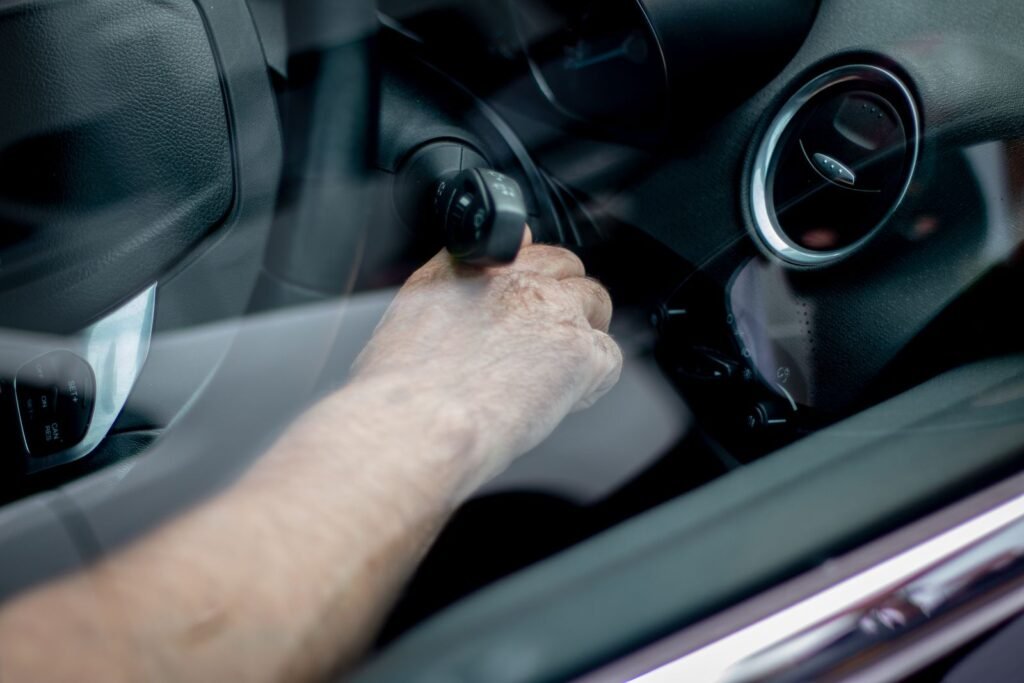
You are sitting in the driver seat, the key is in your hand, and everyone around you makes starting a car look easy, yet in this moment you are not quite sure what to press first, what to turn, or what will happen if you get it wrong. This guide will take you through how to start a car in plain language, for an automatic car and for a manual car, with a key and with a push button, so you can start the engine calmly and drive away with confidence. But there is one small step that most first time drivers miss, and it is the reason so many cars seem to refuse to start, so keep reading until you reach the section on the safety interlock, because that one detail may save you a worried phone call to a mechanic.
The direct answer is simple. To start an automatic car, sit in the driver seat, press the brake pedal firmly with your right foot, make sure the gear selector is in Park, then turn the key to Start and release it as soon as the engine runs, or press the Start Stop button once while the key fob is inside the car. To start a manual car, press the clutch pedal fully to the floor with your left foot, make sure the gear stick is in Neutral, then turn the key or press the button in the same way. That is the whole job in one sentence, and the rest of this guide explains each part slowly, so you know what you are looking at, what you are pressing, and why each step matters.
If your stomach tightens a little the first time you sit behind the wheel, that worry is completely normal, because a car is a large machine and the dashboard is full of lights and symbols that mean nothing to you yet, and nobody wants to break something on the first try. The truth is that starting a car is one of the gentlest things you will ever do with it, and the car itself is built to stop you from making the common mistakes, so take a slow breath, follow the steps below in order, and you will hear the engine settle into a steady idle within a few seconds.
Before You Turn Anything: A Quick Check in the Driver Seat
Before you touch the key or the button, take a few seconds to get settled, because a calm start begins with a comfortable seat and a clear view. Adjust your seat so you can press the pedals fully without stretching, adjust the mirrors so you can see behind you and to each side, and fasten your seat belt. Check that nothing is pressing against the pedals, like a loose floor mat bunched up under your feet, because a mat that slides under the brake pedal can stop the pedal from going down fully, and that can stop the car from starting, so push the mat flat before you go any further.
Next, look at the gear selector. In an automatic car, the selector should be in Park, marked with the letter P, and the parking brake should be on. In a manual car, the gear stick should be in Neutral, which is the loose middle position where the stick moves freely from side to side, and the parking brake should also be on. Put your right foot on the brake now and keep it there, because the brake is the pedal that holds the car still while you start it, and it is also the pedal the car asks for before it will let the engine start at all. With the seat set, the belt on, the gear in Park or Neutral, and your foot on the brake, you are ready to learn the two ways a modern car starts, and that is where the next section begins.
Key Ignition or Push Button Start: Know Which One You Have
Most cars start in one of two ways, and the steps are almost the same, but the part you touch is different, so the first job is to work out which one you are looking at. A key ignition has a round slot on the steering column, just to the right of the steering wheel, with the words Lock, ACC, On and Start printed around it, and you put a metal key into that slot and turn it. A push button start has a round button on the dashboard or on the centre console, usually marked Engine Start Stop or Start Stop, and you press it with your finger while the key fob is inside the car, with no metal key going into a slot at all.
With a key ignition, each position does a different job. Lock is the off position, and the key can only go in or come out in this position. ACC powers the radio and the windows without starting the engine. On powers the dashboard, the lights and the fuel pump, and all the warning lights come on for a few seconds while the car checks itself. Start is the furthest turn, and it cranks the engine until it catches, then you let the key spring back to On by itself. With a push button, the car decides what to do based on whether your foot is on the brake or the clutch. Press the button once with your foot on the brake, and the engine starts. Press it once without your foot on the brake, and the car only powers the accessories, just like the ACC position on a key car, and the engine stays off. This is not a fault, it is how the system is designed, and knowing it in advance stops you from thinking the car is broken when you press the button and nothing happens except the radio coming on. Whichever system your car uses, the rule is the same, the car wants to see the right pedal pressed before it will start, and the next two sections show you the exact steps for an automatic and for a manual, so read the one that matches your car.
How to Start an Automatic Car
Starting an automatic car is the simpler of the two, because there is no clutch to manage, and the car handles the gears for you once the engine is running. Sit in the driver seat, close the door, and fasten your seat belt, then press the brake pedal firmly with your right foot and keep it pressed. This is the step that new drivers most often miss, and it is also the step that matters most, because most modern automatics will not start unless the brake is pressed, so press it firmly, not lightly, and hold it down through the whole starting process.
Check that the gear selector is in Park, marked with the letter P, and if it is in Reverse, Neutral or Drive, move it to Park before you start, because Park locks the wheels and holds the car still, which is exactly what you want while the engine is starting. Now start the engine. If your car has a key, put the key into the ignition, turn it to Start, hold it there for a moment while the engine cranks, then release it as soon as the engine catches and settles into a steady sound. If your car has a push button, press the Start Stop button once, firmly, with your foot still on the brake, and take your finger off the button once the engine is running. Do not hold the key in Start for more than about 10 seconds, and do not press the gas pedal while you start a modern car, because the engine manages its own fuel at startup and extra gas only floods it or makes it rev hard for no reason.
Let the engine settle for a few seconds. The engine may sound slightly louder for a moment when it is cold, then it will drop to a smooth idle, and the dashboard warning lights will go out one by one. Keep your foot on the brake while you watch the dashboard, and only then think about moving the selector to Drive or Reverse. If the engine does not catch on the first try, wait a few seconds, check that your foot is still firmly on the brake and that the selector is still in Park, then try again once. Two tries are normal, a long string of tries is not, and if the car still will not start after a couple of tries, stop and read the section later in this guide on what to do when a car will not start. Once the engine is running smoothly and the dashboard looks calm, you have done the hard part, and the next section covers the manual car, where one extra pedal changes the routine.
How to Start a Manual Car
Starting a manual car adds one pedal, the clutch, and one idea, Neutral, but the routine is just as simple once you have done it a few times. Sit in the driver seat, close the door, and fasten your seat belt, and adjust the seat so your left leg can press the clutch pedal fully to the floor without stretching, because a clutch that is only half pressed will not let the car start, and it can also make the gears grind when you try to move off. Press the clutch pedal fully to the floor with your left foot and keep it there, because most modern manual cars will not start unless the clutch is fully pressed, and a half pressed clutch is the single most common reason a manual car seems to refuse to start.
Make sure the gear stick is in Neutral by wiggling it gently from side to side, and if it moves freely, it is in Neutral, while if it feels stiff and stays in one place, it is in a gear, and you need to move it to Neutral before you start. Press the brake pedal as well if you like, because many drivers press both pedals while starting a manual, and that is a good habit, since it keeps the car still on a slope. Now start the engine in the same way as an automatic, by turning the key to Start and releasing it when the engine catches, or by pressing the Start Stop button once with the clutch fully down. Do not press the gas pedal, and do not let the clutch up until the engine is running smoothly, because letting the clutch up while the car is in gear can make the car lurch or stall. Once the engine is running, keep the clutch down, check the dashboard lights, and only then think about selecting first gear and moving off, and if you want a fuller guide to driving a manual once the engine is running, read our guide on how to drive a manual car, which picks up exactly where this guide leaves off. That covers both types of car, so the next question is what the dashboard is telling you once the engine is running, and that is where the body image below comes in.
What the Dashboard Lights Mean After Starting
When you turn the key to On or press the button without the brake, every warning light on the dashboard comes on for a few seconds, and that is normal, because the car is checking each system before the engine starts. When the engine is running, most of those lights should go out, and the dashboard should settle to just a few calm displays, like the fuel gauge, the temperature gauge, and the gear position. If a light stays on after the engine has been running for a few seconds, it is telling you something, and the colour tells you how urgent it is.
A red light means stop and check now, and the two red lights you are most likely to see are the oil pressure light, which looks like a small oil can, and the battery light, which looks like a battery. If either of those stays on, switch the engine off and call for help, because driving with no oil pressure or no charging can damage the engine quickly. An amber or yellow light means get the car checked soon, and the most common one is the check engine light, which looks like a small engine shape, and which can mean anything from a loose fuel cap to a sensor fault, so book a mechanic within a few days and drive gently until then. A blue light usually means the headlights are on high beam, and a green light usually means a system like the indicators is active, and neither of those is a warning at all. The important habit is to look at the dashboard for a few seconds after every start, before you move off, because those few seconds are the car telling you whether it is ready, and the next section covers the mistakes that new drivers make in those same few seconds.
Common Beginner Mistakes When Starting a Car
The first mistake is pressing the gas pedal while starting a modern car. Older cars sometimes needed a little gas to start, but a modern car manages its own fuel, and pressing the gas only makes the engine rev hard or flood, so keep your right foot on the brake and off the gas until the engine is running smoothly. The second mistake is holding the key in Start for too long. Turn the key, listen for the engine to catch, and release the key at once, because holding it after the engine is running grinds the starter and wears it out, and if the engine does not catch within about 10 seconds, release the key, wait a few seconds, and try again.
The third mistake is forgetting the brake in an automatic or the clutch in a manual, and then thinking the car is broken when nothing happens. This is the safety interlock at work, and it is the real example that proves how common this mistake is. Most modern automatics refuse to start unless the brake is pressed, and most modern manuals refuse to start unless the clutch is fully pressed, so a car that does nothing when you turn the key or press the button is very often a car whose driver has not pressed the right pedal firmly enough, not a car with a fault at all. Press the pedal firmly, all the way down, and try again before you worry about anything else.
The fourth mistake is starting the car while it is in gear, or while the gear selector is in Drive or Reverse instead of Park or Neutral, because starting in gear can make the car lurch forward, stall, or both. The fifth mistake is pressing the push button without the brake and then thinking the car will not start, when in fact the car has only powered the accessories, exactly as it is designed to do. The sixth mistake is rushing off the moment the engine catches, without letting it settle and without checking the dashboard, so give the engine a few seconds, glance at the lights, and only then select a gear. If you avoid these mistakes, you have avoided almost every starting problem a new driver ever meets, and the next section covers what to do on the rare day when the car genuinely will not start.
What to Do If the Car Will Not Start
First, stay calm and run through the simple checks before you assume the worst. Is your foot firmly on the brake in an automatic, or fully on the clutch in a manual? Is the gear selector in Park, or the gear stick in Neutral? Is the key fob inside the car, and is the steering wheel locked? A steering wheel lock can stop the key from turning, and the fix is simple, so turn the steering wheel gently to one side while you turn the key, and the lock should release and let the key turn. If the car has a push button and the fob battery is weak, try holding the fob against the button or in the marked spot in the centre console, because many cars can sense the fob at close range even when its battery is nearly flat, and a new fob battery is a small job at a parts store.
Next, listen to what the car does when you try to start it. If you hear a rapid clicking sound, or the dashboard lights dim and the engine turns over very slowly, the battery is likely weak, and the car does not have enough power to crank the engine. Do not keep trying over and over, because repeated tries only drain the battery further. Check for the early signs of battery trouble in our guide on car battery problem signs, and if the battery is old or the signs have been building for a while, call a mechanic or a roadside service for help, and let them test the battery properly. If you need a new battery, our guide on how to change a car battery explains the job, but if you are not sure, a mechanic is the safer choice.
If you hear nothing at all when you turn the key or press the button, no click and no cranking, check the simple things again, the brake, the clutch, the gear, and the fob, and look at whether the dashboard lights come on at all. If the dashboard is completely dark, the battery may be flat or a connection may be loose, and that is a job for a mechanic. If the dashboard lights come on but the engine does nothing, the starter or the interlock may be at fault, and again, a mechanic should look at it. Call for help if the car will not start after two or three careful tries, if you smell fuel, if you see smoke, if a red warning light stays on, or if you are in an unsafe place like a busy road or a dark car park at night. Note what happened before you call, whether the engine cranked slowly, clicked, or did nothing at all, because that one detail helps the mechanic find the fault much faster. A car that will not start is frustrating, but it is usually a simple fault, and the next section covers one more situation that worries new drivers, starting a car on a cold morning.
Starting a Car in Cold Weather
Cold weather makes starting a car harder, because a cold battery gives less power and cold oil is thicker, so the engine turns over more slowly, and that is normal. The steps are the same as on a warm day, so press the brake or the clutch firmly, check Park or Neutral, and turn the key or press the button, but be patient and give the engine a little more time to catch. If the engine turns over slowly on the first try, release the key, wait a few seconds, and try again once, because a second try often works when the first one was just too slow. Let the engine idle for a short while before you drive off, long enough for the oil to circulate and for the idle to settle, which is usually well under a minute on a modern car, and do not rev the engine hard while it is cold. Clear snow and ice from the windows, the mirrors and the lights before you move, and check that the wipers are not frozen to the glass before you switch them on, because a frozen wiper can burn out its motor. If the car has been standing in very cold weather for days, the battery may be weaker than usual, so a slow crank on a cold morning is a good reason to have the battery tested soon. With cold starts understood, the last comparison to make is the one between the two starting systems themselves, and the table below puts them side by side.
Key Ignition or Push Button Start: A Short Comparison
Both systems start the same engine in the same way, and neither one is better in every car, so the choice comes down to what your car has and what you prefer. A key ignition is simple and familiar, because you can see the key turn through its positions, while a push button is quicker and cleaner, because the fob can stay in your pocket. The table below shows the practical differences, so you can see at a glance how each one behaves, and use it when you drive a car you have not driven before, because the first thing to work out in an unfamiliar car is which system it has, and the second is where its button or its key slot sits.
| Feature | Key ignition | Push button start |
|---|---|---|
| What you touch | A metal key in a slot on the steering column | A round button on the dashboard or centre console |
| What you need | The key itself, in your hand | The key fob inside the car |
| How to start | Turn the key to Start, then release it | Press the brake or clutch, then press the button once |
| Accessories only | Turn the key to ACC | Press the button once without the brake |
| What stops a start | Steering lock, or the car not in Park or Neutral | Brake or clutch not pressed, or fob not inside the car |
| Weak fob battery | Turn the key as normal | Hold the fob near the button or in the marked spot |
Once you know which system a car has, the rest of the routine is the same as in your own car, brake or clutch, Park or Neutral, then turn or press, and the engine will start. That brings the guide to its close, and the questions below cover the points that new drivers ask most often.
Frequently asked questions
Why will my car not start when I press the button?
The most common reason is that your foot is not firmly on the brake in an automatic, or not fully on the clutch in a manual, because the safety interlock stops the car from starting until the right pedal is pressed. Press the pedal firmly, check that the gear is in Park or Neutral, make sure the key fob is inside the car, and try again. If the button only powers the radio and the dashboard, you pressed it without the brake, which is the accessories mode, not a fault.
Do I need to press the gas pedal to start a car?
No, do not press the gas pedal to start a modern car, because the engine manages its own fuel at startup. Keep your right foot on the brake, turn the key or press the button, and let the engine catch and settle on its own. Pressing the gas only makes the engine rev hard or flood, and it does not help the car start.
How long should I hold the key in Start?
Hold the key in Start only until the engine catches, which is usually a few seconds, then release it at once and let it spring back to On by itself. Do not hold the key in Start for more than about 10 seconds, and if the engine does not catch, release the key, wait a few seconds, and try again once. If the car still will not start after a couple of tries, stop and check the brake, the clutch, the gear and the fob, then call a mechanic if it still will not start.
Can I start a car with a weak key fob battery?
Often yes, because many push button cars can sense the fob at close range even when its battery is nearly flat. Try holding the fob against the Start Stop button, or placing it in the marked spot in the centre console or cup holder, then press the brake and the button as normal. If that works, replace the fob battery soon, because a weak battery will only get weaker, and a new battery is a small job at a parts store.