
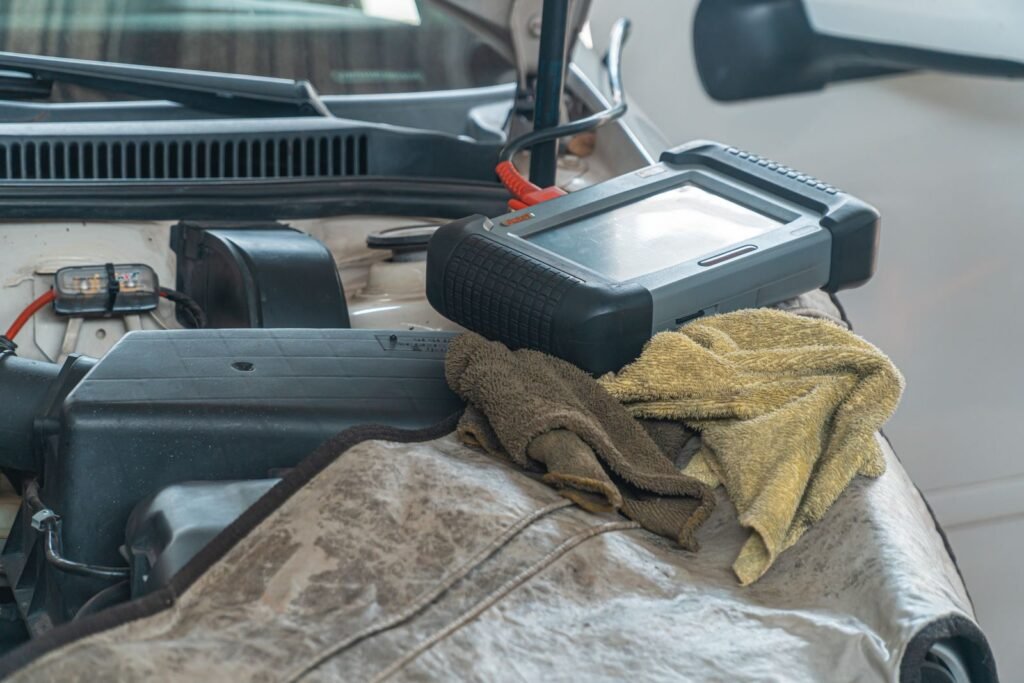
P0101 means the mass air flow sensor, called the MAF sensor, is reporting an amount of air that the engine computer does not believe. The sensor sits between the air filter and the throttle body and measures how much air enters the engine by weight, and the computer compares that reading with what it calculates the engine should draw at that speed and throttle opening. When the two disagree for long enough, the computer stores P0101 and turns on the check engine light. The most common fix is cleaning the MAF sensor, which costs about 10 to 40 dollars in cleaner, while a full sensor replacement typically costs 150 to 450 dollars.
This guide explains what P0101 means, the symptoms to watch for, the causes in order of likelihood, and the diagnose first steps that stop you buying a sensor you do not need. If your car also idles roughly, read our guide on rough idle first, because a rough idle and P0101 often share the same cause, an air leak after the sensor.
What P0101 Actually Means
The full definition is Mass or Volume Air Flow Circuit Range or Performance Problem. The key word is performance: the sensor signal is present and the wiring is not broken, but the reading does not match the computer expectation. That is different from the codes either side of it. P0102 and P0103 are circuit codes, where the signal is missing or pinned at an impossible value, and the sensor or its wiring is nearly always at fault. P0101 is a plausibility check with two possible answers: either the sensor is lying about the air, or the sensor is telling the truth and the engine is genuinely not breathing the way it should.
That is why replacing the sensor fixes this code less than half the time. A dirty sensor, a cracked intake boot, a vacuum leak, a clogged air filter or even a restricted exhaust can all set P0101, and each one needs a different fix. The right approach is to test before you buy parts, starting with the cheapest and most likely causes.
Symptoms of a P0101 Code
P0101 usually comes with something you can feel, because the fuel calculation is built on a bad air number. Watch for hesitation or a flat spot when you first press the accelerator, stalling at idle or when you come to a stop, a rough or hunting idle, poor fuel economy, and black smoke from the exhaust on some cars. Some cars drop into reduced power mode and feel as if they lost half their power.
The pattern matters. A stall that happens at idle but clears when you restart, or hesitation worst at light throttle, points toward the MAF sensor or an air leak. A car that also jerks when you accelerate may have a related fault, so read our guide on car jerks when accelerating if that symptom shows up alongside the code.
Common Causes, in Order to Check
| Cause | Telltale sign | Typical cost to fix |
|---|---|---|
| Dirty or contaminated MAF sensor | Hesitation on light acceleration, oiled aftermarket filter fitted | 10 to 40 dollars to clean, 150 to 450 dollars to replace |
| Air leak after the MAF sensor | Rough idle that steadies as revs rise, cracked intake boot | 40 to 250 dollars |
| Clogged air filter or intake duct | Feels flat above half throttle, filter looks black | 15 to 80 dollars |
| Vacuum leak past the throttle | P0171 or P0174 stored alongside, high fuel trims at idle only | 40 to 600 dollars |
| Failed MAF sensor | Code returns right after cleaning, sensor over 100,000 miles old | 150 to 450 dollars |
| Wrong sensor or aftermarket intake | Code appeared after an intake, filter or sensor change | 60 to 350 dollars |
A dirty sensing element is the most likely cause on a gas engine. The sensor uses a hot wire or hot film element to measure air flow, and oil from a dirty air filter, blow by gases from the PCV system, or an over oiled aftermarket filter coats that element. The coating slows the sensor response, so the computer sees a lagging signal and logs P0101. A cracked intake boot between the air box and the throttle body is the next check, because it lets unmetered air in after the sensor, so the engine gets more air than the sensor measured.
How to Fix P0101, Step by Step
Start with the air filter. Open the air box and look at the filter: if it is black, clogged or packed with debris, replace it, clear the code and drive the car to see whether it returns. Next, inspect the intake duct and all hoses between the air box and the throttle body. Flex each boot gently and look for splits, loose clamps or oil staining, and listen for a hiss at idle that points to a vacuum leak.
Then clean the MAF sensor. Buy a dedicated mass air flow sensor cleaner, never brake cleaner, carb cleaner or electrical contact cleaner, because those can damage the hot film element permanently. Unplug the sensor, remove it from the duct, and spray the sensing element gently from about six inches away. Let it dry fully before you refit it. Clear the code and drive the car through a mix of town and highway driving to see whether it returns.
If the code returns after cleaning, check live data with a scan tool before you buy a sensor. At idle the MAF reading should rise smoothly as you press the throttle, and the fuel trims should sit near zero. Trims that run high only at idle point to a vacuum leak, while a MAF reading that stays low at full throttle points to a restricted intake or exhaust. Only replace the sensor when the data points to it, and fit an OEM or quality branded unit, because cheap aftermarket sensors are known for triggering the same code again on many cars. If the code keeps returning after a new sensor, book a shop, because the fault may sit in the wiring, the exhaust or the engine itself.
Can You Drive With a P0101 Code
Usually yes, for short trips at low speed, because P0101 rarely stops the engine. Keep the speed down, avoid hard acceleration, and watch for stalling at junctions. The car may run rich, which wastes fuel and can damage the catalytic converter if you keep driving it that way for weeks. Fuel economy also falls, often by 10 to 20 percent, because the computer guesses at the fuel mixture instead of measuring it.
Book a mechanic within a few days, sooner if the car stalls, loses power or the light flashes. A flashing check engine light means a misfire that can damage the catalytic converter, so stop and call for a tow rather than driving on.
Frequently asked questions
What does P0101 mean?
P0101 means the mass air flow sensor reading does not match the amount of air the engine computer expects at that speed and throttle opening. The sensor may be dirty or faulty, or the engine may genuinely be drawing the wrong amount of air because of a leak or a restriction.
What causes a P0101 code?
A dirty MAF sensor is the most common cause, followed by an air leak after the sensor, a clogged air filter, a vacuum leak and a failed sensor. A wrong sensor or an aftermarket intake can also set the code.
How much does it cost to fix P0101?
Cleaning the MAF sensor costs 10 to 40 dollars in cleaner. Replacing the sensor costs 150 to 450 dollars. An air leak repair costs 40 to 250 dollars, and a vacuum leak can run 40 to 600 dollars.
Can I just replace the MAF sensor to fix P0101?
Not always. Replacing the sensor fixes this code less than half the time, because the cause is often a dirty sensor, an air leak or a clogged filter. Clean the sensor and check for leaks first, and only fit a new sensor when the live data points to it.