
A blown head gasket announces itself with a small set of classic signs, and learning to spot them is one of the most valuable skills a car owner can have. The short answer: thick white smoke from the exhaust with a sweet smell, engine oil that looks milky or frothy on the dipstick, an engine that keeps overheating even though the coolant looks full, and coolant that vanishes with no puddle under the car. If two or more of these show up together, stop driving and arrange a tow, because every extra mile risks turning a serious repair into a ruined engine.
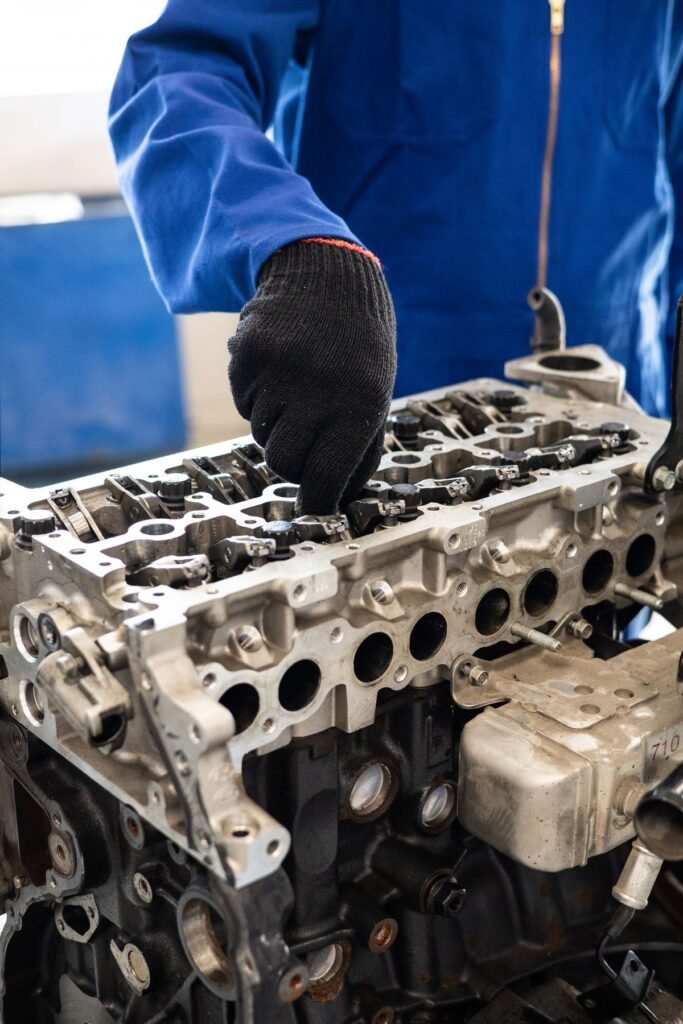
The head gasket is the seal between the engine block and the cylinder head. It keeps three things apart that must never mix: the burning fuel and air in the cylinders, the engine oil, and the coolant that carries heat away. When the seal fails, those circuits start crossing into each other, and every crossing produces a symptom you can see, smell, or feel. Check them in the order below, because the first two tests give you the fastest answer with the least effort.
Thick white smoke from the exhaust
Coolant that leaks into a cylinder turns to steam in the heat of combustion and leaves the tailpipe as thick white smoke that hangs in the air instead of clearing quickly. A little vapor on a cold morning is normal and disappears within minutes; constant white clouds after the engine is fully warm are not. This smoke often carries a sweet smell, which is the coolant burning, and it may leave a slightly sticky residue on your finger if you hold it briefly near the tailpipe.
Your action: check the coolant level in the reservoir before you drive anywhere. If the level is dropping and the exhaust is smoking, you have a strong pair of clues pointing at the gasket. Do not top up the coolant and carry on with a long trip; that only masks the problem for an hour or two. Our guide to white smoke from the exhaust, its causes and fixes walks through the other possible causes so you can tell a blown gasket apart from simpler issues.
Milky or frothy engine oil
Pull the dipstick and look at the oil. Healthy oil is amber to dark brown and flows cleanly. When coolant mixes with oil in the crankcase, the result is a thick, creamy emulsion that looks like a light brown milkshake, sometimes with a frothy texture. You may also see the same milky residue under the oil filler cap.
Your action: if the oil looks milky, do not start the engine again if you can avoid it. Oil diluted with coolant loses its ability to protect bearings and moving parts, so running the engine grinds expensive damage into every rotation. Book a tow to a workshop instead of driving it in. One caution: a small amount of milky residue under the filler cap alone, with clean oil on the dipstick, can simply be condensation from many short trips in cold weather. The dipstick reading is the one that matters.
Overheating even when the coolant looks full
This sign confuses many drivers, because the usual fix for overheating is adding coolant, and here the reservoir looks fine. When combustion gases push past a failed gasket into the cooling system, they create pressure and air pockets that stop the coolant from circulating properly. The temperature gauge climbs, sometimes suddenly, and the heater may blow cold air at the same time because hot coolant is not reaching it.
Your action: if the gauge rises into the red, pull over safely and switch the engine off. Do not open the radiator cap while the engine is hot, because the system is pressurized and can spray scalding coolant. Let it cool for at least 45 minutes, then check the level. If overheating keeps returning with no visible leak, the gasket is a prime suspect. Our article on why your car is overheating lists the simpler causes to rule out first, such as a stuck thermostat or a failed fan.
Coolant that keeps disappearing with no leak on the ground
A cooling system is sealed, so the level should barely move between services. If you are topping up the reservoir every few days yet there is never a puddle under the car and no wet hoses, the coolant is leaving through an internal path. It is either being burned in the cylinders, which produces the white smoke above, or it is seeping into the oil, which produces the milky dipstick.
Your action: mark the coolant level with a piece of tape on the reservoir and check it at the same time each day for a week. A steady drop with no external sign is strong evidence of an internal leak. Take that simple log to the mechanic; it saves diagnostic time and it shows you are an informed customer, which usually gets you a straighter answer about the repair.
Rough idling, misfires, and loss of power
A head gasket also seals the combustion pressure inside each cylinder. When it fails between two cylinders, pressure leaks from the firing cylinder into its neighbor, and the engine loses the squeeze it needs for a strong power stroke. You feel this as a rough or lumpy idle, a stumble when you press the accelerator, or a general lack of power, often with the check engine light coming on because of the misfires.
Your action: note when the roughness happens. Misfires that are worst when the engine is cold and improve slightly as it warms up fit the head gasket pattern, because the metal expands with heat and can partly close a small breach. Either way, a misfiring engine should be diagnosed promptly; driving on it washes fuel past the rings into the oil and can damage the catalytic converter, adding to the bill.
Bubbles in the radiator or coolant reservoir
With the engine fully cold, you can remove the radiator cap or look into the coolant reservoir while a helper starts the engine. A steady stream of bubbles rising through the coolant is exhaust gas being pushed into the cooling system past the failed gasket. This is one of the most direct visual tests you can do at home.
Your action: only ever open the cooling system when the engine is completely cold, ideally after sitting overnight. If you see continuous bubbling that matches the rhythm of the engine, treat it as a near certain sign and call a workshop. You can also buy a chemical block test kit from an auto parts store for a modest price; it changes color if combustion gases are present in the coolant, and it gives you a clear yes or no answer in about ten minutes.
External leaks down the side of the engine
When the gasket fails at its outer edge, oil or coolant can seep out along the seam where the cylinder head meets the block. Look for dark oily streaks or dried green, orange, or pink crusty residue running down the side of the engine. This version of the failure is actually the least damaging, because the fluids are escaping outward instead of mixing inside.
Your action: an external seep that is not yet dripping can sometimes be monitored for a short while, checking fluid levels weekly. But the moment it starts dripping, or the moment any of the internal signs above appear alongside it, the watch and wait period is over. External leaks tend to get worse, not better, and coolant dripping onto a hot exhaust is a fire risk you should not accept.
What to do once you suspect a blown gasket
First, decide whether to drive or tow. Drive only if the engine runs smoothly, the temperature stays normal, and the coolant loss is slow; even then, go straight to a workshop, not on errands. Tow the car if there is milky oil, heavy white smoke, or any overheating into the red. A tow costs far less than a replacement engine.
Second, ask the workshop for a proper diagnosis before approving any repair. A compression test, a leak down test, or a chemical block test will confirm a head gasket failure and rule out simpler problems like a cracked hose or a bad radiator cap. Any shop that wants to replace the gasket without testing first is guessing with your money.
Third, understand the shape of the repair so you can judge quotes. Fixing a head gasket means removing the cylinder head, checking it for warping, replacing the gasket set, and reassembling everything with fresh fluids. It is labor heavy, which is why it is one of the more expensive engine repairs, and why catching the failure early, before overheating warps the head, genuinely saves money. Get the quote in writing, ask whether head resurfacing is included, and ask what warranty comes with the work.
Frequently asked questions
Can I drive with a blown head gasket
You can sometimes drive a short distance to a nearby workshop if the symptoms are mild, the engine runs smoothly, and the temperature stays normal. You should not commute on it or take a long trip. Continued driving risks overheating damage, oil contamination that destroys bearings, and coolant fouling the spark plugs and catalytic converter. When in doubt, tow it.
How long does a head gasket last
A head gasket is designed to last the life of the engine, often well past 150,000 miles, and many never fail. Overheating is the great killer of head gaskets, so the single best prevention is keeping the cooling system healthy: fix coolant leaks promptly, replace a failing thermostat quickly, and never ignore a rising temperature gauge.
Will a head gasket sealer product fix it
Pour in sealers can sometimes slow a small external seep for a while, but they rarely fix an internal breach for long, and they can clog the radiator and heater core, creating new problems. Treat them as a last resort to limp to a workshop, not as a repair. A proper gasket replacement is the only fix that restores the engine to reliable condition.
A blown head gasket feels like a disaster, and the repair bill is never small, but it is a known problem with a known fix. The drivers who come out best are the ones who notice the early signs, stop driving before the engine overheats badly, and insist on a tested diagnosis before approving the work. Check your dipstick and your coolant level this week; those two 60 second checks are the cheapest insurance your engine has.