
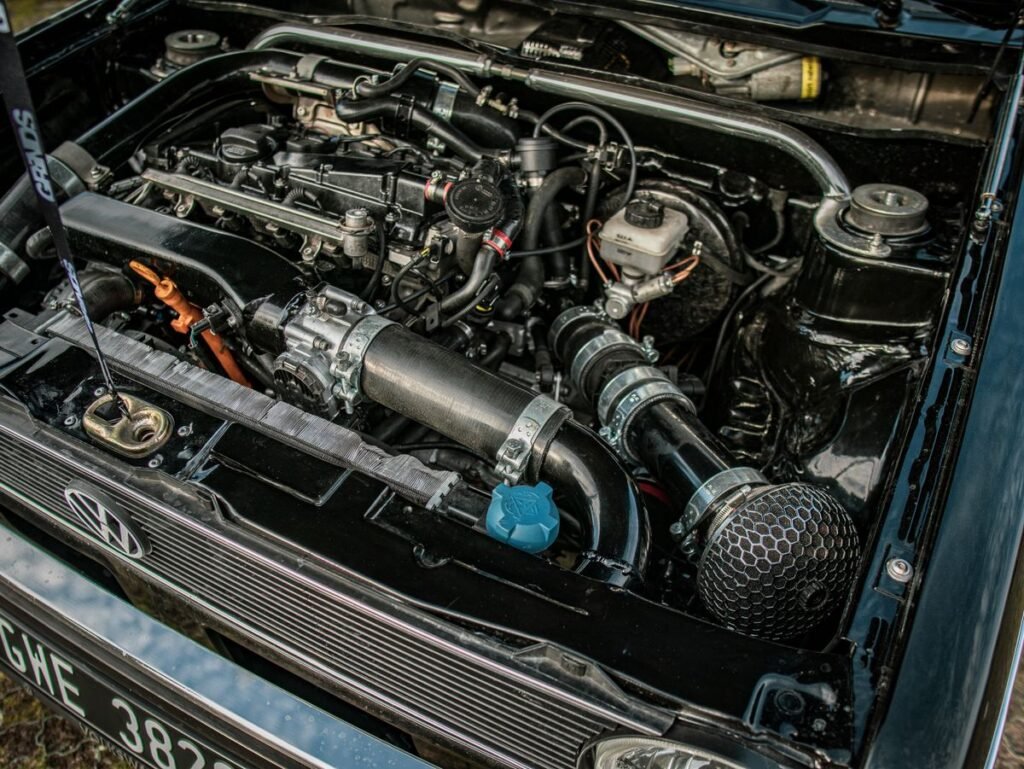
Your car is overheating because the cooling system can no longer move heat away from the engine fast enough. The usual causes are low coolant from a leak, a thermostat stuck shut, a failing water pump, a clogged or damaged radiator, or a cooling fan that has stopped working. When the temperature gauge climbs into the red, pull over somewhere safe, switch the engine off, and let everything cool down fully before you touch anything. Driving on while the engine is too hot can warp the cylinder head and turn a cheap repair into a very expensive one.
What to do the moment the gauge climbs
Turn the heater to its hottest setting and the fan to full speed. This pulls some heat out of the engine and into the cabin, which is uncomfortable but can buy you a short distance to a safe place to stop. Turn off the air conditioning to reduce the load on the engine. If the gauge keeps rising, or you see steam coming from under the hood, stop as soon as it is safe and switch off.
Never open the radiator cap or the coolant tank cap while the engine is hot. The system is under pressure, and boiling coolant can spray out and burn you badly. Wait at least 30 to 45 minutes, then check the coolant level in the plastic overflow tank on the side of the engine bay. If that tank is empty, you have lost coolant somewhere and simply topping up will not fix the cause.
Low coolant and leaks
Coolant does not get used up. If the level keeps dropping, it is leaking, and the leak is the real problem. Common leak points are split hoses, a cracked radiator, a worn water pump seal, a loose hose clamp, and the heater core inside the dashboard. Look for wet patches under the car after it has been parked, crusty coloured deposits around hose joints, and a sweet smell from the engine bay. Our guide to coolant leak signs and how to fix them walks through finding the source before you spend money on parts.
A small leak that only loses a cup of coolant a week can still overheat the car on a hot day or a long hill, because air pockets form in the system and the remaining coolant cannot circulate properly. Keep the level between the marks on the tank and check it every week until the leak is repaired.
A thermostat stuck shut
The thermostat is a small valve that stays closed while the engine warms up, then opens to let coolant flow through the radiator. When it sticks shut with age, coolant stays trapped in the engine and the temperature climbs quickly, often within 10 to 15 minutes of starting a drive. The top radiator hose stays much cooler than it should because hot coolant never reaches the radiator.
The part itself is cheap, usually 15 to 40 dollars, and fitted prices at a shop commonly land between 150 and 350 dollars depending on how much has to come off to reach it. Because the symptoms overlap with other faults, a mechanic will usually test it before replacing anything else.
Radiator and cooling fan problems
The radiator sheds heat to the air passing through it. If its internal passages clog with rust and scale, or its thin fins get flattened by road debris, it cannot cool the coolant properly. Overheating that happens mainly in slow traffic or while idling points at the electric cooling fan, because at road speed air flows through the radiator on its own. A fan that never spins, a blown fan fuse, a failed fan relay, or a faulty temperature sensor can all cause this pattern.
Using the correct coolant and changing it on schedule protects the radiator from the inside. Our radiator fluid guide explains what the fluid does, which type your car needs, and how often it should be replaced.
Water pump and drive belt trouble
The water pump pushes coolant around the whole system. Its bearings wear out over time, and the first signs are often a chirping or grinding noise from the front of the engine, coolant weeping from a small hole under the pump, or a wobbling pulley. If the pump stops turning, circulation stops and the engine overheats fast.
On many engines the pump is driven by a belt. A snapped or slipping belt stops the pump and often the alternator too, so a battery warning light alongside a climbing temperature gauge is a strong clue. Pump replacement costs vary a lot: roughly 300 to 700 dollars on engines where the pump is easy to reach, and 800 dollars or more where it sits behind the timing belt and everything has to come apart anyway.
When it is something more serious
If the car overheats and you also see white smoke from the exhaust, bubbles in the coolant tank, oil that looks like milky coffee, or coolant disappearing with no visible leak, suspect a failed head gasket. Combustion gases leaking into the cooling system push coolant out and create air locks, and coolant leaking into the cylinders burns off as steam. Head gasket repair is major work, commonly 1,500 to 2,500 dollars, and continuing to drive usually makes it worse by warping the head.
What the common repairs cost
| Repair | Typical cost in dollars |
| Thermostat replacement | 150 to 350 |
| Radiator hose replacement | 120 to 300 |
| Cooling fan motor or relay | 150 to 450 |
| Radiator replacement | 400 to 900 |
| Water pump replacement | 300 to 900 |
| Head gasket repair | 1,500 to 2,500 |
These are broad ranges for common cars at independent shops. Parts prices, labour rates, and engine layout move the real figure up or down, so treat them as planning numbers rather than quotes.
How to stop it happening again
- Check the coolant level in the overflow tank every couple of weeks and look under the car for fresh wet patches.
- Change coolant at the interval in your handbook instead of waiting for it to turn brown.
- Replace hoses that feel soft, swollen, or crunchy when squeezed on a cold engine.
- Watch the temperature gauge on long hills and hot days, and act early if it sits higher than usual.
- Fix small leaks promptly, because they always grow and they always fail at the worst moment.
Frequently asked questions
Can I drive a short distance with the temperature gauge in the red?
No. Even a few minutes at that temperature can warp the cylinder head or blow the head gasket. Pull over, switch off, and arrange a tow if the cause is not an obvious simple top up after the engine has cooled.
How long should I wait before opening the coolant tank?
Wait at least 30 to 45 minutes after switching off, and longer on a hot day. Squeeze the top radiator hose gently through a cloth: if it still feels hard and very hot, the system is still under pressure and the cap must stay on.
Can I use plain water instead of coolant?
Plain water is acceptable as a short emergency measure to reach a workshop. It has no corrosion protection and boils at a lower temperature than proper coolant mix, so have the system drained and refilled with the correct fluid soon afterwards.