
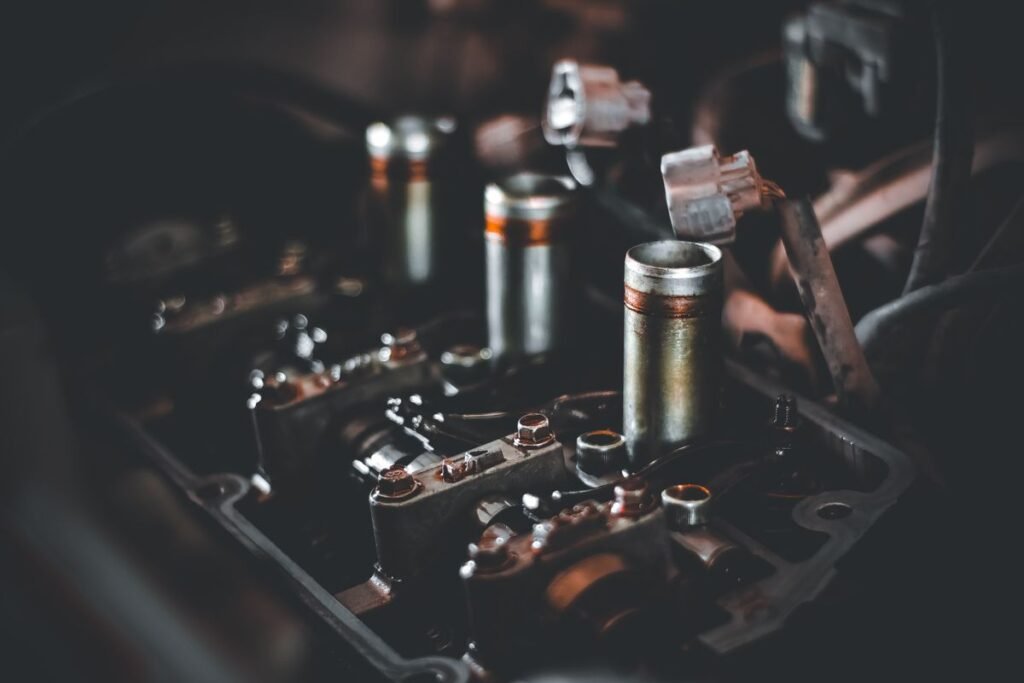
Spark plugs wear out slowly, so the signs of bad plugs usually creep up on you rather than arriving all at once. The most common bad spark plug symptoms are rough idling, engine misfires, harder starting, worse fuel economy and a car that feels lazy when you accelerate. If your car shows two or three of these together and the plugs are old, they are the first thing to check.
What spark plugs do and why they wear out
Each spark plug fires a tiny bolt of electricity thousands of times a minute to ignite the fuel and air mix in its cylinder. Over time the spark erodes the metal tips, the gap between them grows wider, and deposits from fuel and oil build up on the firing end. A wider gap needs more voltage to spark, and a dirty tip sparks weakly. The result is a burn that is late, weak or missing altogether, which the engine feels as a misfire.
Plug life depends on the material. Old style copper plugs may last only 20,000 to 30,000 miles. Platinum plugs often reach 60,000 miles, and the longest lasting types are covered in our guide to iridium spark plugs, which explains why many modern cars go 100,000 miles on one set.
The main signs of bad spark plugs
Rough idle and vibration
When you stop at a light, a healthy engine ticks over smoothly. Worn plugs make the idle uneven, with small shakes and a puttering exhaust note. The rev counter needle may wobble slightly instead of holding steady.
Misfires and jerking under load
A misfire feels like a brief stumble or jerk, most often when you accelerate or climb a hill. The engine may hesitate, then catch again. Repeated misfires usually bring on the check engine light, and the stored code will name the cylinder involved.
Hard starting
Weak sparks make cold starts harder. If your car cranks longer than it used to before it fires, especially on cold mornings, worn plugs are a likely cause alongside the battery.
Worse fuel economy
An engine with weak sparks burns fuel less completely, so you visit the pump more often. A drop of 10 to 30 percent in fuel economy is possible with badly worn plugs, and it often arrives so gradually that drivers blame everything else first.
Sluggish acceleration
The car feels flat when you press the accelerator, particularly when joining fast traffic. Because every cylinder is not pulling its full weight, the whole car feels heavier than it is.
Engine surging or uneven running at steady speed
At a constant cruise, worn plugs can make the engine hunt up and down slightly, as if you are feathering the throttle when you are not.
Signs you can see with your own eyes
If you or a mechanic removes the plugs, their faces tell the story.
- Worn, rounded electrodes with a gap clearly wider than new means the plug is simply old.
- Black, sooty deposits suggest the engine is running rich or the plug is too cold for the engine.
- Oily deposits point to oil getting into the cylinder, which is an engine issue, not just a plug issue.
- White, blistered tips can mean the engine has been running hot or lean.
- Cracked porcelain means that plug is finished and can misfire badly under load.
Safety warning: a flashing check engine light means a serious misfire that can overheat and damage the catalytic converter. Slow down, avoid heavy acceleration and get the car checked promptly. Driving on with a flashing light can turn a cheap plug change into a very expensive exhaust repair.
Bad plugs or something else
Misfires have more than one possible cause, and honest diagnosis matters before you spend money. Ignition coils fail with almost identical symptoms, because each coil feeds one plug its spark. Fuel injectors, vacuum leaks and low compression can also mimic plug trouble. Our page on ignition coil replacement signs and costs shows how the two problems overlap and how a mechanic separates them, often by swapping a coil to another cylinder and seeing whether the misfire follows it.
A fair rule of thumb: if the plugs are past their service interval, replace them first. They are cheap, they were due anyway, and fresh plugs rule out the most common cause in one step.
How often to change spark plugs
Drivers often ask how often to change spark plugs, and the honest answer is that it depends on the plug type and your car maker schedule. Use these general ranges as a guide.
| Plug type | Typical service life |
|---|---|
| Copper | 20,000 to 30,000 miles |
| Platinum | 40,000 to 60,000 miles |
| Double platinum | 60,000 to 80,000 miles |
| Iridium | 80,000 to 120,000 miles |
Your owner manual schedule always wins over general advice. Turbocharged engines and cars that idle a lot in traffic may need plugs sooner than the top of these ranges.
What replacement costs
Prices vary by car model and region, but spark plug replacement is one of the cheaper engine jobs. A set of plugs themselves costs roughly 5 to 25 dollars per plug depending on type. Labor is where engines differ: on many four cylinder cars the plugs sit on top and the whole job takes under an hour, while some V6 and V8 engines bury the rear plugs and need parts removed to reach them.
| Job | Typical total cost range |
|---|---|
| Four cylinder engine, plugs replaced | 100 to 250 dollars |
| V6 engine, easy access | 200 to 400 dollars |
| V6 or V8 engine, hard access | 300 to 600 dollars |
Ask the workshop to show you the old plugs. Their condition confirms whether plugs were really the problem and hints at the health of each cylinder.
Frequently asked questions
Can bad spark plugs damage the engine?
Yes, if you ignore them. Constant misfires send unburned fuel into the exhaust, which can overheat and ruin the catalytic converter. Long term misfires also wash oil from cylinder walls. A timely plug change is cheap insurance.
Should I replace all the plugs or just the bad one?
Replace the full set. Plugs wear together, so if one has failed from age the others are close behind. Replacing one at a time usually means paying labor several times.
Will new spark plugs improve performance?
They restore the performance you lost, rather than adding power beyond standard. If the old plugs were worn, the car will idle smoother, start easier and pull more cleanly, which can feel like a real gain.
Worn spark plugs are one of the most fixable causes of a car that runs rough and drinks fuel. Check the mileage, look for the classic signs, and a fresh set will often bring an older engine back to smooth, eager running for a modest cost.