
TPMS Light Stays On After Filling Tires: What to Check Next
If you filled your tires and the tire pressure warning light is still on, do not assume the job is done and do not assume a sensor has failed. In most cases the light stays on because the pressure was checked the wrong way, because one tire was missed, because the system has not finished its relearn, or because air is still escaping slowly. Work through the checks in this guide in order, and you will usually find the cause without paying for a part you do not need. Start with a cold pressure check using your own gauge, because that single check rules out the most common reason for a stubborn light.
Check Pressure the Right Way First
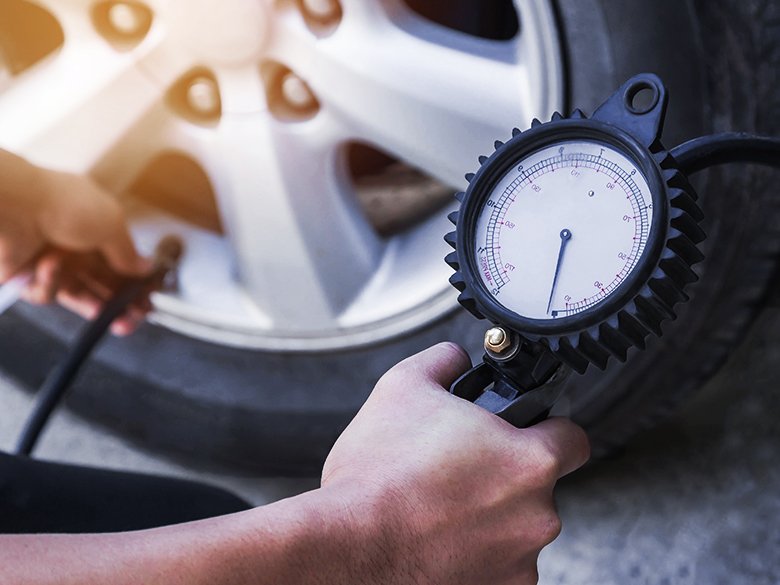
A tire pressure monitoring system does not judge your tires by how they look. It judges them by pressure, and small differences matter. Check pressure when the tires are cold, which means the car has been parked for a few hours or has only been driven a very short distance at low speed. Driving warms the air inside a tire and raises the reading, so a warm reading can look correct even when the cold pressure is low. Use a handheld gauge you trust rather than relying only on the air pump display at a station, because pump gauges are often knocked around and can read high or low. Compare each reading with the pressure listed on the driver door sticker or in your owner manual for your car, not with the number printed on the tire sidewall. The sidewall number is a maximum limit for the tire, not the pressure your car maker recommends for normal driving.
Check all four road tires one by one, and write each reading down as you go. It is easy to fill three tires correctly and leave one slightly low, and that one tire is enough to keep the light on. If a reading is low, add air in small amounts and check again with your own gauge. Do not fill by feel and do not fill until the tire looks firm, because a tire can look normal while still being well below the recommended pressure. Once every tire matches the recommended cold pressure, take a short drive and watch the light. If the light goes out, the problem was pressure all along. If it stays on, move to the next check instead of adding more air beyond the recommended pressure, because overfilling creates its own problems with grip, wear, and ride comfort.
Give the System Time to Relearn
Many drivers expect the light to switch off the moment air goes in, but many systems need a drive before they update. Some systems read pressure continuously, while others only confirm a new reading after the wheels have turned for a while. The exact relearn behaviour depends on your car, so check your owner manual for the procedure that applies to your model. Some cars relearn on their own after normal driving. Others need a reset button pressed, a menu option selected, or a short sequence done in a set order. If your car has a reset control, use it only after you have confirmed cold pressure in every tire, because resetting with a low tire still in place simply teaches the system to accept the wrong pressure.
Do not reset the system again and again in the hope that repetition will fix it. One careful reset after a correct cold pressure check is enough to test the point. If the light returns after a proper reset and a normal drive, the system is telling you something real, and the next checks matter more than another reset. Make a note of whether the light comes on at start up and stays on, or whether it flashes for a while before staying on, because that pattern helps a technician later. A steady light usually points to pressure or a slow leak. A flashing light often points to a system fault, such as a sensor that is not communicating. Keep that observation ready, and book a sensor check if the light flashes or if it returns every time after a correct reset.
Check Every Tire, Including the Spare When It Is Monitored
It is easy to forget a tire that you cannot see clearly. Some cars monitor only the four road tires, but some also monitor a full size spare. If your car monitors the spare and that spare is low, the light can stay on even when all four road tires are perfect. Check your owner manual to see whether your spare is monitored. If it is, check its pressure the same way, when cold, with your own gauge. A spare that has sat unused for a long time is often low, and that alone can explain a light that seems to ignore your work on the road tires.
While you are at each wheel, look at the tire and the valve. Check for a valve cap that is missing, cracked, or loose, and fit a cap if one is missing, because the cap keeps dirt and moisture out of the valve. Look for a nail, screw, or sharp stone stuck in the tread, and look for a cut or bulge in the sidewall. Do not pull a nail out at the roadside if the tire is still holding air, because removing it can turn a slow leak into a fast one. Instead, note which tire has the object, keep your speed low, and get that tire inspected promptly. If any tire looks damaged, bulging, or badly worn, do not keep driving on it while you test the warning light. Get that tire checked first, because safety comes before clearing a dashboard light.
Look for a Slow Leak
A slow leak is the most frustrating cause of a light that keeps coming back. You fill the tires, the light goes out, and a day or two later it returns. That pattern usually means air is escaping somewhere, just slowly enough that you do not notice it at first. Common places for a slow leak are a small puncture in the tread, a valve that does not seal fully, corrosion where the tire meets the wheel rim, and a bead seal that has been disturbed by a pothole or a kerb strike. Temperature change can make the pattern clearer, because cold air contracts and pressure drops, so a tire that is borderline in warm weather can trigger the light on a cold morning.
You can narrow a slow leak down without special tools. Fill all tires to the correct cold pressure, record each reading, and check the same tires again the next morning before driving, using the same gauge. If one tire has dropped noticeably while the others have stayed steady, that tire is your suspect. You can also listen and feel around the valve after filling, and look for a faint hiss, but do not use soapy water on a hot wheel and do not remove a wheel yourself unless you are confident and safe doing so. Once you have identified the suspect tire, take the car for a tire inspection and tell the technician which tire lost pressure and how fast it lost it. That clear history saves time and makes a correct repair more likely.
Sensor Battery, Damage, and Recent Tire Work
Each tire pressure sensor runs on its own small battery, and that battery wears out with age. When a sensor battery gets weak, the sensor may stop sending readings, send them only sometimes, or send a reading that the car cannot trust. The result is often a light that stays on or flashes, even though tire pressure is correct. Sensor damage can cause the same problem. A sensor can be damaged during a tire change, a wheel repair, or a hard kerb strike, and corrosion around the valve can also stop it working properly. If the light problem started right after new tires, a tire repair, or wheel work, tell the shop that did the work, because the timing points strongly to a sensor or valve issue from that visit.
Do not replace all four sensors at once just because one light is on. A proper check can usually identify which wheel is not reporting, and replacing only the faulty sensor is the sensible first step. Ask the shop to check sensor readings wheel by wheel, and ask them to check valve condition and sealing at the same time. If a sensor is replaced, make sure the new sensor is programmed or relearned for your car, because a new sensor that has not been matched to the car will not clear the light on its own. Keep the old sensor report if the shop gives you one, and keep your pressure readings with it, so you have a clear record if the light returns.
When the Light Means Stop and Get Help
Most TPMS lights are warnings about pressure, not emergencies, but some situations need prompt action. If the light comes on together with a tire that looks flat, a sudden change in handling, pulling to one side, or a loud noise from a wheel, slow down gently, avoid harsh braking, and pull over somewhere safe as soon as you can. Do not keep driving at normal speed on a tire that is clearly losing air fast. Use your spare or call for roadside help, depending on what your car carries and what you are comfortable doing safely. If the car feels unstable, stop sooner rather than trying to reach a distant garage.
Also book a prompt inspection if the light flashes before staying on, if pressure drops again within a day of filling, if you find damage or a foreign object in a tire, or if the car pulls, vibrates, or feels different since the light appeared. Those signs point to a leak, a damaged tire, or a sensor fault that a pressure top up will not fix. When you book, tell the shop the cold pressure readings you recorded, whether the light is steady or flashing, and whether the problem started after tire work or after a cold snap. That information helps the technician start at the right wheel instead of guessing, and it helps you avoid paying for repeated top ups that do not solve the cause.
Your Next Step
Start again from a cold check with your own gauge, match every tire including a monitored spare to the door sticker pressure, and do one proper reset or relearn drive as your manual describes. If the light clears, check pressure again the next cold morning to make sure a slow leak is not hiding behind the first fix. If the light stays on, flashes, or returns quickly, book a wheel by wheel sensor and leak check and take your recorded readings with you. Do not keep resetting the light and driving on, because the light is the only warning you get before a low tire affects braking distance, handling, and tire life. Fix the cause, not just the warning, and your next drive will be safer and quieter for it.
Questions and Answers
Why does the TPMS light stay on after I filled my tires to the correct pressure?
The most common reasons are a warm pressure reading that looked correct but was low when cold, one tire that was missed, a monitored spare that is low, a slow leak, or a system that has not completed its relearn yet. A flashing light more often points to a sensor fault than to pressure alone. Check cold pressure in every tire with your own gauge, complete one proper relearn or reset, and check again the next cold morning. If the light still stays on after that, book a sensor and leak check for the wheel that is not reporting correctly.
Can I drive with the TPMS light on?
You can drive short distances at low speed to a safe place or a tire shop if the tires look normal and the car handles normally, but do not ignore the light and carry on as usual. A low tire affects braking, handling, and tire wear, and it can fail without much warning. Check pressure as soon as you can, and if a tire looks flat, the car pulls, or handling has changed, slow down gently and pull over somewhere safe. Get the cause checked promptly rather than driving for days with the warning on.
Does cold weather keep the TPMS light on?
Cold weather can trigger the light because air inside a tire contracts as temperature falls, so pressure drops even though no air has escaped. That is why a light often appears on the first cold morning of a cold spell. Check pressure when the tires are cold and fill to the recommended pressure on the door sticker, not to a higher pressure to compensate for the weather. If the light returns quickly after a correct cold fill, or if only one tire keeps dropping, treat it as a possible slow leak and book a tire inspection.
For the basics of what the warning means, read our guide to TPMS light meaning and fixes, and for the correct checking method, read how to check tire pressure.