
Knowing how to freshen car interior spaces properly is the difference between a car that smells clean for a month and one that smells clean for a day. The method that works is a proper clean first, then odor removal at the source, then better habits. Vacuum everything, wipe every hard surface, clean the seats and carpets, clear out the vents, and only then think about fragrance. Sprays on top of a dirty car just mix perfume with the problem.
Step 1: Empty the car and vacuum properly
Take everything out: mats, boot contents, rubbish from door pockets, and anything under the seats. You will almost always find the real smell source at this stage, whether it is an old food wrapper, a gym bag, or a spilled drink that dried under a mat. Vacuum the seats, carpets, boot, and the gaps around the seat rails, and use the crevice tool along the seams where crumbs collect. Shake out and vacuum the floor mats separately, and wash rubber mats with soapy water.
- Remove all loose items and rubbish first
- Vacuum seats, carpets, boot, and under the seats
- Use the crevice tool along seams, rails, and seat edges
- Wash rubber mats and let them dry fully before refitting
Step 2: Clean the seats and carpets
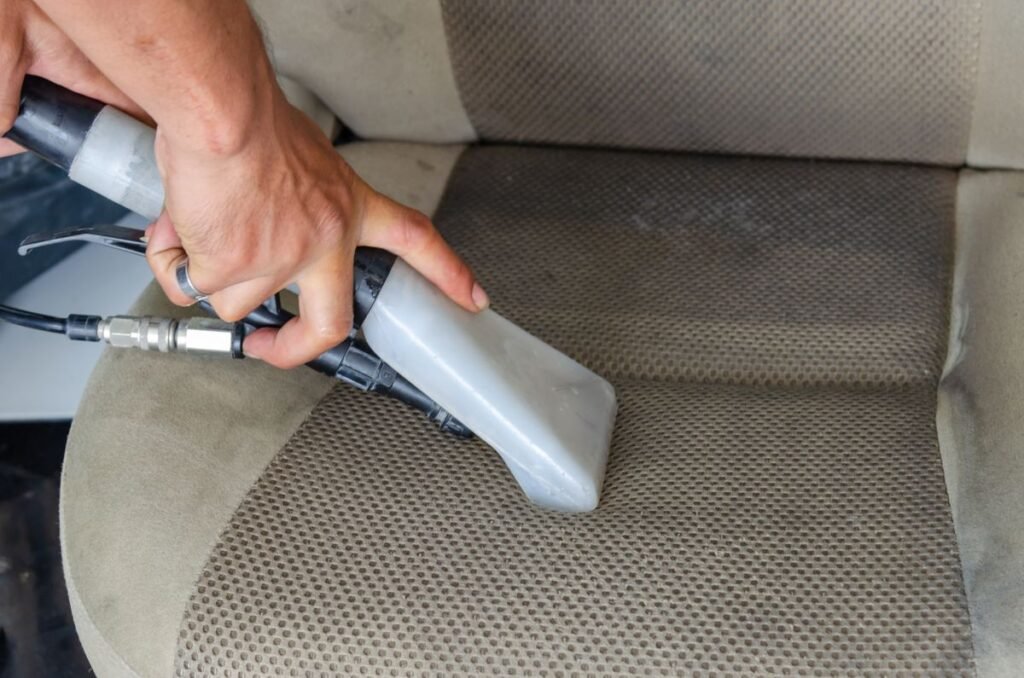
Fabric seats hold most interior smells. A carpet and upholstery cleaner, worked in with a soft brush and blotted with a microfiber cloth, lifts most spills and grime. For a deeper clean, a rented carpet extraction machine makes a dramatic difference and usually costs around $30 to $50 for a day. Leather seats need a dedicated leather cleaner followed by a conditioner, which stops the surface drying and cracking. Whatever you use, let the interior dry fully with the doors or windows open, because a damp interior grows mildew and smells worse than before.
If a specific bad smell survives a full clean, it has a source that needs hunting down, and our guide on how to remove bad smells from a car covers stubborn cases like smoke, milk spills, and mildew in detail.
Step 3: Wipe down every hard surface
The dashboard, door cards, steering wheel, center console, and cup holders all collect sticky residue that holds odors. Use an interior cleaner or a cloth dampened with warm water and a drop of mild soap, then dry with a second cloth. Clean inside the cup holders and door pockets carefully, as spilled coffee and soft drinks love to hide there. Finish with glass cleaner on the inside of the windows and windscreen, because the film that builds up on glass traps smells and makes the car feel stale.
Step 4: Tackle the vents and the cabin filter
If the car smells musty every time the fan runs, the problem is in the ventilation system. A clogged cabin air filter is the most common cause, and it is cheap and easy to replace on most cars, usually behind the glovebox. A new filter typically costs $15 to $40, and fitting takes ten minutes. Air conditioning systems can also grow mold on the evaporator, which gives that old sock smell when the AC starts. An AC sanitizing spray used as directed helps, and running the fan on full for a few minutes before switching off on humid days keeps the system drier.
Step 5: Neutralize odors instead of covering them
Once the car is clean, deal with what lingers. Baking soda is the classic budget fix: sprinkle it over fabric seats and carpets, leave it for several hours or overnight, then vacuum it up. An open container of activated charcoal left in the car absorbs smells over a few days without adding any scent of its own. For smoke and other deep smells, an ozone treatment at a detailing shop is the heavy option. Only after all this should you add a light fragrance if you enjoy one, and keep it subtle.
What a proper interior freshen up costs
Doing it yourself is cheap, and even professional help is reasonable. Prices vary by car model and region, but expect roughly:
| Option | Typical cost |
|---|---|
| DIY clean with basic products | $10 to $30 |
| Carpet machine rental for a day | $30 to $50 |
| New cabin air filter | $15 to $40 |
| Professional interior detail | $75 to $200 |
| Ozone odor treatment at a shop | $50 to $150 |
Having the right products on hand makes all of this far easier, and our roundup of the best car detailing kit options shows what a sensible home kit should include without overspending.
Habits that keep the interior fresh
Deal with spills the same day
Milk, coffee, and food spills turn into serious smells within days, especially in warm weather. Blot a spill straight away and clean it properly the same evening, and most odor problems never start.
Air the car out regularly
On a dry day, open all the doors for ten minutes while you tidy the garage or check the tires. Fresh air through the cabin stops the stale, closed up smell that builds in cars that sit unused.
Keep food and gym gear out overnight
Takeaway bags, sports kits, and wet umbrellas are the top three causes of mystery car smells. Make it a rule that nothing smelly sleeps in the car.
Frequently asked questions
Why does my car smell bad even after cleaning?
Usually the source is still there: a spill under a seat, a saturated cabin filter, or mold in the air conditioning system. Check the boot for a damp spare wheel well too, because water leaks collect there and turn musty.
Does baking soda really remove car odors?
Yes, for mild to moderate smells in fabric. It absorbs odors rather than masking them. Leave it on seats and carpets for several hours, ideally overnight, then vacuum thoroughly. Very strong smells like smoke may need repeated treatments or an ozone service.
How often should I freshen my car interior?
A quick vacuum and wipe down every few weeks keeps things under control for most drivers. A deep clean like the one in this guide is worth doing two or three times a year, or straight after any spill, illness, or pet accident.
A fresh interior is mostly about removing the cause, not adding scent. Clean it properly once, keep on top of the small habits, and every drive starts in a car that feels good to sit in.