
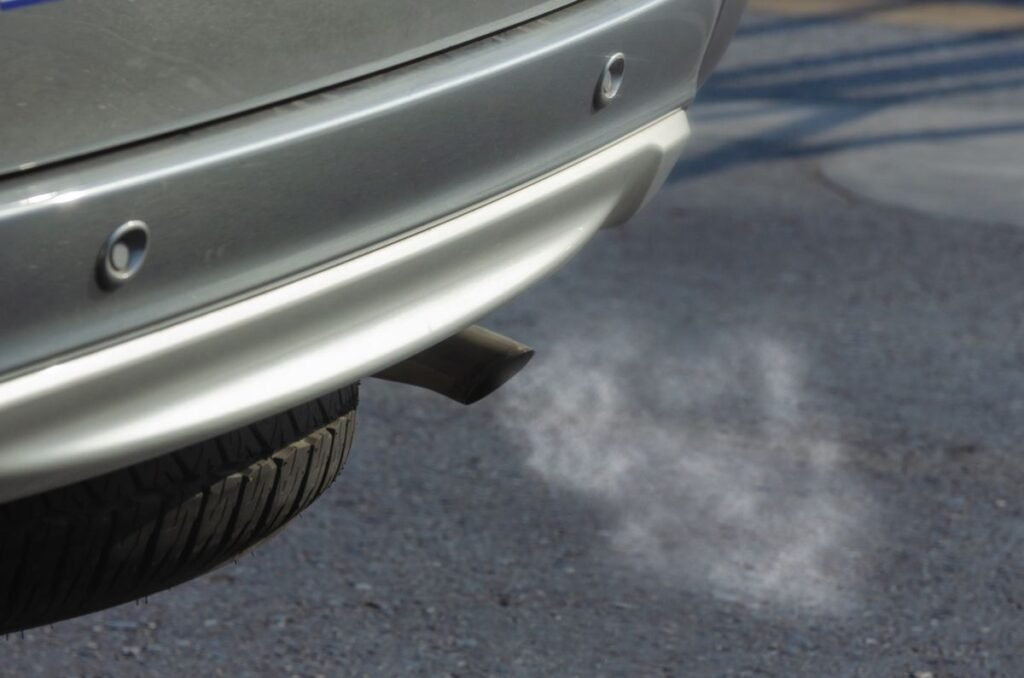
A thin wisp of white vapor from the exhaust on a cold morning is usually harmless condensation, but thick white smoke from exhaust pipes that keeps pouring out once the engine is warm is a warning sign. Persistent white smoke usually means coolant is getting into the engine and burning, and the most serious cause is a failed head gasket. Catching it early can be the difference between a moderate repair and an engine that is damaged beyond economical repair.
Normal vapor versus real smoke
Every engine produces water vapor as a byproduct of burning fuel. On a cold start, especially in cool or damp weather, that vapor condenses in the cold exhaust and looks like white smoke for the first few minutes. It is thin, it has almost no smell, and it fades as the exhaust warms up. That is normal and needs no repair.
Problem smoke is different in three ways. It is thick and billowing rather than wispy. It continues after 10 to 15 minutes of driving. And it often has a slightly sweet smell, which is the signature of burning coolant. If your exhaust matches that description, treat it seriously.
Main causes of white smoke
Blown head gasket
The head gasket seals the engine block to the cylinder head and keeps coolant, oil, and combustion pressure in their separate channels. When it fails, coolant can leak into the cylinders and burn, producing dense white smoke. Other signs include the engine overheating, coolant level dropping with no puddle under the car, milky residue under the oil filler cap, and rough running. This is the classic and most common serious cause.
Cracked cylinder head or engine block
Severe overheating can crack the head or, less often, the block itself. The symptoms look the same as a blown gasket, but the repair is much more expensive because the damaged part must be replaced or machined, not just re sealed.
Coolant leaking into the intake or turbo
Some engines route coolant through the intake manifold or a turbocharger. A failed gasket or seal in those parts can let coolant reach the cylinders through a path that has nothing to do with the head gasket, which is why proper diagnosis matters before paying for the biggest repair.
Transmission fluid burning (some automatics)
On older automatic cars, a failed vacuum modulator can let the engine draw in transmission fluid and burn it, making pale smoke. This is rare on modern cars but cheap to fix when it is the cause.
Simple checks you can do
- Watch the coolant level over a few days. A steady drop with no visible leak points inside the engine.
- Check whether the smoke continues once the engine is fully warm.
- Look at the oil filler cap. A creamy, mayonnaise like deposit suggests coolant and oil are mixing.
- Watch the temperature gauge. Overheating plus white smoke is a stop driving combination.
- Note the smell. Sweet means coolant; acrid and blue tinted means oil instead.
If coolant is disappearing, look for external leaks first, because a split hose or a tired radiator cap is far cheaper than internal engine work. Our guide to car coolant leak signs and fixes walks through where leaks hide. A faulty coolant sensor can also confuse the picture by misreporting engine temperature, which our engine coolant temperature sensor guide explains.
What about blue or black smoke
Smoke color is a useful clue. Blue smoke means engine oil is burning, often from worn piston rings or valve seals. Black smoke means too much fuel or too little air, pointing at injectors, sensors, or a clogged air filter. Gray smoke is harder to pin down and can overlap with both. White smoke that smells sweet remains the coolant warning.
How a mechanic confirms the cause
Because several very different faults produce the same smoke, a good workshop tests before quoting. A cooling system pressure test shows whether the system holds pressure or leaks it away. A chemical block test samples the air above the coolant and changes color if exhaust gases are getting in, which is strong evidence of a gasket or crack problem. A compression or leak down test on the cylinders can then pinpoint which cylinder is involved. Expect the testing itself to take an hour or two, and it is money well spent, because it separates a few hundred dollars of gasket work from an engine opening job.
Repair costs
Prices vary a lot by car model and region, and engine layout matters: a transverse four cylinder is cheaper to open than a big V8.
| Repair | Typical cost |
|---|---|
| Diagnosis, including a coolant pressure test | $100 to $250 |
| Intake manifold gasket | $300 to $800 |
| Head gasket replacement | $1,200 to $2,500 |
| Cylinder head replacement | $2,000 to $4,000 |
| Used or rebuilt engine swap | $3,000 to $6,000 |
A safety warning
If white smoke comes with overheating, rising temperature, or a fast dropping coolant level, stop driving the car. An overheating engine can warp its cylinder head in minutes, turning a gasket job into an engine replacement. Never open the coolant reservoir cap while the engine is hot, because the system is pressurized and can spray boiling coolant. Let it cool fully first.
Frequently asked questions
Can I drive with white smoke from the exhaust
Thin vapor on a cold start is fine. Thick white smoke that continues when warm is not fine to ignore. A short, gentle drive to a workshop is usually acceptable if the temperature stays normal, but towing is safer if the car overheats or loses coolant quickly.
Does white smoke always mean a blown head gasket
No. It is the most common serious cause, but intake gaskets, turbo seals, and cracks can produce the same smoke. A pressure test and a chemical block test confirm the cause before you commit to a big bill.
Will a head gasket sealer fix it
Pour in sealers sometimes slow a small leak for a while, but they are a temporary measure at best and can clog heater cores and radiators. They are not a substitute for a proper repair on a car you plan to keep.
White smoke is one of those symptoms where timing decides the bill. Confirm whether it is harmless vapor or burning coolant, act quickly if it is coolant, and your engine has a far better chance of a long life.