
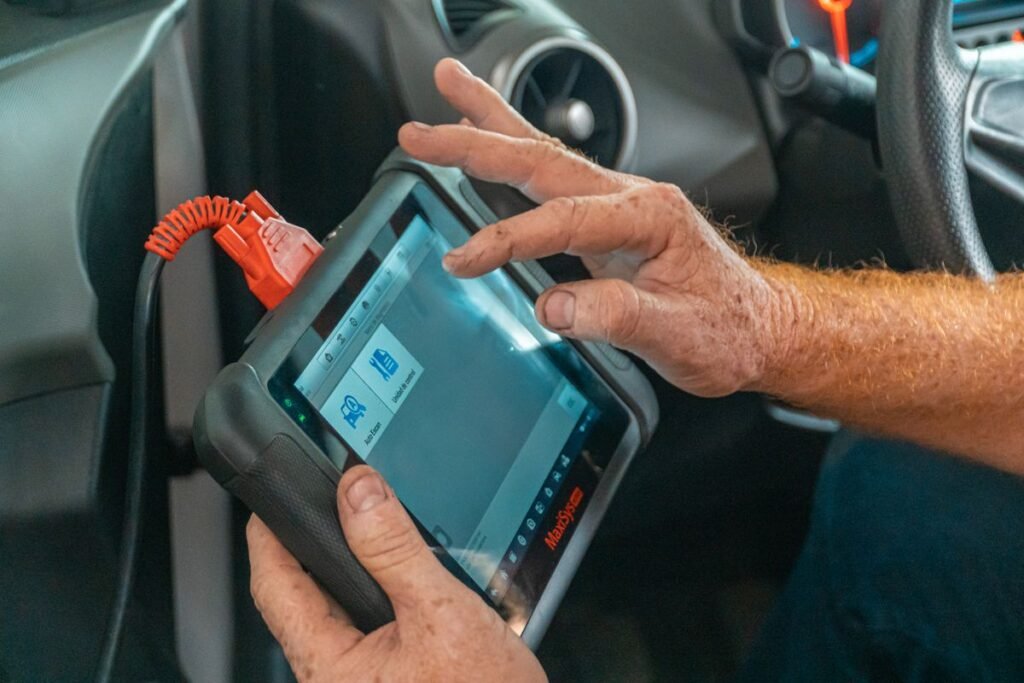
If you are asking why is my check engine light on, the short answer is that your car’s computer has detected a problem in the engine or emissions system and stored a fault code about it. The check engine light meaning is simple: something needs attention, but the light alone cannot tell you exactly what. It can be anything from a loose gas cap that costs nothing to fix, to a failing catalytic converter that costs well over a thousand dollars, which is why reading the code is always the first step.
What does check engine light mean in plain terms
Modern cars constantly monitor dozens of sensors. When one reading falls outside its normal range, the computer turns on the check engine light and saves a code that points a mechanic, or you, toward the faulty system. A steady light usually means the problem is not an emergency, but it should still be checked within a few days. A flashing or blinking light is different. It signals a serious misfire that can damage the catalytic converter, so read our guide on what a flashing check engine light means and slow down right away if yours is flashing.
The light is part of the emissions control system, so many causes are related to fuel, air, spark, or exhaust. The engine may still run normally, which is why drivers often ignore it. Ignoring it is risky, because a small issue like a bad sensor can lead to bigger damage and failed emissions tests over time.
The most common causes
Loose or faulty gas cap
The gas cap seals the fuel system. If it is loose, cracked, or missing, fuel vapor escapes and the computer flags an evaporative leak. Tighten the cap until it clicks, then drive for a day or two. The light often goes off on its own. A new cap costs roughly 10 to 30 dollars.
Oxygen sensor failure
Oxygen sensors measure unburned oxygen in the exhaust so the computer can balance fuel and air. When one fails, fuel economy drops and emissions rise. Replacement usually costs 250 to 500 dollars including labor.
Worn spark plugs or ignition coils
Spark plugs ignite the fuel mixture. Worn plugs or a weak coil cause misfires, rough idling, and poor acceleration. Plugs are a normal wear item, and a full set with labor often runs 150 to 400 dollars depending on the engine.
Mass airflow sensor problems
This sensor measures air entering the engine. A dirty or failed sensor causes hesitation, stalling, and poor mileage. Sometimes careful cleaning fixes it. Replacement typically costs 250 to 400 dollars.
Catalytic converter failure
The catalytic converter cleans exhaust gases. It rarely fails on its own; usually another problem, like a long ignored misfire, destroys it. Replacement is expensive, commonly 1,000 to 2,500 dollars or more, which is one reason early diagnosis matters.
Typical causes and repair costs
| Cause | Common symptoms | Typical cost range |
|---|---|---|
| Loose or bad gas cap | No symptoms, light only | 0 to 30 dollars |
| Oxygen sensor | Poor fuel economy | 250 to 500 dollars |
| Spark plugs or coils | Misfire, rough idle | 150 to 600 dollars |
| Mass airflow sensor | Hesitation, stalling | 250 to 400 dollars |
| Catalytic converter | Power loss, rattling | 1,000 to 2,500 dollars |
| EVAP system leak | Fuel smell, light only | 100 to 600 dollars |
These are general ranges for common cars in the United States. Prices vary by car model and region, and luxury or European models usually cost more.
Can you keep driving with the light on
With a steady light and a car that runs normally, you can usually drive gently to a shop or parts store within the next few days. Check your oil and coolant levels, and pay attention to new noises, smells, or power loss. Safety warning: if the light is flashing, if the temperature gauge climbs, if the oil pressure warning appears, or if the engine shakes badly, stop driving as soon as it is safe and call for help. Continuing can turn a moderate repair into engine damage.
What to do next, step by step
- Check the gas cap first. Tighten it and see if the light clears after a few trips.
- Note any symptoms, such as rough running, strange smells, or loss of power.
- Get the code read. Many auto parts stores scan codes for free, or a basic scanner costs 25 to 60 dollars.
- Look up what the code points to. Our guide to car fault codes and DTC meanings explains how to read them.
- Fix the root cause, then clear the code and confirm the light stays off.
Avoid simply clearing the code without a repair. The light will return, the underlying problem can get worse, and the car will not pass an emissions inspection with a recently cleared system.
Will the car pass an emissions test with the light on
In almost every state that runs emissions or smog inspections, an illuminated check engine light is an automatic failure, no matter how well the car drives. The testing equipment also checks whether the system was recently reset, so clearing the code in the parking lot before a test does not work either. Plan ahead: fix the cause, drive the car normally for several days so all the monitors complete their self checks, and only then book the inspection.
Frequently asked questions
Will the check engine light turn off by itself
Yes, it can. If the problem was temporary, like a loose gas cap that you tightened, the light often goes off after several normal drives. If it stays on for a week, get the code read.
How much does it cost to diagnose the light
Many parts stores read codes for free. A full professional diagnostic at a shop usually costs 100 to 180 dollars, and some shops apply that fee toward the repair.
Can a dead battery cause the check engine light
A weak battery or a recent jump start can trigger warning lights on some cars because sensors lose power. If the light appeared right after battery trouble, have the battery tested and the codes read before replacing parts.
The check engine light is your car’s way of asking for attention, not a reason to panic. Check the simple things first, read the code, and fix the cause early. That approach saves money and keeps a small warning from becoming a big repair.